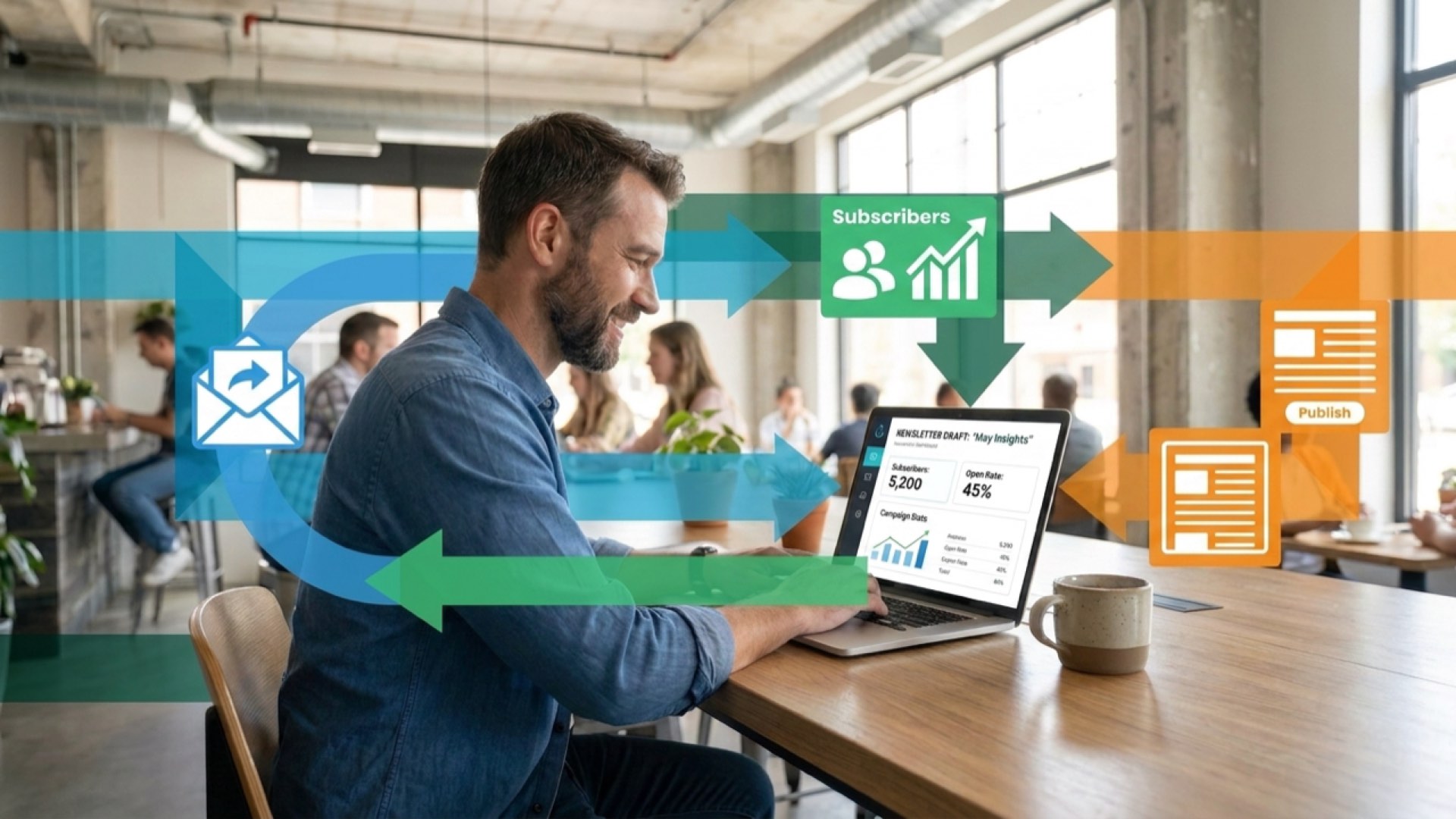
Email Marketing for Ecommerce: Complete Guide for 2026
Most ecommerce brands are sitting on untapped revenue.
Email marketing isn't just a channel. It's the most profitable retention lever you control. Effective targeting and accurate lists generate £45 in revenue for every £1 invested in email marketing for retail and ecommerce brands.

Yet when we audit Klaviyo accounts, we find the same pattern. Brands treat email like a broadcast tool. They send the same messages to everyone. They ignore customer lifecycle stages. They leave revenue on the table.
The difference between mediocre email marketing and revenue-driving retention comes down to three things. First, understanding that email automation workflows matter more than one-off campaigns. Second, knowing which flows to build based on customer behaviour. Third, measuring what drives revenue, not vanity metrics.
This guide covers everything we've learned helping hundreds of ecommerce brands make retention inevitable. You'll see which email campaigns actually move the needle. How to build automation that scales with your business. Where to focus your efforts for instant impact.
We're not going to waste your time with generic best practices. We're showing you the exact approach that turns email subscribers into repeat customers.
What Makes Ecommerce Email Marketing Different
Ecommerce email marketing is direct marketing built for one purpose. Turning browsers into buyers, then buyers into repeat customers.
The fundamentals are simple. You collect email addresses from website visitors and social media followers. You send targeted messages based on customer behaviour. You measure revenue impact, not just open rates.
What sets ecommerce email marketing apart is the customer journey. Someone who just discovered your brand needs different messages than a customer who's bought three times. That's where email automation workflows become essential.
The Revenue Model Behind Email
The numbers tell the story. Retail and ecommerce brands see £45 in revenue for every £1 invested in email marketing when they target accurately.
This ROI comes from three sources. First, welcome email series that convert new subscribers. Second, abandoned cart emails that recover lost revenue. Third, post-purchase flows that drive repeat orders.
Most brands focus on the first two. The real money sits in the third. Repeat customers spend more, buy more often, and refer others.
Lifecycle Emails vs Broadcast Campaigns
There are two types of ecommerce email campaigns. Lifecycle emails trigger automatically based on customer actions. Promotional emails go to your entire list on a schedule.
Lifecycle emails perform better. They're timely, relevant, and personalised to behaviour. Boosting conversions with timely emails such as abandoned cart reminders, limited-time offers, or product restocks is highly effective.
Promotional emails still matter. You need them for product launches, seasonal sales, and engaging subscribers. But they shouldn't be your only strategy.
The Platform Question
Your email platform determines what's possible. Klaviyo dominates ecommerce for good reason. It integrates deeply with Shopify and other platforms. It handles complex segmentation without breaking. It attributes revenue accurately.
Other platforms like Omnisend and Mailchimp work for smaller stores. But as you scale, you need the automation power that dedicated ecommerce platforms provide.
The platform choice matters less than how you use it. Most brands use 10% of their platform's capabilities. They build basic flows, then wonder why results plateau.
Building Your Email List the Right Way
Now that you understand the foundation, let's focus on list growth. Your email list is an owned asset. Social media platforms can change algorithms overnight. Your email list stays yours.
List building for ecommerce isn't about collecting as many addresses as possible. It's about attracting subscribers who want to buy from you.
Strategic Opt-In Points
Place signup forms where purchase intent is highest. Your checkout page is obvious but often overlooked. Add a checkbox for email updates during checkout. Make it checked by default with clear language.
Product pages work when you offer something valuable. "Get restocked alerts for this item" converts because it serves a need. "Sign up for our newsletter" doesn't.
Exit-intent popups catch browsers before they leave. Offer a discount code in exchange for an email address. Yes, this discounts your first sale. But it starts the customer relationship.
Lead Magnets That Actually Work
Generic discounts attract bargain hunters. Specific lead magnets attract ideal customers.
A skincare brand might offer "The 5-Minute Morning Routine Guide". A furniture store could provide "Room Measurement Templates". These qualify leads whilst building your list.
The best lead magnets solve a problem your products address. They demonstrate expertise. They make the first purchase easier.
List Hygiene Matters
A smaller, engaged list beats a large, unengaged one. Only 23.6% of businesses verify their email lists before every campaign, leaving many vulnerable to bounces, spam traps, and disengaged subscribers.

Remove subscribers who haven't engaged in 90 days. Send them a win-back email first. If they don't respond, let them go. They're hurting your deliverability.
Clean lists improve inbox placement. Better inbox placement means higher open rates. Higher open rates drive more revenue.
Welcome Email Series That Convert
With subscribers joining your list, your welcome email series makes the crucial first impression. This is where you turn curiosity into customers.
A welcome email isn't a single message. It's a series that introduces your brand, builds trust, and drives the first purchase. Most brands send one welcome email. Top performers send three to five.
Email One: Deliver on Your Promise
Send this immediately after signup. If you promised a discount code, include it. If you offered a guide, attach it. Don't make people wait.
Use the subject line to reference what they signed up for. "Here's your 15% discount code" beats "Welcome to our store". It shows you keep promises.
Keep this email short. Thank them for subscribing. Deliver what you promised. Invite them to browse your bestsellers. That's it.
Email Two: Tell Your Story
Send this 2-3 days after the first email. Share why you started the brand. What problem you're solving. Why your approach is different.
People buy from brands they connect with. This email builds that connection. Include founder photos if you have them. Share customer results. Make it personal.
End with a soft call-to-action. "See what makes us different" linking to your about page works. So does "Read customer reviews" linking to testimonials.
Email Three: Overcome Purchase Barriers
Send this 5-7 days after signup. Address the top reasons people don't buy. Shipping concerns. Return policies. Product quality questions.
Use social proof here. Share customer testimonials. Include product reviews. Show how many customers you've served.
The call-to-action should be direct. "Shop Now" or "View Bestsellers" with your most popular products.
Email Four: Create Urgency
Send this 10-14 days after signup. If they haven't purchased yet, they need a reason to act now.
Time-limited offers work. "Your welcome discount expires in 48 hours" creates urgency. Limited stock alerts work too. "Only 3 left of our bestseller" triggers action.
This email should be the most direct. Clear subject line. Bold call-to-action. Simple design that focuses on the offer.
Measuring Welcome Series Performance
Track conversion rate by email. Which message drives the most first purchases? That tells you what resonates.
Measure time-to-first-purchase. A strong welcome series converts subscribers within 14 days. If most conversions happen after 30 days, your series isn't working hard enough.
Check unsubscribe rates by email. High unsubscribes on email two? Your story isn't resonating. On email four? Your urgency feels pushy.
Abandoned Cart Recovery That Works
The welcome series starts relationships. Abandoned cart emails recover revenue that's already in play.
Cart abandonment is normal. People get distracted. They comparison shop. They're not ready to buy yet. Your abandoned cart email sequence brings them back.
A well-built abandoned cart flow recovers 25-40% of lost sales. Most brands leave this revenue on the table because they send one generic reminder.
The Three-Email Framework
Email one goes out 1-2 hours after abandonment. The subject line should be simple. "You left something behind" or "Still interested?" work better than clever copy.
Show what they left in their cart. Use product images and names. Make it dead simple to return and complete the purchase. Include a direct cart recovery link.
Email two sends 24 hours later. Add social proof here. Show product reviews. Mention how many people bought this item recently. Address common objections.
Include your return policy. Highlight free shipping if you offer it. Make the purchase feel safe.
Email three goes out 48-72 hours after abandonment. This is your last chance. A small discount can work here, but test it. Some brands recover more carts without discounting.
What to Include in Cart Recovery Emails
Product images are essential. People need to remember what caught their attention. Show the exact items they added, not similar products.
Scarcity works when it's real. "Only 2 left in stock" drives action. Fake scarcity destroys trust. Only use it if your inventory data is accurate.
Customer reviews reduce purchase anxiety. Someone abandons a cart because they're uncertain. Reviews provide the reassurance they need.
Make the call-to-action obvious. A single button that says "Complete Your Order" beats multiple links. Remove friction.
Advanced Cart Recovery Tactics
Segment by cart value. High-value carts deserve personal attention. Send a different sequence for carts over £500. Consider adding phone follow-up for very high values.
Test timing. Some audiences respond better to faster sequences. Others need more time. Run tests to find your optimal timing.
Add browse abandonment flows. Someone who viewed a product but didn't add it to cart shows interest. Send a gentler reminder than your cart sequence.
We cover the technical details of setting up these flows in our guide on which Klaviyo flows actually matter.
Post-Purchase Flows That Drive Repeat Orders
Cart recovery gets attention because the revenue impact is immediate. Post-purchase flows matter more for long-term growth.
The goal is simple. Turn first-time buyers into repeat customers. Repeat customers spend more, cost less to acquire, and refer others.
The Thank You Email
Send this immediately after purchase. Confirm the order. Set delivery expectations. Thank them genuinely.
Include order details with product images. Link to their order tracking page. Provide customer service contact information.
This isn't the place to sell. It's about reassurance. They just gave you money. Make them feel good about that decision.
The Delivery Confirmation Email
Send this when the order ships. Include the tracking number with a link to the carrier's site. Tell them when to expect delivery.
You can start warming them up for the next purchase here. Include a section like "You might also like" with complementary products. Keep it subtle.
The Product Education Email
Send this 3-5 days after delivery. Help customers get the most from their purchase. Share usage tips. Link to tutorial videos. Provide care instructions.
This email reduces returns. It increases satisfaction. It positions you as helpful, not just transactional.
For some products, this becomes a series. A skincare brand might send a 30-day routine guide. A tech company might share advanced features over time.
The Review Request Email
Send this 7-14 days after delivery. They've had time to use the product. Now ask for feedback.
Make leaving a review easy. Include a direct link to the review page. Consider offering an incentive like entry into a monthly prize draw.
Reviews serve two purposes. They provide social proof for future buyers. They give you feedback to improve products.
The Repeat Purchase Email
Timing depends on your product. Consumables need replenishment reminders. "You bought coffee beans 28 days ago. Time to restock?" works for products with predictable usage.
For durable goods, focus on complementary products. Someone who bought a camera needs lenses, bags, and accessories. Your purchase history tells you what to recommend.
Email personalisation generates 6x greater transaction rates. Use purchase data to make relevant suggestions.

Segmentation and Personalisation Strategies
You've built the core flows. Now let's make them more effective through segmentation and personalisation.
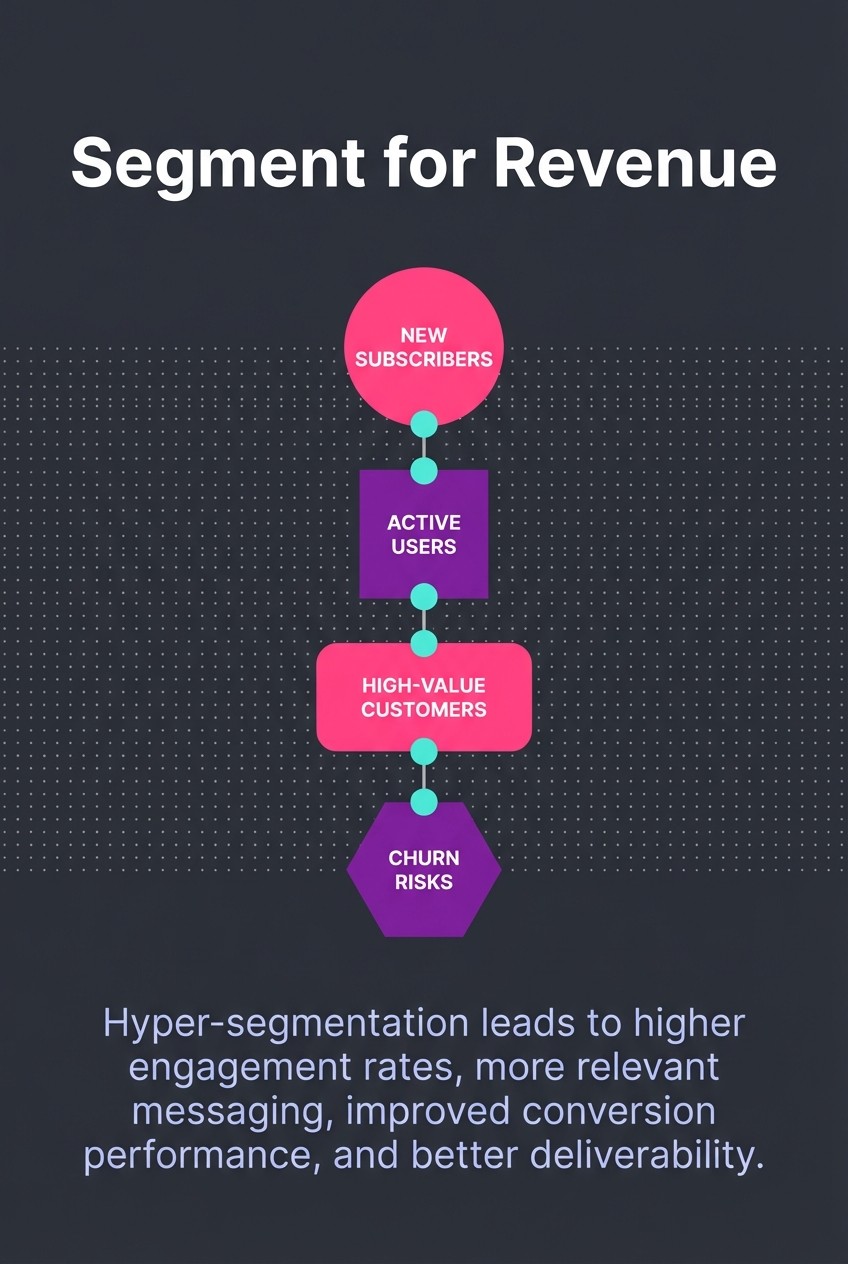
Sending the same message to everyone is easier. It's also less profitable. Hyper-segmentation leads to higher engagement rates, more relevant messaging, improved conversion performance, and better deliverability.
Behavioural Segmentation
Segment by purchase history first. Someone who's bought three times gets different messages than a first-time buyer. They don't need convincing. They need reasons to buy again.
Browse behaviour matters too. Track which categories people view. Someone who browses men's shoes shouldn't get emails about women's handbags.
Engagement level is crucial. Highly engaged subscribers can handle more emails. Dormant subscribers need gentler reactivation campaigns.
Demographic and Geographic Segmentation
Location affects relevance. Send different messages based on weather, local events, or regional preferences. A winter coat sale resonates differently in Edinburgh than in London.
Time zones matter for send times. Schedule emails to arrive when people actually check their inbox. Morning emails work for some audiences. Evening works for others.
Age and gender segmentation helps when products skew demographically. Just don't assume. Let behaviour guide you first, demographics second.
Customer Lifecycle Stages
New subscribers need education and trust-building. First-time buyers need reassurance and product guidance. Repeat customers need VIP treatment and exclusive offers.
Lapsed customers require win-back campaigns. At-risk customers benefit from retention offers before they churn.
Map your customer lifecycle stages. Define what qualifies someone for each stage. Build specific flows for each transition.
Understanding customer lifetime value helps you segment more strategically. High-CLV customers deserve premium treatment.
Practical Personalisation Tactics
Use first names in subject lines and greetings. It's basic but it works. Just verify your data is clean first. "Hi [FNAME]" destroys credibility.
Reference past purchases in recommendations. "Because you bought X, you might like Y" feels relevant. Generic product grids don't.
Personalise based on engagement. Frequent openers can receive more emails. Rare openers need higher-value messages when they do engage.
Show location-specific content. Mention local stockists. Reference regional events. Acknowledge local holidays.
Email Automation Workflows Beyond the Basics
The foundation is set. Welcome series, abandoned cart, and post-purchase flows are running. Now let's build the automation that separates good from exceptional.
These workflows require more setup but deliver compound returns. They run 24/7 without manual intervention. They respond to customer behaviour in real-time.
Win-Back Campaigns for Lapsed Customers
Define "lapsed" based on your purchase cycle. For fashion, it might be 90 days. For furniture, it could be two years.
Send a gentle reminder first. "We haven't seen you in a while" with product recommendations based on past purchases. No pressure, just value.
If that doesn't work, try a survey. "What can we do better?" shows you care. The responses guide improvements. Some people will buy just because you asked.
The final email in a win-back series can include an incentive. "Here's 20% off to welcome you back" works for price-sensitive customers. For others, emphasise new products or improvements.
VIP and Loyalty Programme Emails
Identify your top customers. Top 10% by revenue or purchase frequency deserve special treatment.
Give them early access to sales. Offer exclusive products. Provide free shipping. Make them feel valued because they are.
Create a points programme if it fits your brand. Email milestones. "You've earned 500 points" with a redemption reminder drives engagement.
Birthday and anniversary emails work for loyalty. Offer a special discount on their birthday. Celebrate their customer anniversary. Personal touches build relationships.
Product Launch Sequences
Build anticipation before launch. Send teasers to engaged subscribers. Share behind-the-scenes content. Create waitlists.
On launch day, email your most engaged subscribers first. Give them priority access. This rewards loyalty and guarantees early sales.
Follow up with broader list segments over the next few days. Segment by interest based on past behaviour. Someone who bought similar products gets priority over someone who hasn't.
Replenishment Reminders
Calculate average reorder time for consumable products. Trigger reminder emails based on purchase date plus average cycle.
Make reordering effortless. Include a direct link to purchase the same product. Pre-fill the cart if possible.
Test timing. Too early and people ignore it. Too late and they've already bought from a competitor. Find the sweet spot through testing.
Re-Engagement Flows
Track email engagement separately from purchase behaviour. Someone might buy regularly but never open emails. Focus re-engagement on email interaction.
Send a compelling subject line. "Should we break up?" or "Last chance to stay subscribed" grab attention. Inside, ask if they want to stay on the list.
Offer preference centre access. Let them choose email frequency or content types. Some people want fewer emails, not zero emails.
After a final re-engagement attempt, remove non-responders. This improves deliverability for engaged subscribers.
Campaign Strategy for Promotional Emails
Automation handles lifecycle marketing. Promotional campaigns drive urgency and clear inventory. You need both.
Email frequency should prioritise quality over quantity due to subscriber fatigue. Don't email just because you can.

Campaign Calendar Planning
Plan campaigns around your business needs. Product launches need campaigns. Seasonal sales need campaigns. Slow periods need engagement campaigns.
Map out major promotional periods. Black Friday, Christmas, summer sales. Plan these months in advance. Last-minute campaigns rarely perform as well.
Leave room for reactive campaigns. Competitor activity, unexpected inventory, or trending topics create opportunities.
Segmented Campaign Sends
Don't send every campaign to your entire list. Segment based on relevance.
A men's product promotion only goes to men's product buyers and browsers. A premium product launch goes to high-value customers first.
Create holdout groups for testing. Send campaigns to 90% of the segment. Hold back 10% as a control. This lets you measure true campaign impact.
Seasonal Campaign Strategies
Major retail periods like Black Friday need early preparation. Start teasing deals two weeks before. Build anticipation.
During the event, increase email frequency. Daily emails work during BFCM. Your customers expect it.
After major sales, shift to relationship building. Thank customers. Share year-in-review content. Reset for normal cadence.
Testing Campaign Elements
Test subject lines on every campaign. Send version A to 10% of your list, version B to another 10%. Wait two hours. Send the winner to the remaining 80%.
Test send times. Your data might show Tuesday at 10am works best. But test Thursday evening or Saturday morning occasionally.
Test email length. Long-form storytelling works for some brands. Short and punchy works for others. Your audience tells you through engagement.
Measuring What Matters in Email Marketing
You're building flows and sending campaigns. Now focus on measuring the outcomes that drive business growth, not vanity metrics.
The shift we recommend is simple. Stop optimising tasks. Start optimising results.
Revenue Attribution
Track revenue per email. This single metric tells you if email is working. Compare it across flows and campaigns.
Use platform attribution correctly. Klaviyo tracks both click attribution and placed order attribution. Understand the difference.
Click attribution credits the last email clicked before purchase. Placed order attribution credits the last email received. Both matter for different reasons.
Calculate email marketing ROI monthly. Take total email revenue minus platform costs and time investment. Divide by costs. You should see 30:1 or higher for mature programmes.
Engagement Metrics That Predict Revenue
Open rate matters for inbox placement. Low open rates signal deliverability problems. Track it by flow and campaign.
Click-through rate shows message relevance. High opens but low clicks mean your content doesn't match expectations. Test different offers and copy.
Conversion rate is open-to-purchase. This varies by email type. Welcome series should convert higher than promotional campaigns.
Flow-Specific Metrics
Welcome series conversion rate measures how well you turn subscribers into customers. Benchmark against industry standards but focus on your own improvement.
Abandoned cart recovery rate shows percentage of abandoned carts converted. Track this weekly. Small improvements compound quickly.
Repeat purchase rate from post-purchase flows indicates retention effectiveness. This metric directly impacts customer lifetime value.
List Health Indicators
List growth rate is new subscribers minus unsubscribes divided by total list size. Healthy ecommerce lists grow 2-5% monthly.
Unsubscribe rate should stay below 0.5% per campaign. Higher rates signal frequency problems or relevance issues.
Spam complaint rate must stay under 0.1%. Higher rates damage sender reputation and deliverability.
Engagement rate is percentage of list that opened or clicked in the last 90 days. Healthy lists maintain 30-40% engagement.
Technical Setup and Deliverability
Strong strategy fails without proper technical foundation. Email deliverability determines whether your messages reach the inbox.
Most deliverability problems come from authentication issues or list quality. Both are fixable.
Email Authentication
Set up SPF, DKIM, and DMARC records. These prove you're authorised to send from your domain. Without them, emails land in spam.
SPF lists which servers can send email for your domain. DKIM adds a digital signature to verify authenticity. DMARC tells receiving servers what to do with failed checks.
Your email platform provides the DNS records you need. Add them to your domain settings. Verify they're working correctly.
Sender Reputation Management
Email providers track your sending reputation. High spam complaints or bounce rates damage it. Good engagement improves it.
Warm up new sending domains slowly. Don't blast your entire list on day one. Start with your most engaged subscribers. Gradually increase volume.
Monitor your sender score using tools like Google Postmaster Tools. Watch for sudden drops. Investigate causes immediately.
List Hygiene Best Practices
Only 23.6% of businesses verify their email lists before every campaign. Don't be part of the 76.4%.
Remove hard bounces immediately. These are invalid email addresses. Continuing to send to them hurts your reputation.
Handle soft bounces carefully. These are temporary issues like full inboxes. Remove addresses that soft bounce repeatedly.
Suppress unengaged subscribers from promotional campaigns. They can still receive transactional emails. This protects your sender reputation whilst maintaining compliance.
Content Filtering Avoidance
Spam filters analyse content, not just sender reputation. Certain words and patterns trigger filters.
Avoid spam trigger words like "FREE!!!", "ACT NOW", or "GUARANTEED". Write naturally. Desperate language signals spam.
Balance text and images. All-image emails trigger filters. Include sufficient text content.
Test emails before sending. Most platforms offer spam testing. Use it to catch issues before they impact deliverability.
Platform Selection and Migration
The right platform makes everything easier. The wrong one creates constant friction.
We specialise in Klaviyo because it's built specifically for ecommerce. Deep Shopify integration. Powerful segmentation. Accurate revenue attribution. Flexible automation.
What to Look for in an Email Platform
Ecommerce integration is non-negotiable. Your platform needs real-time access to customer data, purchase history, and browsing behaviour.
Segmentation capabilities determine personalisation depth. Look for platforms that handle complex conditions and dynamic segments.
Automation workflow builders should be visual and flexible. You need to create complex flows without writing code.
Analytics must track revenue accurately. Click-through rates matter less than pounds generated.
Popular Ecommerce Email Platforms
Klaviyo leads for mid-market and enterprise ecommerce brands. It handles complexity without breaking. The learning curve is steeper but the capabilities justify it.

Omnisend works well for smaller stores. It's more affordable and easier to learn. You'll outgrow it as you scale.

Mailchimp serves general marketing better than ecommerce specifically. The ecommerce features exist but feel bolted on.
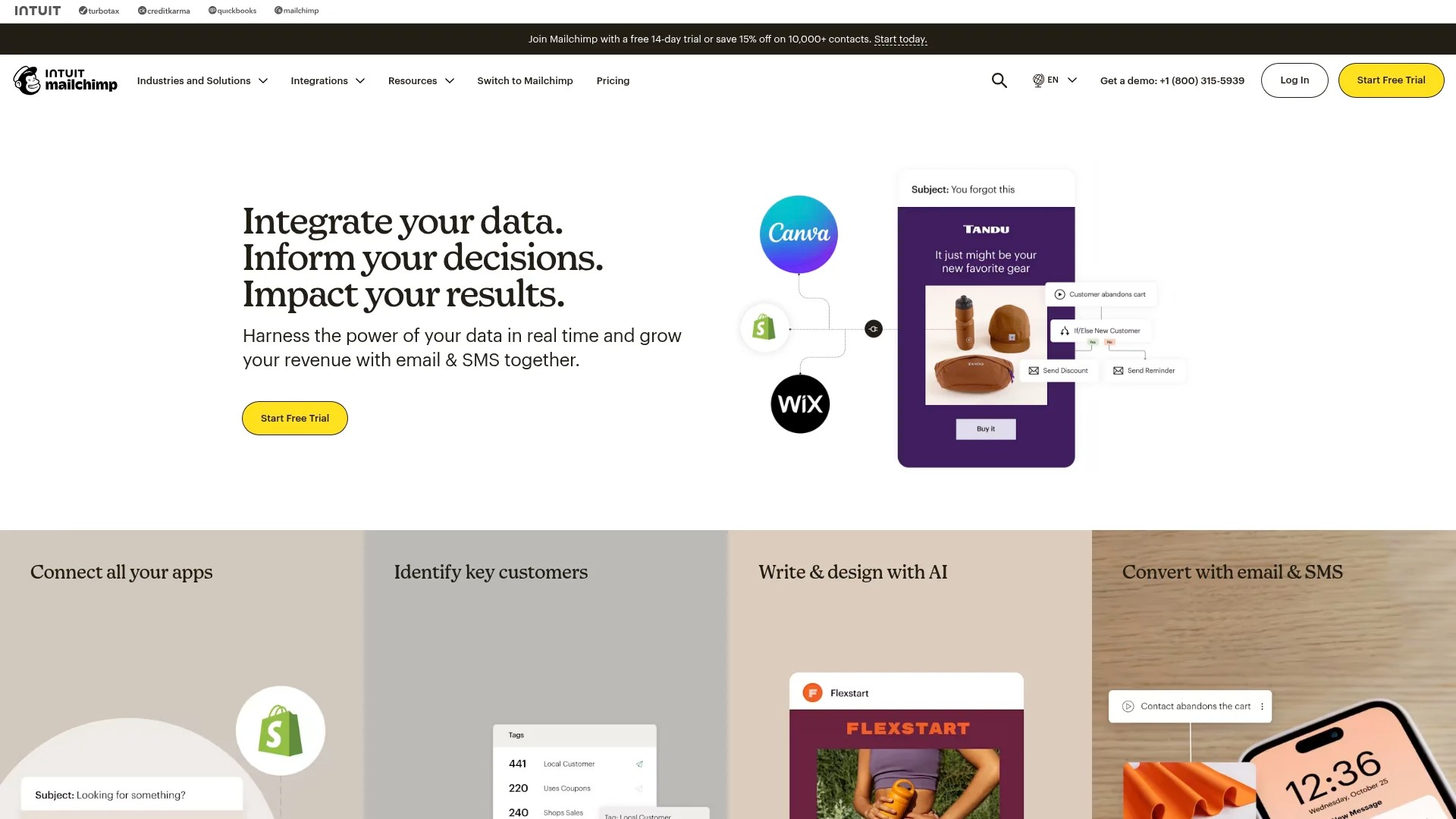
Klaviyo automation also includes SMS, which extends your retention strategy beyond email alone.
Migration Best Practices
Migrating platforms disrupts performance temporarily. Plan it carefully.
Export your entire list with all custom fields and segment data. Clean the data before importing to your new platform.
Rebuild flows in the new platform before switching. Test thoroughly. Compare to your old flows to ensure nothing's missing.
Run platforms parallel for two weeks if possible. Compare performance. Verify all data syncs correctly.
Warm up your sender reputation on the new platform. Even though it's the same domain, sending behaviour changes affect reputation.
Advanced Tactics for Scaling Revenue
You've mastered the fundamentals. These advanced tactics push performance higher.
The difference between good and exceptional email marketing often comes down to small optimisations that compound over time.
Predictive Sending
Send emails when each subscriber is most likely to engage. Some people check email at 7am. Others check at 9pm.
Klaviyo includes predictive sending based on individual engagement patterns. It analyses when each person typically opens emails and schedules sends accordingly.
This increases open rates without changing content. The same email performs better simply because timing improves.
Dynamic Content Blocks
Show different content to different segments within the same email. Product recommendations change based on browse history. Offers vary by customer value.
This reduces the number of email variants you need to create whilst maintaining personalisation. One campaign serves multiple segments effectively.
Test dynamic content against static versions. Sometimes simplicity wins. Other times, personalisation drives significant lifts.
Conditional Flow Logic
Build flows that branch based on customer behaviour. Someone who clicks but doesn't buy gets a different follow-up than someone who doesn't click at all.
Use time delays strategically. Test different wait times between emails in a flow. Small timing changes impact conversion rates.
Add filters to prevent over-mailing. If someone receives a promotional campaign, delay their next flow email by 24 hours. This prevents inbox fatigue.
Understanding re-entry criteria in automation helps you build more sophisticated flows without annoying customers.
Cross-Sell and Upsell Sequences
Analyse purchase patterns. Which products are commonly bought together? Build automated sequences that suggest logical next purchases.
Someone who bought a camera gets lens recommendations. A supplement buyer receives related product suggestions based on their purchase.
Time these sequences based on product usage cycles. Suggest accessories whilst the initial product is still new and exciting.
Common Email Marketing Mistakes to Avoid
Even experienced brands make these mistakes. Avoiding them saves time and revenue.
Sending Too Much Too Soon
New subscribers aren't ready for daily emails. Build frequency gradually. Start with your welcome series. Add them to promotional campaigns slowly.
Watch engagement rates by subscriber tenure. If new subscribers show lower engagement, you're overwhelming them.
Ignoring Mobile Optimisation
Most emails are opened on mobile devices. Your emails must work perfectly on small screens.
Use single-column layouts. Make buttons large enough to tap easily. Keep subject lines short so they don't get cut off.
Test emails on actual mobile devices before sending. What looks good on desktop often fails on mobile.
Buying Email Lists
Never buy email lists. Ever. The people on those lists didn't opt into your emails. They'll mark you as spam.
This destroys your sender reputation. It damages deliverability for legitimate subscribers. It violates privacy regulations.
Build your list organically. It takes longer but creates engaged subscribers who actually want to hear from you.
Neglecting Transactional Emails
Order confirmations and shipping notifications have higher open rates than marketing emails. Use them strategically.
Include cross-sell suggestions. Link to helpful content. Build the relationship whilst providing necessary information.
Just don't make them overly promotional. The primary purpose is transaction confirmation. Marketing is secondary.
Setting and Forgetting Automation
Flows need regular optimisation. Review performance quarterly at minimum. Test new approaches. Update copy. Refresh product recommendations.
Customer behaviour changes. Market conditions shift. Your automation should evolve accordingly.
Privacy, Compliance, and Best Practices
Legal compliance isn't optional. Violations carry serious penalties. More importantly, respecting subscriber privacy builds trust.
GDPR Compliance for UK and EU
Get explicit consent before adding anyone to your email list. Pre-checked boxes don't count as consent under GDPR.
Provide clear information about how you'll use email addresses. Include this in your signup form and privacy policy.
Make unsubscribing easy. Include an unsubscribe link in every marketing email. Honour unsubscribe requests immediately.
Store subscriber data securely. Document your data protection measures. Be prepared to provide or delete data upon request.
CAN-SPAM Compliance
Include your physical business address in every email. Use accurate from names and subject lines. Honour opt-out requests within 10 business days.
These are minimum legal requirements. Following them keeps you compliant but doesn't guarantee engagement.
Consent and Preference Management
Offer a preference centre where subscribers control their email experience. Let them choose email frequency or content types.
Some people want daily deals. Others prefer weekly digests. Letting them choose reduces unsubscribes whilst maintaining engagement.
Track consent carefully. Document when and how each subscriber opted in. You may need this information for compliance audits.
Building Your Email Marketing Strategy
You've seen the tactics. Now let's build the strategy that ties everything together.
Strategy determines which tactics matter for your specific business. Not every brand needs every flow. Focus on what drives results for you.
Setting Clear Objectives
Start with business goals. Do you need to increase average order value? Improve repeat purchase rate? Grow revenue from existing customers?
Your email marketing strategy should directly support these goals. If repeat purchases matter most, invest heavily in post-purchase flows.
Set specific targets. "Increase email revenue by 30% this quarter" beats "improve email marketing". Specific targets focus effort.
Prioritising Flows and Campaigns
Build foundational flows first. Welcome series, abandoned cart, and post-purchase form the core. Get these right before adding complexity.
Add specialised flows based on your business model. Subscription brands need different flows than one-time purchase businesses.
Balance automation and campaigns. Flows run continuously. Campaigns create urgency and clear inventory. You need both working together.
Resource Allocation
Email marketing requires time, money, and expertise. Allocate resources realistically.
Platform costs scale with list size. Budget for growth. Factor in design resources for templates. Account for time spent on strategy and optimisation.
Decide what to handle internally versus outsourcing. Some brands build internal teams. Others work with agencies. Both approaches work if resourced properly.
Testing and Optimisation Roadmap
Create a testing calendar. Plan which elements to test each month. Subject lines one month. Send times the next. Email length after that.
Document test results. Build institutional knowledge about what works for your audience. Use this to inform future decisions.
Set aside time for flow optimisation. Review each major flow quarterly. Update copy, refresh offers, test new approaches.
Make Retention Inevitable
Ecommerce email marketing isn't complicated. It's systematic.
Build the foundation first. Welcome series that converts new subscribers. Abandoned cart flows that recover revenue. Post-purchase sequences that drive repeat orders.
Then layer in sophistication. Segmentation that makes messages relevant. Personalisation that increases transaction rates. Advanced flows that respond to specific customer behaviours.
Measure what matters. Revenue attribution tells you if email marketing works. Flow-specific metrics show where to optimise. List health indicators predict future performance.
The brands winning with email marketing aren't doing anything magical. They're executing the fundamentals consistently. They're testing continuously. They're optimising based on data, not assumptions.
Start with one flow. Get it working properly. Then add the next. Build momentum through consistent improvement, not massive overhauls.
Your email list is an asset that compounds over time. Treat it that way. Invest in growing it properly. Nurture subscribers with relevant messages. Convert them into customers, then repeat customers.
That's how you make retention inevitable.
Ready to build an email marketing strategy that actually drives revenue? We help ecommerce brands turn email subscribers into repeat customers through Klaviyo automation that works. Get in touch to see how we can make retention inevitable for your brand.
.jpg)
.jpg)