Winback Flow Strategy: Re-engage Lapsed Customers
Most ecommerce brands are sitting on a goldmine they don't even realise exists. The customers who've already bought from you once but haven't returned in ninety days represent some of the highest-value opportunities in your entire database.
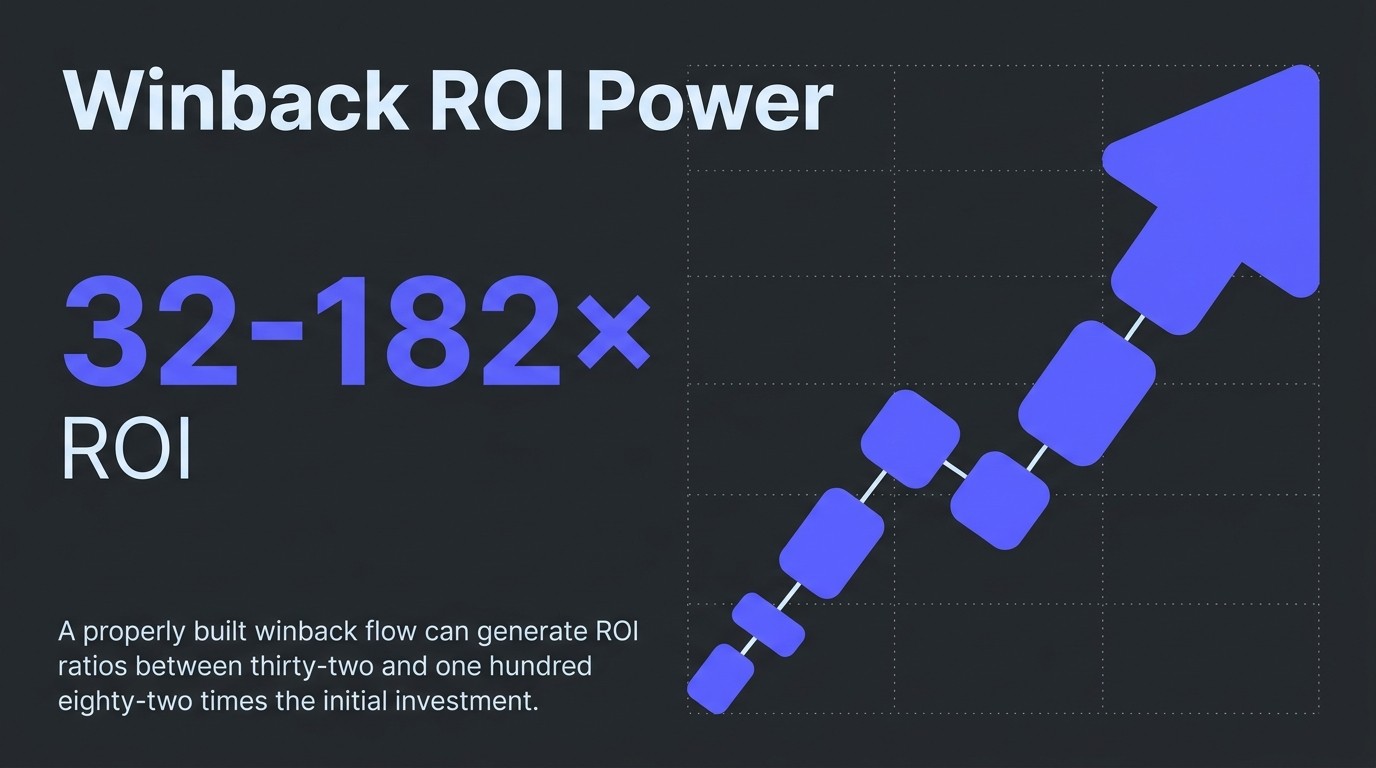
A properly built winback flow can generate ROI ratios between thirty-two and one hundred eighty-two times the initial investment. That's not a typo.
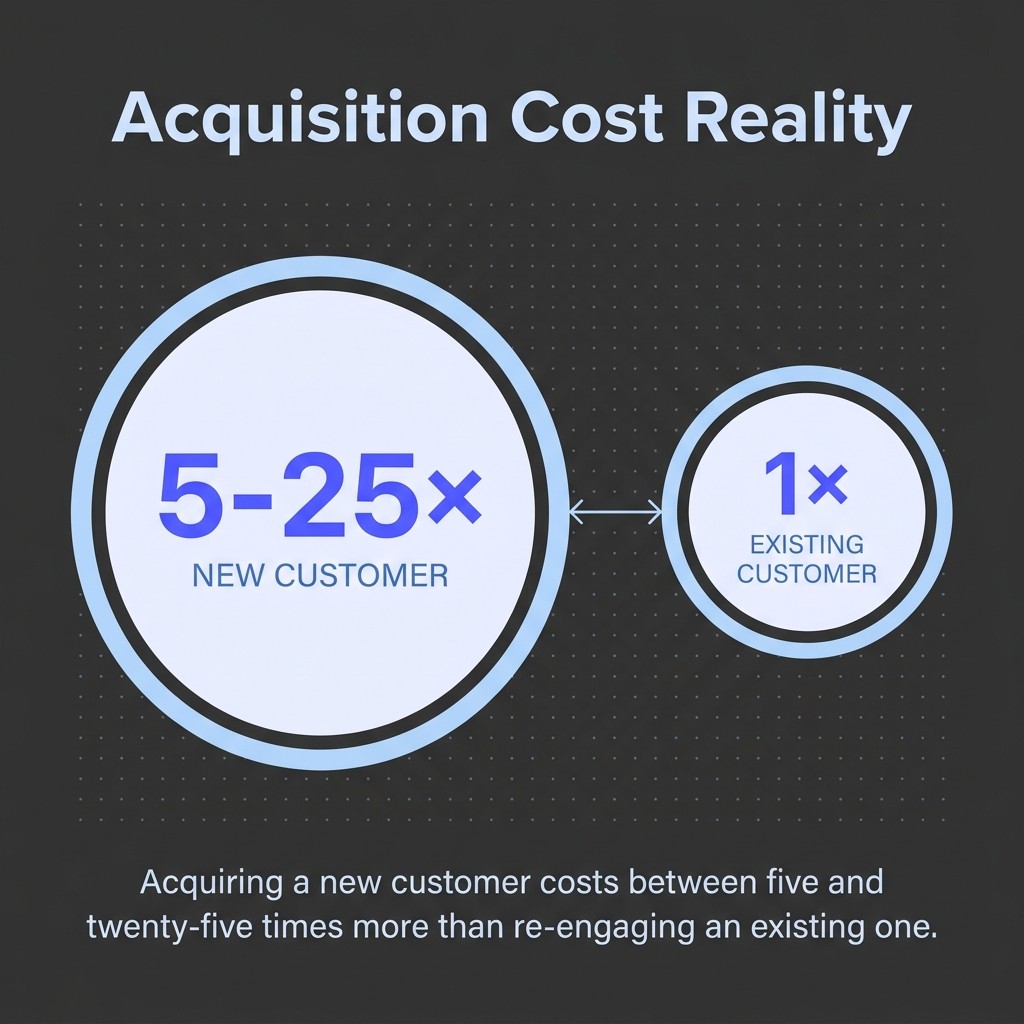
The maths is brutal but simple. Acquiring a new customer costs between five and twenty-five times more than re-engaging an existing one. Every lapsed customer you win back delivers revenue without the acquisition cost, without the onboarding friction, and without the trust-building phase you need with complete strangers.
Yet most Klaviyo accounts we audit either skip winback flows entirely or run weak, generic campaigns that barely move the needle. This guide will show you exactly how to build winback campaigns that actually work, using proven strategies across segmentation, timing, messaging, and measurement.
You'll learn when to send winback emails, how to segment inactive subscribers for maximum relevance, which subject lines actually get opens, and how to structure the flow itself for measurable results. By the end, you'll have everything you need to make retention inevitable.
What a Winback Email Actually Does
A winback email targets customers who've previously purchased from your brand but have now gone silent. They're not strangers. They're not leads. They're past buyers who've stopped engaging.
The goal is simple: get them to make another purchase before they forget you exist entirely. Unlike acquisition campaigns that introduce your brand to cold audiences, winback campaigns leverage existing relationships and past purchase behaviour to bring revenue back online.
Most brands confuse winback flows with re-engagement campaigns. Re-engagement targets subscribers who've stopped opening emails but haven't necessarily purchased. Winback flows specifically target lapsed customers, people who've bought at least once but haven't returned within your typical purchase cycle.
The difference matters because the messaging shifts completely. A subscriber who never bought needs convincing. A lapsed customer needs reminding, incentivising, or problem-solving.
Winback emails work because the hardest part is already done. These customers have already trusted you with payment information, received your product, and experienced your brand. The friction is lower. The trust baseline is higher. Your job is to overcome whatever caused them to drift away.
Why Winback Flows Deserve Your Attention
The economics of winback campaigns are exceptional compared to almost any other channel. You're targeting people who've already demonstrated buying intent, product-market fit, and willingness to pay.
Here's what makes the numbers work. New customer acquisition requires ad spend, landing page optimisation, trust signals, risk reversal, and multiple touchpoints before conversion. Lapsed customers already cleared those hurdles. They know your product works. They know your service delivers. The cost to convert them is a fraction of cold acquisition.
When you combine lower costs with existing customer data, you can personalise winback campaigns in ways that acquisition campaigns simply can't match. You know what they bought, when they bought it, how much they spent, and whether they engaged with post-purchase content.
That data enables segmentation precision that drives results. Research demonstrates the substantial impact of segmentation precision with fifty-four percent better performance than generic approaches.

Customer lifetime value improves dramatically when you successfully reactivate lapsed buyers. A customer who returns after going dormant often becomes more engaged than before, particularly if your winback strategy addresses the reason they left in the first place.
The alternative to winback is watching your customer list slowly decay. Every month, a percentage of your buyers will naturally drift away due to changing needs, competitive offers, or simple forgetfulness. Without systematic winback flows, your list becomes a leaky bucket that requires constant acquisition spend just to maintain revenue.
When to Send Winback Emails
Timing determines whether your winback flow catches customers at the optimal intervention moment or arrives too late to matter. Send too early and you annoy active customers. Send too late and they've already moved to a competitor.
The ideal winback window depends entirely on your typical purchase cycle. A coffee subscription brand might define lapsed at thirty days. A furniture retailer might wait a full year. The trigger should align with when a customer would naturally repurchase if they were still engaged.
Calculate Your Lapsed Customer Definition
Start with your average days between purchases for repeat customers. Pull this metric from Klaviyo analytics or your customer lifetime value calculations. Add twenty to thirty percent buffer time to account for normal variation.
For example, if your repeat customers typically buy every sixty days, your lapsed definition might be ninety days. This gives natural purchase cycle variation room whilst catching customers before they've fully churned.
Avoid using arbitrary timeframes like six months for all customers. A customer who bought three times in their first two months operates on a completely different cycle than someone who made a single purchase eighteen months ago.
Trigger-Based Timing Works Better Than Calendar-Based
The most effective winback flows use behavioural triggers rather than fixed calendar dates. Trigger-based automation catches customers at optimal intervention moments.
Set your flow to trigger when a customer profile meets your lapsed criteria: last purchase date exceeds your threshold AND no subsequent purchases exist. This ensures the flow only targets genuinely inactive customers, not someone who's already in an active purchase consideration phase.
Layer in engagement signals as secondary triggers. A customer who stopped opening emails thirty days ago poses a different challenge than someone who's opened recent campaigns but hasn't purchased. The latter might just need a stronger incentive. The former might need a deliverability intervention first.
Multi-Touch Sequences Perform Better Than Single Sends
Single winback emails rarely succeed at scale. Build a sequence that escalates both urgency and incentive value across three to five emails spaced seven to fourteen days apart.
Your first email should be light-touch. Remind them what they're missing without heavy discounting. The second can introduce a modest incentive. The third should present your strongest offer with clear urgency. The final email can be a breakup message that sets expectations around list cleaning.
This graduated approach lets you measure which message resonates whilst controlling margin impact. Some customers will convert on the reminder alone. Others need the incentive. The sequence structure ensures you're not leaving money on the table by leading with discounts unnecessarily.
How to Segment Inactive Subscribers
Generic winback campaigns fail because they treat all lapsed customers identically. A customer who bought once for £25 eighteen months ago has completely different needs than someone who spent £500 across five purchases in the past year.
Effective segmentation starts with purchase history but extends into engagement behaviour, product affinity, and predicted lifetime value. The goal is creating audience segments specific enough for genuinely personalised messaging.
Purchase Frequency Segments
Separate one-time buyers from repeat customers immediately. One-time buyers never experienced your full value proposition. Repeat customers did, then chose to leave anyway. The messaging must account for this difference.
One-time buyers need education-focused content that demonstrates value they might have missed. Highlight product uses they didn't explore, share customer success stories, or offer complementary products that enhance their original purchase.
Repeat customers who've stopped buying likely encountered a specific problem or found a better alternative. Your winback messaging should acknowledge their previous relationship, ask for feedback, and present incentives substantial enough to overcome whatever drove them away.
Monetary Value Segments
Total spend determines how aggressively you should invest in winning someone back. A customer who's generated £2,000 in revenue deserves more effort than someone who spent £30 once.
Create tiers based on lifetime value. High-value customers might receive personalised outreach from your team, exclusive access to new products, or VIP-level incentives. Mid-tier customers get strong automated sequences with meaningful discounts. Low-tier customers receive basic reminder flows.
This tiered approach ensures your incentive costs align with potential return. Offering thirty percent off to someone who spent £25 eighteen months ago rarely makes financial sense. The same offer to someone who spent £1,500 over multiple purchases could be highly profitable.
Product Category Segments
Customers who bought from specific categories often respond better to messaging built around those products. Someone who purchased skincare products wants different content than someone who bought activewear.
Use purchase history to create product-specific winback segments. Feature new arrivals in their category, highlight complementary products, or offer replenishment reminders for consumable items.
Category segmentation works particularly well for brands with diverse product catalogues. A customer interested in one category might not care about promotions in others. Targeted messaging shows you understand their specific interests rather than blasting generic sales.
Engagement-Based Segments
Customers who stopped purchasing but still open your emails represent a different opportunity than those who've completely disengaged. Check email engagement over the past thirty to sixty days before sending winback campaigns.
Engaged non-purchasers might just need a stronger call to action or a more compelling offer. Completely disengaged customers might have deliverability issues, changed email addresses, or actively decided to disengage from your brand.
For disengaged contacts, consider a re-engagement sequence focused on inbox placement before launching into winback messaging. There's no point crafting perfect product offers if they're landing in spam folders.
Essential Components of High-Converting Winback Emails
Every winback email must accomplish three things: get opened, communicate value immediately, and drive a specific action. Miss any of these and the entire flow fails regardless of how well you've segmented or timed it.
The best winback emails balance emotional reconnection with practical incentives. Pure emotion without offers rarely converts at scale. Pure discounting without relationship acknowledgement feels transactional and damages brand equity.
Subject Lines That Actually Get Opened
Your subject line determines whether the entire campaign succeeds or dies in the inbox. Winback subject lines that include personalisation achieve an average open rate of twenty-nine point six percent.

The most effective subject line approaches fall into four categories: emotional reconnection, urgency-based, incentive-led, and curiosity-driven. Each works for different segments and brand voices.
Emotional reconnection subjects work well for brands with strong identity and loyal customer bases:
- We miss you, [First Name]
- It's been too long
- Are we still friends?
- Your absence has been noted
- Come back to [Brand Name]
Urgency-based subjects create FOMO and time pressure:
- Last chance: Your account expires soon
- Final call before we say goodbye
- 24 hours to claim your offer
- This is it, [First Name]
- About to remove you from our list
Incentive-led subjects lead with the offer value:
- Here's 25% off to welcome you back
- Your exclusive comeback discount awaits
- We'll give you £15 to return
- Special offer just for returning customers
- Your welcome back gift is inside
Curiosity-driven subjects work when you have genuinely new products or significant brand updates:
- You haven't seen what we've been working on
- We've changed. A lot.
- Something new we think you'll love
- This wasn't here when you left
- Our biggest update ever
Test different approaches across your segments. High-value customers might respond better to emotional subjects. Deal-seekers probably prefer direct incentive subjects. New product launches create natural opportunities for curiosity-based approaches.
Opening Copy That Rebuilds Connection
The first sentence must acknowledge the relationship history without being needy or desperate. You're a brand they chose before, not an ex-partner begging for attention.
Strong opening lines reference specific past behaviour when possible. "You haven't ordered your usual coffee blend in sixty days" works better than generic "We miss you" copy. The specificity proves you're paying attention and value their individual relationship.
Avoid guilt-tripping or making customers feel bad for leaving. "Where did we go wrong?" might seem clever but often backfires by creating negative associations with your brand. Focus on positive reconnection instead.
Consider asking for feedback in your opening if you genuinely want to understand why they left. Many customers will tell you exactly what went wrong if you ask directly. This data becomes invaluable for improving retention across your entire customer lifecycle.
Value Propositions That Address Why They Left
Your core message should tackle the most common reasons customers stop buying. Price concerns, product fit issues, changed circumstances, or simply forgetting you exist each require different approaches.
For price-sensitive customers, your value proposition might emphasise new entry-level products, payment plans, or time-limited discounts. For customers who didn't find the right product fit, highlight expanded catalogues, new categories, or improved product lines.
Customers who left due to poor experience need proof you've fixed the problems. If you've improved shipping times, upgraded customer service, or enhanced product quality, make these improvements central to your winback messaging.
Customers who simply forgot about you need compelling reasons to remember. New product launches, major brand updates, or significant industry recognition can all serve as re-engagement hooks that create natural reasons to return.
Calls to Action That Remove Friction
Your CTA must make the next step completely obvious and extremely easy. "Shop now" works for some brands but often lacks specificity. "Claim your 25% discount" or "Browse new arrivals" provides clearer direction.
Consider using multiple CTAs that serve different customer motivations. A primary CTA might push toward immediate purchase whilst a secondary CTA offers "Browse what's new" for customers not ready to buy yet.
Make the landing page experience match the email promise exactly. If your subject line offered twenty-five percent off, the discount should auto-apply on the landing page. Any friction between email promise and website reality kills conversion.
For high-value customers, consider adding a direct contact option as an alternative CTA. Some customers want to talk to a human before returning, particularly if they left due to service issues.
Proven Winback Campaign Examples
The most effective winback campaigns use specific psychological triggers and proven structural patterns. These examples show how different approaches work for different customer segments and brand positions.
The "We Miss You" Emotional Appeal
Emotional reconnection campaigns work exceptionally well for brands with strong identity and community elements. The approach acknowledges the relationship, expresses genuine appreciation for past custom, and invites customers back without aggressive selling.
Subject line: "We miss you, [First Name]"
Opening copy focuses on the relationship rather than products. "It's been [X days] since your last order, and we've noticed your absence. Our community isn't quite the same without you."
The email then transitions to value, highlighting what they're missing. New products, improved features, or community moments they've missed create gentle FOMO without pressure.
The CTA invites them back with a modest welcome-back gesture. A small discount, free shipping, or exclusive early access signals appreciation without devaluing your brand through heavy discounting.
The Incentive-Led Discount Offer
Direct discount campaigns work best for price-sensitive segments and competitive categories where customers regularly shop around. The approach leads with value and makes the offer impossible to ignore.
Subject line: "Here's 25% off to welcome you back"
Opening copy acknowledges the lapse but immediately pivots to the offer. "We haven't seen you in a while, so here's 25% off your next order to welcome you back."
The body content reinforces the offer value whilst addressing potential objections. Highlight free returns, quality guarantees, or other risk-reversal elements that might have caused hesitation previously.
Time-limit the offer to create urgency. Forty-eight or seventy-two hours works well for creating action without feeling manipulative. Make the countdown visible and the expiry clear.
One critical note: rewards deliver better ROI than discounts, including superior cross-sell and upsell revenue improvements. Consider offering store credit or points instead of percentage discounts when your brand positioning allows it.
The New Product Showcase
Product-focused campaigns work when you've launched significant new items since the customer's last purchase. This approach positions the winback as a product announcement rather than a "please come back" plea.
Subject line: "You haven't seen what we've been working on"
Opening copy creates curiosity around the new products. "Since your last order, we've launched our most requested product line. Based on what you bought before, we think you'll love these."
Feature three to five new products with clear imagery and benefit-focused copy. Use their purchase history to personalise which products you showcase, ensuring relevance to their known preferences.
The CTA focuses on discovery rather than immediate purchase. "Explore the new collection" or "See what's new" reduces pressure whilst still driving traffic.
The Feedback Request
Feedback campaigns work particularly well for customers who left after negative experiences. This approach demonstrates you care about their opinion and genuinely want to improve.
Subject line: "Quick question about your experience"
Opening copy directly asks why they stopped buying. "We noticed you haven't ordered recently, and we'd love to know why. Your feedback helps us improve for everyone."
Include a very short survey, maximum three questions. Ask about their experience, what would bring them back, and whether they've found alternatives. Keep it genuinely short or response rates collapse.
Offer a small incentive for completing the survey. Ten percent off or £5 store credit rewards their time whilst creating a natural re-engagement hook.
The data you collect becomes invaluable for improving your entire customer retention strategy beyond just winback campaigns.
The "Last Chance" Breakup Email
Breakup emails work as the final touch in a winback sequence. They create urgency through potential loss whilst giving customers one final opportunity to re-engage before you clean your list.
Subject line: "This is it, [First Name]"
Opening copy makes the stakes clear. "We haven't heard from you in [X months], and we're about to remove inactive contacts from our list. This is your last chance to stay connected."
Explain why you're cleaning your list. Better deliverability, more relevant content for engaged subscribers, and respecting their inbox all frame list cleaning as beneficial rather than punitive.
Offer two clear paths: re-engage with a strong final offer, or unsubscribe cleanly. Some customers will appreciate the clean break. Others will convert specifically because of the urgency.
Actually follow through on your promise. If they don't engage with the breakup email, remove them from your active lists. This improves your sender reputation and ensures future campaigns only reach genuinely interested contacts.
The Multi-Channel Approach
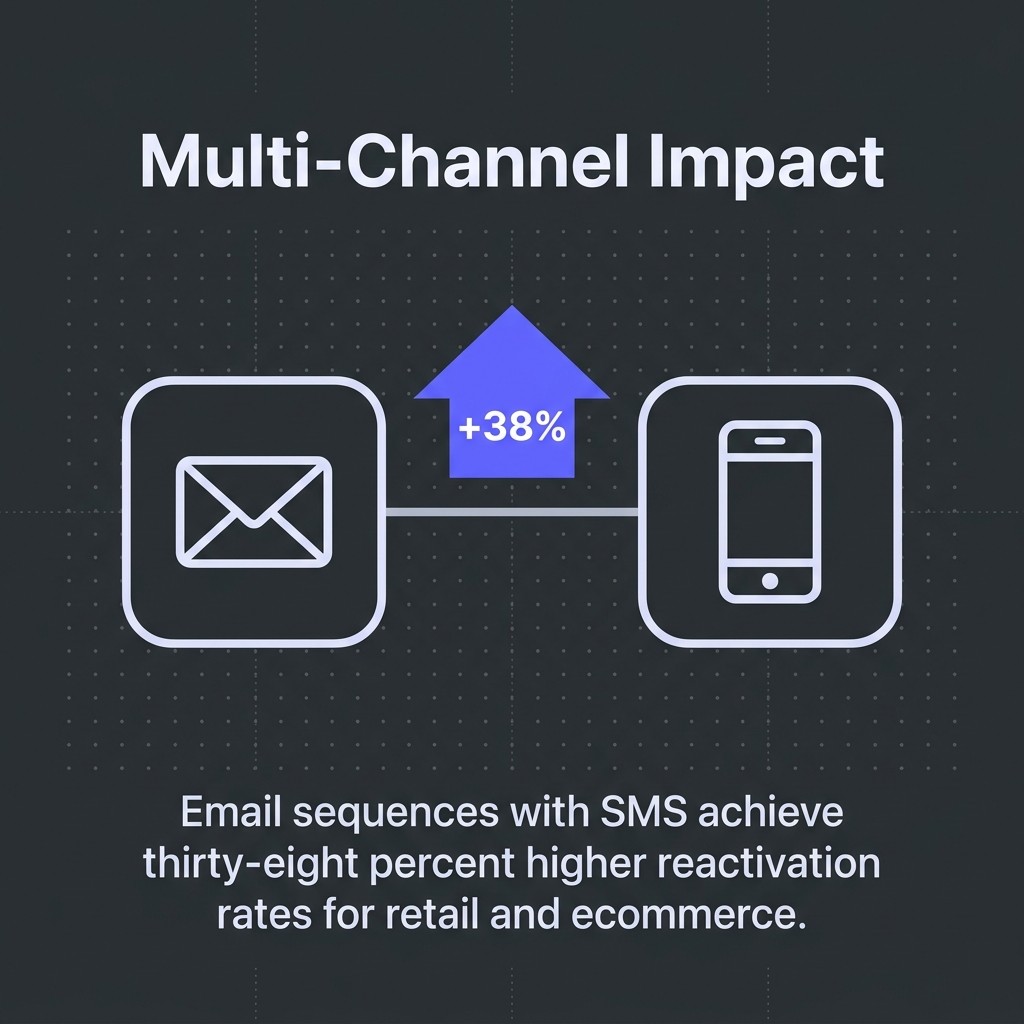
For high-value customers, consider combining email with SMS or direct mail. Email sequences with SMS achieve thirty-eight percent higher reactivation rates for retail and ecommerce.
The multi-channel sequence starts with email for initial contact. If they don't engage within seven days, follow up with SMS for higher visibility. SMS achieves ninety-eight percent open rates compared to email's twenty to thirty percent.
Your SMS should be extremely concise and value-led. "Hi [Name], we miss you at [Brand]. Here's 25% off to come back: [link]" delivers the core message without wasting characters.
For your highest-value customers, consider adding direct mail as a third touchpoint. A personalised postcard or small gift creates physical presence that digital channels can't match.
Subject Line Strategies That Drive Opens
Subject lines determine whether your carefully crafted winback campaign ever gets read. Most winback emails fail not because of poor offers or weak copy, but because the subject line didn't earn the open.
The best performing subject lines balance clarity with curiosity, urgency with value, and personalisation with brand voice. Generic subjects get ignored. Overly clever subjects confuse. The sweet spot communicates both what the email contains and why it matters now.
Personalisation That Goes Beyond First Names
Including first names improves open rates, but personalisation based on purchase behaviour performs even better. Reference specific products they bought, categories they browsed, or time since their last order.
Product-specific subjects:
- Missing your usual [Product Name]?
- Time to restock your [Product Category]
- New arrivals in [Category They Purchased]
- Your favourite [Product] just got better
Time-based personalisation:
- It's been [X days] since we've seen you
- 90 days without [Product Category], everything okay?
- Your [Month] order was our last together
Urgency Without False Scarcity
Urgency drives action, but fake urgency damages trust. Use real deadlines tied to legitimate business reasons rather than arbitrary countdown timers.
Legitimate urgency subjects:
- Your account expires in 48 hours
- Final email before we remove you from our list
- Last day: 25% off for returning customers
- Your saved items are about to expire
- Confirm you still want emails from us
These subjects work because the urgency is real. You genuinely plan to clean your list, the discount genuinely expires, or the saved items genuinely won't persist forever.
Question-Based Subjects That Spark Curiosity
Questions work when they address genuine customer concerns or create curiosity about something valuable. Avoid questions that feel manipulative or obviously rhetorical.
Effective question subjects:
- Did we do something wrong?
- What would it take to win you back?
- Have you found a better alternative?
- Are you still interested in [Category]?
- Can we tempt you back?
These questions either request genuine feedback or acknowledge the competitive reality customers face. Both approaches feel respectful rather than manipulative.
Benefit-Led Subjects That Lead With Value
When your winback offer is genuinely compelling, leading with the benefit often outperforms clever copy. Clear value communication beats wordplay for most segments.
Direct benefit subjects:
- 25% off to welcome you back
- Free shipping on your return order
- £20 store credit waiting for you
- Your exclusive comeback offer
- We've upgraded your account to VIP
These subjects work because they answer the customer's immediate question: "What's in it for me?" The clarity removes friction and sets clear expectations.
Best Practices for Winback Flow Performance
Building the winback flow is only half the work. Optimising performance requires systematic testing, clean data hygiene, and integration with your broader retention strategy.
The brands that generate exceptional winback results treat these flows as core revenue drivers rather than afterthought campaigns. They test aggressively, segment precisely, and measure obsessively.
Test Subject Lines First, Offers Second
Subject line testing delivers the highest impact with the least effort. A subject line improvement from fifteen percent to twenty-five percent open rate increases your flow revenue by sixty-seven percent instantly.
Test subject lines in matched pairs across your segments. Emotional versus urgent. Incentive-led versus curiosity-driven. Personalised versus generic. Run each test until you reach statistical significance, then implement the winner permanently.
Once you've optimised subject lines, move to offer testing. Test discount levels, discount types, free shipping thresholds, and non-monetary incentives. Track not just conversion rate but also average order value and repeat purchase rate.
Some customers will convert with smaller incentives. Others need your strongest offer. Sequential testing helps you find the minimum effective incentive for each segment, protecting margins whilst maintaining conversion rates.
Combine Email and SMS for Maximum Impact
Multi-channel sequences consistently outperform email-only approaches for winback campaigns. The increased visibility and immediacy of SMS makes it particularly effective for customers who've stopped engaging with email entirely.
Structure your sequence with email first, SMS second. Email provides space for detailed messaging, product showcases, and social proof. SMS delivers urgent, concise follow-up for customers who didn't engage with email.
Time your SMS send seven to ten days after the initial email. This gap ensures you're reaching genuinely non-responsive customers rather than people who just haven't opened their inbox yet.
Keep SMS copy extremely focused. State the offer, create urgency, provide a link. Anything beyond fifty characters reduces effectiveness.
Clean Your List Based on Winback Results
Customers who don't respond to your complete winback sequence should be removed from your active lists. Continuing to email completely disengaged contacts damages your sender reputation and reduces deliverability for engaged subscribers.
After your final breakup email, segment non-responders into a suppression list. Remove them from regular campaigns but keep their data for potential future re-engagement if they return organically.
This list cleaning improves your email performance across all campaigns, not just winback flows. ISPs reward senders who maintain engaged lists with better inbox placement.
Consider a final opt-in campaign before complete suppression. Ask non-responders to explicitly confirm they want to keep receiving emails. Some customers will confirm, giving you permission to continue. Others won't respond, confirming they should be removed.
Track Revenue Attribution Accurately
Measuring winback flow performance requires tracking both immediate conversion and longer-term customer behaviour. A customer who returns after a winback campaign might generate significant revenue over the following months.
Track these metrics for winback flow performance:
MetricWhat It MeasuresWhy It MattersFlow open ratePercentage who open any email in sequenceIndicates subject line and send time effectivenessFlow click ratePercentage who click any link in sequenceShows message relevance and offer appealConversion ratePercentage who make a purchaseMeasures ultimate flow successRevenue per recipientTotal revenue divided by sequence sendsShows true flow value including non-converters90-day repeat ratePercentage who buy again within 90 daysIndicates whether you've truly reactivated them
Win-back rates cluster between fifteen and thirty percent for healthy reactivation campaigns. If your conversion rate falls below fifteen percent, your segmentation, timing, or offers likely need adjustment.
Integrate Winback with Your Lifecycle Strategy
Winback flows shouldn't operate in isolation. They're one component of a complete customer lifecycle management system.
Customers who convert through winback campaigns should re-enter your standard post-purchase flows immediately. Treat them like new customers for the first thirty days, then transition back to your regular retention sequences.
Use winback conversion data to improve earlier lifecycle touchpoints. If many customers lapse at the ninety-day mark, your sixty-day retention campaigns might need strengthening. Winback success reveals gaps in your earlier retention efforts.
Consider building win-prevention flows that trigger before customers reach lapsed status. A sixty-day engagement campaign for customers approaching your ninety-day lapsed definition can prevent winback situations entirely.
Maintain Consistent Brand Voice Throughout
Your winback campaigns should sound like natural extensions of your brand, not desperate pleas from a different company. Customers notice when tone shifts dramatically between regular campaigns and winback sequences.
If your brand voice is typically premium and refined, don't suddenly switch to aggressive discounting language in winback flows. Maintain your positioning whilst still creating compelling offers.
If your brand is playful and casual, let that personality shine through winback messaging. Humour can diffuse the awkwardness of re-engagement when used appropriately.
The goal is making customers feel like returning to a brand they know and trust, not discovering a completely different company trying to win them back.
Advanced Segmentation for Complex Catalogues
Brands with large product catalogues face unique winback challenges. A customer who bought running shoes shouldn't receive winback emails featuring formal wear, even if both products exist in your catalogue.
Category-based segmentation becomes essential for relevance. Use purchase history to determine which product categories each customer cares about, then build winback flows specific to those categories.
Browse Abandonment Data Enhances Purchase History
Combine purchase history with browse abandonment data for more precise targeting. A lapsed customer who recently browsed new arrivals in their previous purchase category shows higher intent than someone who hasn't visited your site in months.
Create segments that layer engagement signals onto purchase behaviour. Recent browsers get different messaging than complete ghosting customers. The former might just need a gentle nudge. The latter requires stronger intervention.
Use browsing data to personalise product recommendations within your winback emails. If they viewed specific items recently, feature those products prominently in your winback campaign.
Seasonal Purchase Patterns Inform Timing
Some customers buy seasonally rather than on regular cycles. A customer who purchases winter clothing every November but goes silent in spring isn't truly lapsed. They're seasonal.
Identify seasonal purchase patterns by analysing purchase dates across your customer base. If significant portions of your audience buy during specific months, adjust your lapsed definitions accordingly.
Build seasonal anticipation campaigns that trigger before expected purchase windows rather than treating seasonal customers as lapsed. A September email to winter clothing buyers creates anticipation. A May winback campaign to the same customers wastes resources.
Geographic and Demographic Factors
Location and demographic data can inform both timing and messaging for winback campaigns. Customers in different regions might have different needs, competitive pressures, or seasonal patterns.
Use location data to personalise inventory mentions. Highlighting products available in their area or shipping times to their location creates practical relevance that generic messaging can't match.
Consider cultural and demographic factors in your messaging approach. Winback campaigns that work brilliantly for one demographic segment might completely miss with another. Test messaging approaches across your demographic segments separately.
Common Winback Flow Mistakes to Avoid
Most winback flows fail due to preventable mistakes rather than complex strategy errors. Avoiding these common pitfalls improves results immediately.
Leading with Maximum Discounts
Many brands panic and immediately offer their strongest discount in the first winback email. This approach leaves no room for escalation and trains customers to wait for maximum discounts before purchasing.
Build graduated incentive structures instead. Start with value reminders and modest offers. Escalate to stronger incentives only for customers who don't convert on lighter touches.
This approach protects margins by only discounting as heavily as necessary whilst still converting customers who would have returned with smaller incentives.
Ignoring Mobile Optimisation
Winback emails must work perfectly on mobile devices. Many lapsed customers primarily check email on phones, and poor mobile experiences kill conversion regardless of offer quality.
Test every winback email on multiple mobile devices before launching. Check image loading, CTA button sizes, and copy readability on small screens. A CTA that looks perfect on desktop but requires pinch-zooming on mobile destroys your conversion rate.
Keep mobile-first design principles central: large touch targets, concise copy, single-column layouts, and fast-loading images.
Forgetting to Suppress Recent Purchasers
Always suppress customers who've purchased recently from your winback flows. Nothing damages customer relationships faster than receiving "we miss you" emails days after making a purchase.
Set suppression rules based on your typical shipping and delivery times. A customer who ordered five days ago but hasn't received their package yet shouldn't see winback messaging.
Check that your flows properly exclude active subscribers and recent converters from other campaigns. Receiving multiple conflicting messages creates confusion and damages brand perception.
Not Testing Send Times
Winback email performance varies significantly based on send time. The optimal time depends on your audience's behaviour patterns and the urgency of your messaging.
Test send times systematically across your segments. B2C brands often see strong performance with evening sends when customers browse leisurely. B2B audiences might respond better to mid-morning sends during work hours.
Consider day-of-week performance as well. Some brands find midweek sends outperform Monday or Friday campaigns. Others see weekend spikes for specific product categories.
Overlooking Unsubscribe Patterns
Monitor unsubscribe rates carefully throughout your winback sequence. Unusually high unsubscribes indicate messaging problems, timing issues, or audience mismatch.
If your first winback email generates normal unsubscribe rates but subsequent emails spike, your frequency or escalation strategy might be too aggressive. Pull back the sequence timing or reduce the number of touches.
Some unsubscribes are healthy. Customers who clearly don't want your emails anymore should be allowed to leave cleanly. Focus on keeping unsubscribe rates reasonable rather than preventing all unsubscribes.
Make Retention Inevitable
Most ecommerce brands treat winback flows as an afterthought. They build basic sequences with generic messaging and wonder why results disappoint.
The brands that generate exceptional winback results approach these campaigns with the same rigour they apply to acquisition. They segment precisely based on purchase behaviour and engagement signals. They test systematically across subject lines, offers, and timing. They measure not just immediate conversion but longer-term reactivation and repeat purchase rates.
Your winback flow should trigger when customers cross your specific lapsed threshold, which you've calculated based on actual purchase cycle data rather than arbitrary timeframes. The sequence should escalate both urgency and incentive value across three to five emails, giving customers multiple opportunities to re-engage at different motivation levels.
Start with your highest-value lapsed customers. Build a dedicated flow for customers who've generated significant revenue but haven't purchased recently. Test subject lines that reference their specific purchase history. Craft offers substantial enough to overcome whatever drove them away.
Once that high-value flow performs consistently, expand to broader lapsed segments. One-time buyers need different messaging than repeat customers. Recent lapses require lighter touches than customers who've been gone for months.
Every customer you successfully reactivate generates revenue without acquisition costs. Every winback flow improvement compounds across your entire customer base. The economics make retention optimisation one of the highest-ROI activities in ecommerce marketing.
Your lapsed customers represent proven demand for your products. They've already cleared the trust barrier and demonstrated purchase intent. The work required to win them back is a fraction of what new customer acquisition demands.
Ready to make retention inevitable? Get a free Klaviyo audit and discover exactly which winback opportunities you're missing in your current setup.
.jpg)
.jpg)