What Is Klaviyo? Complete Platform Overview [2026]
Klaviyo is a marketing automation platform built specifically for e-commerce brands that unifies customer data, email marketing, and SMS into one system designed to drive repeat purchases and revenue growth. Unlike generic email tools, Klaviyo pulls real-time shopping behaviour, purchase history, and browsing data from your store to trigger personalised messages at exactly the right moment in the customer lifecycle. The platform integrates with Shopify, WooCommerce, Magento, and over 300 other platforms to synchronise every customer touchpoint, creating automated flows that recover abandoned carts, welcome new subscribers, and bring back lapsed customers without manual intervention.
Most e-commerce stores leave revenue on the table because their email platform can't act on customer behaviour in real time. Klaviyo fixes that problem by connecting directly to your store's data and turning every action into an automation opportunity.
You'll see how Klaviyo works across the entire customer lifecycle. We'll cover its core features, marketing automation capabilities, integration ecosystem, and pricing structure. You'll also get clarity on who actually needs Klaviyo versus simpler alternatives, plus actionable steps to evaluate whether it's the right platform for your store's current revenue stage.
The Marketing Automation Platform Built for E-commerce
Klaviyo positions itself as a customer data platform combined with email and SMS marketing automation. It's not a generic marketing tool adapted for e-commerce. It's purpose-built for online retail.
The platform stores every customer interaction in unified profiles. Browsing history, purchase records, email engagement, SMS responses, and custom properties all live in one centralised database. This creates a single source of truth for each contact, which flows into every campaign and automated flow you send.
Founded in 2012 by Andrew Bialecki and Ed Hallen in Boston, Klaviyo emerged when e-commerce brands needed better data integration than traditional email platforms offered. Early adopters wanted tools that could segment audiences based on actual purchase behaviour, not just open rates. That core philosophy still drives the platform today.
The system automatically syncs with your e-commerce platform every time a customer browses a product, adds to cart, completes a purchase, or abandons checkout. You don't manually upload CSV files or update segments. Klaviyo pulls fresh data constantly and recalculates segments in real time.
Email Marketing Capabilities That Drive Revenue
Email marketing in Klaviyo operates across two main formats: one-off campaigns and automated flows. Campaigns go to defined segments at scheduled times. Flows trigger automatically based on customer actions or conditions.
The platform includes a drag-and-drop email builder with pre-designed templates optimised for e-commerce. You can insert product feeds, personalised recommendations, dynamic discount codes, and countdown timers directly into emails. Each element pulls data from your product catalogue and customer profiles.
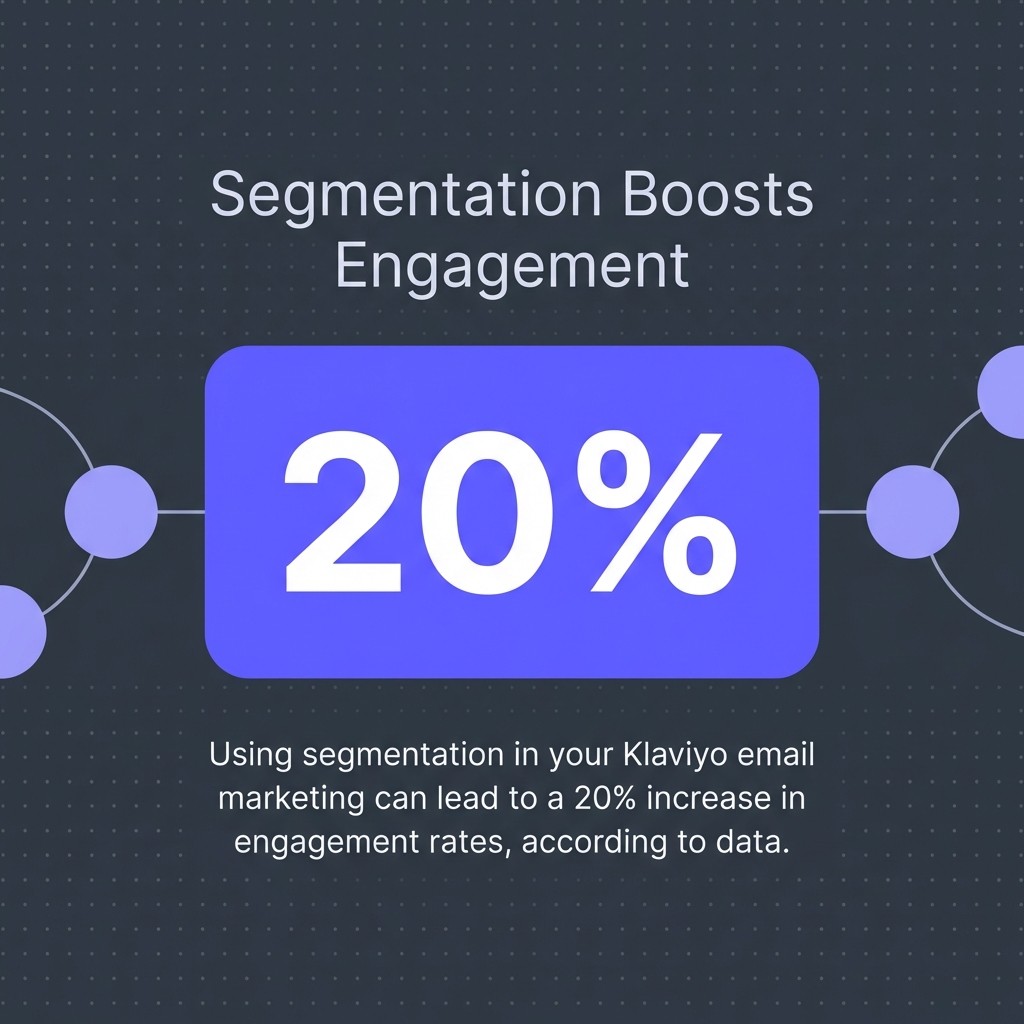
Segmentation determines campaign performance. Klaviyo lets you create segments based on predicted next purchase date, total customer value, products viewed, abandoned cart value, geographic location, and dozens of other data points. Klaviyo's segmentation feature can increase engagement by 20% compared to basic list sends.
A/B testing runs on subject lines, send times, content variations, and sender names. The platform automatically sends the winning version to the remaining audience. You set the test percentage and winning metric.
Email FeatureCapabilityBusiness ImpactDynamic product feedsAuto-populate products based on browsing historyHigher click-through on personalised recommendationsPredictive analyticsExpected next order date and churn riskTargeted win-back campaigns before customers lapseSmart sendingOptimal send time per recipientImproved open rates through timing optimisation
Deliverability tools include domain authentication setup, spam testing, and engagement-based suppression. The platform monitors sender reputation and provides recommendations to maintain inbox placement.
Personalised emails in Klaviyo have shown 60% higher conversion rates compared to generic batch sends. That performance gap comes from behavioural triggers and dynamic content working together.

Campaign Creation and Management
Creating a campaign starts with segment selection. You choose who receives the email based on any combination of customer properties, behaviour, or engagement history. The segment updates dynamically until you send.
The content editor supports HTML and plain text. You can save reusable blocks for headers, footers, product grids, and promotional sections. Template libraries organise designs by campaign type.
Scheduling allows immediate sends, future dates, or optimal send time based on each recipient's engagement patterns. You can also set campaigns to send when a segment reaches a certain size.
Performance Tracking and Attribution
Campaign reporting shows opens, clicks, conversions, and revenue attributed to each send. Klaviyo tracks purchases back to the email that drove them, even if the customer clicks multiple emails before buying.
The platform assigns conversion windows (typically 5 days for email, 1 day for SMS) to attribute revenue accurately. You see which campaigns drive sales and which generate engagement without purchases.
Cohort analysis compares performance across customer segments. You can identify which product categories drive the highest engagement or which acquisition sources produce the most responsive email subscribers.
SMS Marketing Functionality
SMS marketing in Klaviyo works similarly to email but optimised for mobile immediacy. Messages trigger based on the same customer data and behaviour that powers email flows.
The platform supports two-way conversations. Customers can reply to SMS messages, and responses appear in your Klaviyo inbox. You can set up keyword triggers for automated responses or route conversations to your support team.
Compliance tools handle opt-in collection, unsubscribe requests, and regulatory requirements across different regions. Klaviyo automatically manages consent records and suppression lists to keep you compliant with TCPA, GDPR, and other regulations.
SMS credits operate separately from email sending. You purchase credits based on expected volume, and costs vary by country and message length. Pricing typically ranges from £0.01 to £0.05 per message depending on destination.
- Abandoned cart recovery via SMS typically converts 3-5% of recipients within 1 hour
- Order confirmation and shipping updates maintain high engagement without feeling promotional
- Flash sales and time-sensitive offers drive immediate action through mobile urgency
- Back-in-stock alerts for waitlisted products capture ready-to-buy customers
The platform automatically tracks SMS attribution the same way it tracks email revenue. You see exactly which messages drive purchases and calculate ROI per campaign or flow.
Marketing Automation Flows That Run Your Retention
Flows are Klaviyo's automated sequences triggered by customer actions or time delays. They run continuously in the background, sending the right message to the right person at the right moment.
Each flow starts with a trigger: someone subscribes, abandons a cart, makes a purchase, or hits a specific date. The flow then sends a series of emails or SMS messages based on conditions you define.
Welcome flows activate when someone subscribes to your list. They typically include 3-5 messages over 7-14 days, introducing your brand, sharing social proof, and offering a first-purchase incentive. These flows convert 15-25% of new subscribers into customers.

Abandoned cart flows trigger when someone adds products but doesn't complete checkout. The sequence usually sends 2-3 reminders over 24-72 hours, often including a discount escalation. Well-optimised abandoned cart flows recover 25-40% of lost sales.
Post-purchase flows nurture customers after they buy. They might include order confirmation, shipping updates, product education, review requests, and cross-sell recommendations. The goal is moving customers towards a second purchase within 30-60 days.
Conditional splits let you branch flows based on customer behaviour. If someone opens but doesn't click, they get a different follow-up than someone who clicks but doesn't buy. This creates personalised journeys without manual intervention.
Flow analytics show entry counts, conversion rates, revenue per recipient, and drop-off points. You identify where customers exit the sequence and optimise those specific messages.
Building and Optimising Automated Sequences
Flow creation starts with selecting a trigger type. Klaviyo offers metric-based triggers (someone does something), date-based triggers (anniversary, birthday), and segment-based triggers (someone enters a list).
Time delays control message spacing. You set how long to wait between emails, often using dynamic delays based on customer timezone or engagement patterns. Smart sending prevents messages from going out at inconvenient times.
Each flow step includes conditional logic. You can check if someone purchased, opened a previous email, belongs to a specific segment, or meets any custom criteria before sending the next message.
Testing flows involves small initial audiences before scaling. You monitor conversion rates, unsubscribe rates, and revenue attribution. Adjustments focus on timing, messaging, and incentive structures based on performance data.
Customer Data Platform and Segmentation
Klaviyo functions as a customer data platform that stores every interaction in unified profiles. Each profile contains contact information, purchase history, browsing behaviour, email engagement, SMS responses, and custom properties you define.
The platform creates profiles automatically when someone subscribes, makes a purchase, or interacts with your store. It merges duplicate profiles based on email address or phone number, maintaining one complete record per customer.
Segmentation operates on any data point in these profiles. You build segments using conditions, filters, and logic groups. Common segments include recent purchasers, high-value customers, engaged subscribers, product-specific buyers, and geographic locations.
Predictive analytics layers on top of historical data. Klaviyo calculates expected next order date, churn risk, predicted customer lifetime value, and likelihood to purchase specific products. These predictions update continuously as new data arrives.
Custom properties let you track business-specific data. You might store customer preferences, loyalty tier status, product warranties, subscription renewal dates, or any other relevant information. This data then becomes available for segmentation and personalisation.
Active Profiles and Contact Management
Klaviyo charges based on active profiles, not total contacts. An active profile is someone who's engaged with email or SMS in the last 6 months, or made a purchase regardless of engagement.
Suppressed profiles don't count towards your billing limit. These include unsubscribed contacts, hard bounces, and manually suppressed emails. You can store unlimited suppressed profiles without additional cost.
The platform automatically moves inactive profiles to a lower-cost tier after 6 months of no engagement. This keeps pricing aligned with your actually reachable audience rather than penalising list growth.
Profile management includes bulk import, export, merge, and deletion tools. You can clean your list, remove duplicates, and update contact information through CSV uploads or API integrations.
E-commerce Platform Integrations
Klaviyo's integration ecosystem connects your marketing automation to sales platforms, customer service tools, advertising networks, and analytics systems. The platform maintains official integrations with major e-commerce platforms and thousands of apps.
The Shopify integration is Klaviyo's most developed connection. It syncs orders, products, customers, and inventory in real time. Shopify's transactional email service uses Klaviyo where configured, creating seamless order confirmation and shipping notification flows.
WooCommerce, Magento, and BigCommerce integrations offer similar functionality. They pull product catalogues, track checkout behaviour, sync customer data, and enable cart recovery without custom development.
The platform also connects to advertising networks like Facebook and Google Ads. You can sync customer segments for retargeting, exclude recent purchasers from acquisition campaigns, and track ad-driven email signups.
- Customer service platforms like Gorgias and Zendesk share support ticket data
- Review platforms like Yotpo and Reviews.io trigger review request flows
- Loyalty programmes like Smile.io sync points balances and reward tiers
- Subscription platforms like ReCharge enable subscription-specific messaging
Custom integrations work through Klaviyo's API. Developers can push events, update profiles, trigger flows, and pull reporting data. The API supports most use cases that aren't covered by pre-built integrations.
Data Synchronisation and Real-Time Updates
Integrations sync data bidirectionally in most cases. When a customer updates their email in Shopify, Klaviyo updates the profile automatically. When someone unsubscribes in Klaviyo, that suppression syncs back to your e-commerce platform.
Real-time syncing means flows trigger within seconds of customer actions. Someone abandons a cart at 2pm, and the first recovery email sends at 2:15pm. This immediacy improves conversion rates compared to delayed batch processing.
Historical data imports during initial setup. Klaviyo pulls past orders, customer records, and product catalogues to build complete profiles from day one. This enables immediate segmentation based on purchase history without waiting for new data.
Pricing Structure and Plan Options
Klaviyo pricing operates on a tiered structure based on active profile count. As your list grows, the monthly cost increases across defined thresholds. Email is included in all plans, whilst SMS requires separate credit purchases.
The free plan covers up to 250 email contacts and 150 SMS contacts. It includes basic email campaigns, essential flows, and limited segmentation. Most stores outgrow this within 3-6 months of consistent list growth.
Paid plans start at approximately £20-£30 monthly for 251-500 contacts and scale upward. By 5,000 contacts, you're typically paying £100-£150 monthly. At 25,000 contacts, costs reach £500-£700 monthly depending on features selected.
Email sending is unlimited across all paid plans. You're not charged per message sent, only for the number of contactable profiles in your account. This makes high-frequency campaigns economical compared to per-send pricing models.
SMS operates separately with pay-as-you-go credits. UK messages cost roughly £0.01-£0.02 each, US messages £0.01, and international rates vary. You purchase credits in bundles and they roll over month to month.
For detailed UK-specific pricing breakdowns and cost optimisation strategies, see our complete Klaviyo pricing guide for 2026.
The platform includes all features across paid tiers. You're not locked out of automation capabilities or segmentation tools at lower price points. The only variable is contact count and support level.
Evaluating Return on Investment
Klaviyo justifies its cost when it generates more revenue than it costs. Most stores see positive ROI once monthly revenue exceeds £30,000-£50,000, where improved retention and cart recovery outweigh platform fees.
Calculate your potential return by estimating abandoned cart recovery value (typically 25-40% of abandonment value), welcome series conversions (15-25% of new subscribers), and repeat purchase uplift (10-20% improvement in 60-day repurchase rate).
Smaller stores under £30,000 monthly revenue often find simpler, cheaper platforms adequate. The advanced segmentation and predictive analytics don't deliver enough additional revenue to offset Klaviyo's premium pricing at that scale.
Larger operations see Klaviyo's capabilities translate directly to revenue gains. Better customer lifecycle management, sophisticated flows, and data-driven segmentation create measurable improvements in retention metrics and customer lifetime value.
Who Actually Needs Klaviyo
Klaviyo suits e-commerce brands prioritising retention marketing and customer lifecycle management. If you're focused on driving repeat purchases, recovering abandoned carts, and maximising customer value, the platform delivers tools purpose-built for those outcomes.
The platform makes most sense for stores with established customer bases generating at least £50,000 monthly revenue. At that scale, even small improvements in retention metrics produce enough additional revenue to justify the platform cost and implementation effort.
D2C brands benefit particularly from Klaviyo's deep e-commerce integrations. If you sell primarily through Shopify, WooCommerce, or similar platforms, the native connections provide immediate data synchronisation and behavioural triggers without custom development.
Brands with complex product catalogues, multiple purchase cycles, or subscription models leverage Klaviyo's segmentation and flow capabilities effectively. The platform handles nuanced customer journeys better than generic email tools.
Conversely, stores under £30,000 monthly revenue typically don't need Klaviyo's full capabilities. Shopify Email or simpler alternatives like Mailchimp often suffice until retention becomes a primary growth lever.
Common Scenarios Where Klaviyo Fits
You're likely ready for Klaviyo if you're currently losing revenue to abandoned carts that basic recovery emails aren't capturing. The platform's sophisticated flows and behavioural triggers recover more sales than simple reminder sequences.
If your customer data lives across multiple systems and you can't easily segment based on purchase behaviour, Klaviyo's unified profiles solve that fragmentation. You gain one complete view of each customer across all touchpoints.
Brands struggling with one-time purchasers who never return benefit from Klaviyo's post-purchase flows and replenishment sequences. The platform automates the nurture process that moves customers towards second and third purchases.
When you've outgrown your current email platform's segmentation limits or automation capabilities, Klaviyo provides the next tier of sophistication without jumping to enterprise-level complexity.
Getting Started With Klaviyo
Start by connecting Klaviyo to your e-commerce platform through the native integration. The setup wizard walks through authentication, data synchronisation preferences, and initial list imports.
Allow 24-48 hours for historical data to populate. The platform pulls past orders, customer records, and product catalogues to build complete profiles. This initial sync creates the foundation for accurate segmentation.
Configure your essential flows first: abandoned cart recovery, welcome series, and post-purchase sequences. These three flows drive the majority of automated revenue in most Klaviyo accounts. Use Klaviyo's pre-built templates as starting points and customise messaging to match your brand.

Set up basic segments for engaged subscribers, recent purchasers, and lapsed customers. These segments power your first campaigns and help you understand audience composition before building more complex segmentation logic.
- Connect your e-commerce platform and verify data is syncing correctly
- Import your existing email list and ensure suppression lists transfer properly
- Configure domain authentication for optimal email deliverability
- Build your first three automated flows using templates
- Create 3-5 core segments based on engagement and purchase behaviour
- Send your first segmented campaign to test deliverability and engagement
- Monitor flow performance for 14 days before optimising timing and messaging
The platform includes guided onboarding for paid accounts. Take advantage of setup support to avoid common configuration mistakes that hurt deliverability or automation performance.
For stores serious about retention, our team helps you move beyond basic setup to flows actually optimised for your customer lifecycle. Learn more about which Klaviyo flows actually drive results versus which ones waste your time.
Key Questions About Klaviyo
What is the difference between Klaviyo and Shopify?
Klaviyo is a dedicated email marketing platform offering advanced segmentation, multi-step automation, and predictive analytics for e-commerce. Shopify Email is a basic, integrated email tool with simple automations and limited customisation. Klaviyo suits growth-phase stores, whilst Shopify Email suits beginners.
Is Klaviyo paid or free?
Klaviyo offers a free plan for up to 250 email contacts and 150 SMS contacts. Paid plans start at approximately £20-£30 monthly for 251-500 contacts and scale based on your active profile count. Email sending is unlimited on paid plans, whilst SMS requires separate credit purchases.
Can I use Klaviyo without an e-commerce platform?
Yes, but you lose most of Klaviyo's value. The platform is built for e-commerce integrations that pull purchase data, browsing behaviour, and product catalogues. Without those connections, you're essentially using an expensive email tool without the behavioural triggers and segmentation that justify the cost.
How long does it take to see results from Klaviyo?
Most stores see immediate impact from abandoned cart flows within the first week. Welcome series and post-purchase flows build momentum over 30-60 days as more customers enter the sequences. Full retention improvements typically become measurable after 90 days of consistent operation.
Making Retention Inevitable
Klaviyo gives e-commerce brands the automation infrastructure to turn one-time buyers into repeat customers systematically. The platform connects customer data, marketing channels, and behavioural triggers into flows that run your retention strategy without constant manual intervention.
Most stores don't fail at retention because they lack ideas. They fail because executing those ideas manually doesn't scale. Klaviyo automates the execution whilst keeping personalisation intact.
The platform makes sense when retention becomes your primary growth lever. If you're acquiring customers profitably but losing them after one purchase, Klaviyo's lifecycle flows address that specific problem. If you're still figuring out product-market fit or struggling to drive initial sales, invest elsewhere first.
Start with the free plan to test basic functionality. Build your three essential flows. Monitor performance for 30 days. If those flows generate measurable revenue, scaling to a paid plan becomes an obvious investment rather than a hopeful expense.
Ready to see what properly optimised Klaviyo flows actually look like? Our audits show exactly where your current setup is leaving revenue on the table and which fixes drive the fastest returns. Get a free Klaviyo audit and discover what's holding your flows back.
.jpg)
.jpg)