
Klaviyo vs Omnisend vs Drip: Honest Comparison
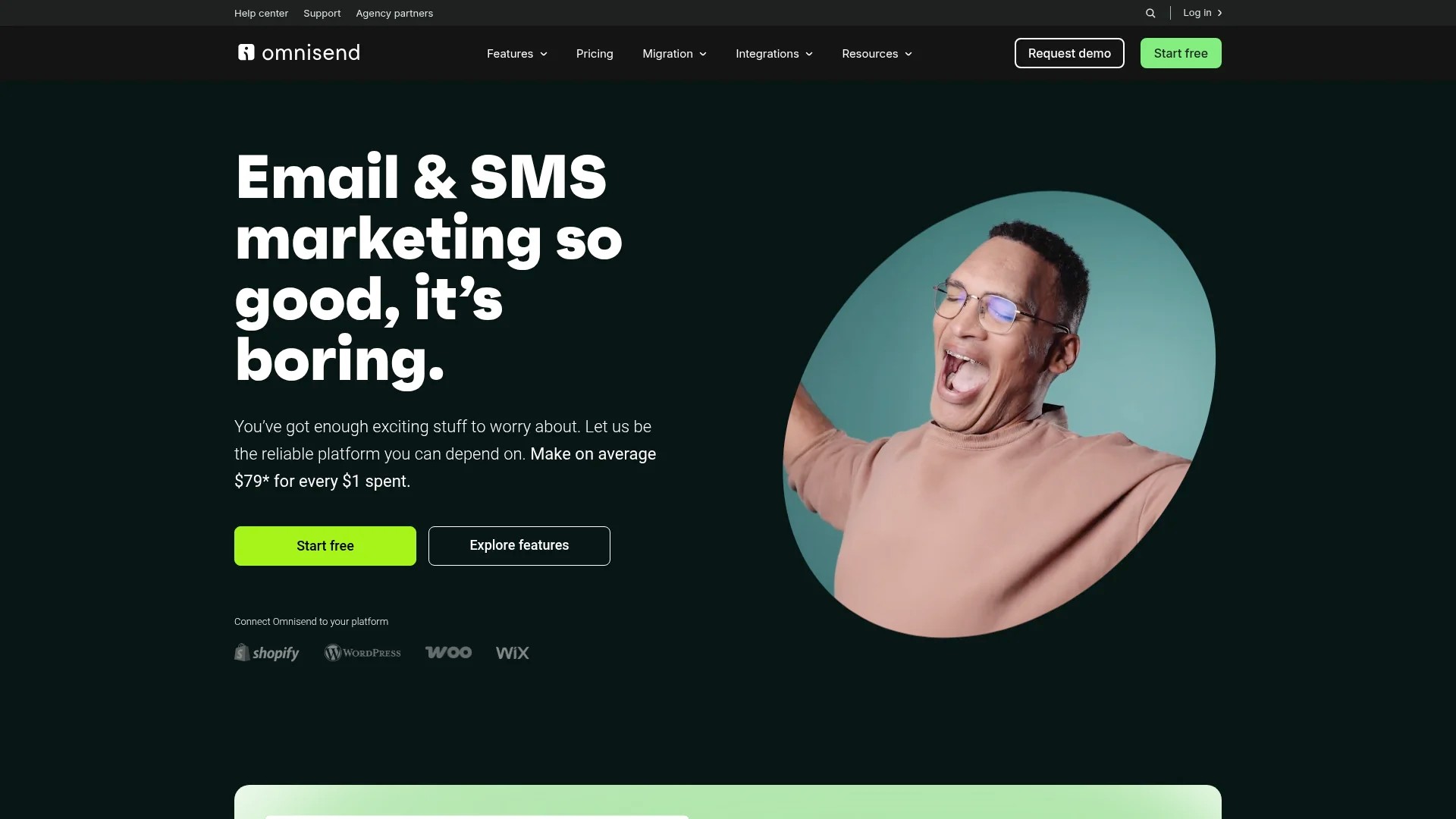
Most ecommerce brands waste money choosing the wrong email platform. The difference between Klaviyo and Omnisend isn't just features—it's about whether you're optimising for immediate simplicity or future scale. Omnisend offers free plans with support and positions itself as the beginner-friendly option, whilst Klaviyo is recognized as more feature-rich and complex for brands serious about retention. Drip sits somewhere in the middle, targeting growing D2C brands who've outgrown basic tools but aren't ready for Klaviyo's learning curve.
Here's what matters: pricing scales dramatically as your contact list grows. Small businesses pay pennies, but at 50,000 contacts, you're looking at hundreds monthly. The platform you choose now determines your costs in 18 months.
We'll compare pricing across five contact tiers (250 to 50,000), examine free plans, test email editors, analyse automation depth, and show you exactly when each platform makes financial sense. You'll also understand SMS costs, segmentation capabilities, and which tool delivers the best ROI for your specific situation.
Quick Summary: Which Platform Wins Where
The right platform depends entirely on your current size and technical skills. Here's the honest assessment.
Omnisend is positioned as more ecommerce-focused and user-friendly. It's ideal for beginners or small teams without dedicated developers. The drag-and-drop builder requires zero coding knowledge, and you can launch campaigns within minutes of signing up.
Klaviyo dominates for brands serious about retention marketing. The platform offers deeper segmentation, advanced predictive analytics, and behaviour-based automation that Omnisend can't match. Expect a steeper learning curve—most teams need 2-4 weeks to feel comfortable.
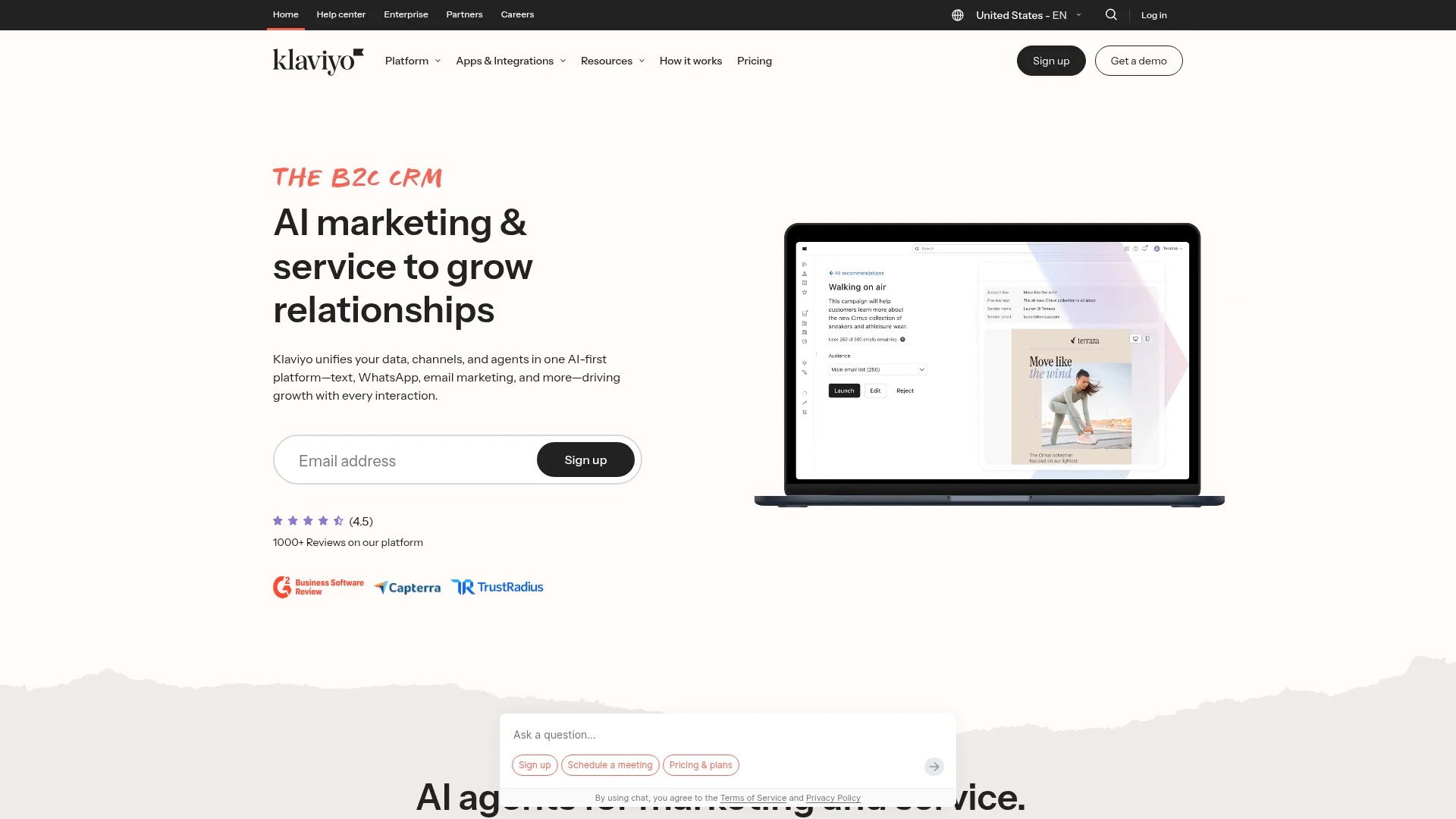
Drip targets the middle ground. It's more sophisticated than Omnisend but less overwhelming than Klaviyo. Perfect for growing D2C brands with 5,000-15,000 contacts who need solid automation without enterprise complexity.
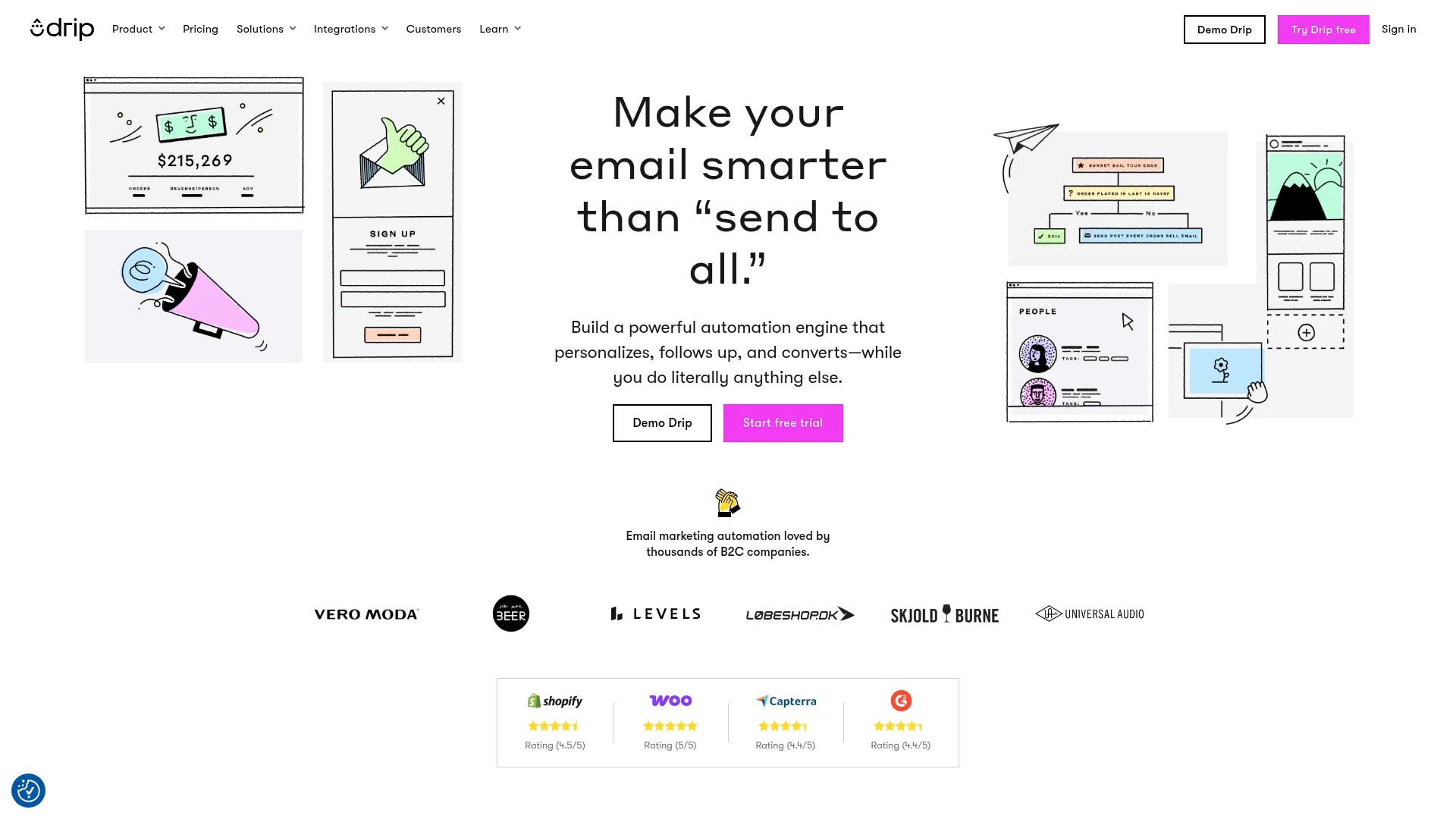
PlatformBest ForStarting PriceKey StrengthOmnisendBeginners, small teamsFree (up to 250 contacts)Ease of useKlaviyoGrowth brands, retention focusFree (up to 250 contacts)Advanced segmentationDripMid-market D2C£39/month (2,500 contacts)Balance of power/simplicity
Cost becomes the deciding factor at scale. A brand with 10,000 contacts pays roughly £50/month for Omnisend, £100/month for Klaviyo, and £99/month for Drip. At 50,000 contacts, those numbers jump to £400+, £700+, and £184/month respectively.
Pricing Comparison: The Real Cost at Every Stage
Pricing structures reveal where each platform wants you to spend money. All three use contact-based pricing, but the way they calculate costs differs significantly.
Understanding Contact-Based Pricing Models
Omnisend charges based on total contacts in your account. If you have 5,000 subscribers but only email 2,000, you still pay for 5,000. The pricing includes email sends, but SMS costs extra per message.
Klaviyo works similarly but bundles SMS credits into higher tiers. You pay for profiles (contacts with any data), not just email subscribers. This gets expensive fast if you're collecting customer data from multiple touchpoints.
Drip uses a simpler model focused purely on active contacts. If someone hasn't engaged in 60 days, they don't count towards your limit. This can save you hundreds monthly compared to the other two platforms.
Monthly Costs Across Five Contact Tiers
Here's where your budget actually goes. These are UK prices as of March 2026.
ContactsOmnisendKlaviyoDrip250FreeFree£391,000£13£20£395,000£48£100£9910,000£93£150£9950,000£403£700£184

Notice how Drip's pricing remains flat between 5,000 and 10,000 contacts. This happens because they count active engagement, not total list size. For brands with healthy lists but lower engagement rates, this structure saves money.
Klaviyo's pricing jumps aggressively past 5,000 contacts. You're paying for advanced features like predictive analytics and custom reporting. If you're not using those features, you're overspending.
Hidden Costs: SMS and Add-Ons
SMS marketing adds significant costs across all three platforms. Omnisend charges £0.012 per SMS in the UK. Send 10,000 texts monthly and that's £120 on top of your base subscription.
Klaviyo bundles SMS credits into plans above £100/month but charges £0.015 per message once you exceed your allocation. Heavy SMS users often hit overages by mid-month.
Drip doesn't offer native SMS. You'll need to integrate with a third-party service like Twilio, which adds integration complexity and separate billing.
Free Plan Comparison: What You Actually Get
Free plans look generous on paper but come with frustrating limitations. Here's what's actually usable.
Omnisend's free plan supports 250 contacts and 500 emails monthly. You get basic automation (welcome series, abandoned cart), one popup, and email support. The major restriction: no SMS marketing and limited segmentation options.
Klaviyo's free plan also covers 250 contacts but includes 500 email sends. Unlike Omnisend, you get full access to segmentation, advanced reporting, and predictive analytics. The catch: learning how to use those features takes weeks.
Drip offers no free plan. Their lowest tier starts at £39/month for 2,500 contacts. This immediately eliminates them for bootstrapped startups testing email marketing for the first time.
Free Plan Limitations That Force Upgrades
Both Omnisend and Klaviyo restrict SMS on free plans. If you're running a modern ecommerce operation, SMS drives 15-25% of retention revenue. You'll upgrade within months to unlock this channel.

Email send limits (500/month) sound reasonable until you're sending welcome series, abandoned cart reminders, and promotional campaigns. A healthy list of 250 contacts easily requires 1,000+ sends monthly when automation is active.
Priority support only comes with paid plans. Free users wait 24-48 hours for responses. When you're troubleshooting a broken flow that's costing you sales, that delay is expensive.
Which Free Plan to Choose
Pick Omnisend if you're absolute beginners. The interface is intuitive, templates are professional, and you can launch campaigns without reading documentation. Perfect for Shopify store owners launching their first email programme.
Choose Klaviyo if you're willing to invest learning time upfront. The free plan gives you access to features that cost hundreds monthly on other platforms. Spend three weeks learning the platform whilst free, then scale on solid foundations.
Skip Drip if you need to test before committing. Their 14-day trial requires a credit card, and there's no true free tier for experimentation.
Small Business Pricing: 250-1,000 Contacts
This tier represents most new ecommerce stores. Monthly costs are manageable, but feature limitations become apparent quickly.
At 1,000 contacts, Omnisend costs £13/month. You get 6,000 emails monthly, basic automation, and web push notifications. SMS costs £0.012 per message on top of your subscription.
Klaviyo charges £20/month for 1,000 contacts with 5,000 email sends. You maintain access to advanced segmentation, A/B testing, and predictive analytics. SMS is still locked behind higher tiers or available as add-on credits.
Drip remains flat at £39/month regardless of whether you have 250 or 2,500 contacts. This makes them the most expensive option for small lists but competitive once you pass 1,500 contacts.
Feature Access at This Tier
Omnisend provides pre-built workflows for welcome series, abandoned cart, and post-purchase sequences. Templates are decent but generic. Customisation requires upgrading to higher tiers for advanced conditional splits.
Klaviyo gives you full workflow builder access even at £20/month. You can build complex flows with unlimited conditional splits, time delays based on customer behaviour, and cross-channel sequences. The challenge is knowing how to structure them properly.
Drip offers visual workflow automation at all tiers. Their "liquid" syntax allows for advanced personalisation without custom coding. Workflows can respond to browsing behaviour, purchase history, and custom events tracked from your store.
ROI Expectations for Small Businesses
Small lists (under 1,000 contacts) rarely generate enough revenue to justify complex platforms immediately. You need fundamental flows working properly before advanced features matter.
Start with Omnisend if your team has zero email marketing experience. Get welcome series and abandoned cart flowing within days. Expect 5-8% of revenue to come from automated flows within 60 days of proper setup.
Choose Klaviyo if someone on your team understands retention marketing fundamentals. The platform won't limit your strategy as you grow. Properly configured Klaviyo accounts generate 15-25% of total ecommerce revenue from email within six months.
Understanding Klaviyo's pricing structure becomes critical as your list approaches 2,000 contacts. Costs accelerate quickly past this threshold.
Growing Businesses: 5,000-10,000 Contacts
This tier represents established ecommerce brands generating £50,000-£200,000 monthly revenue. Your platform choice significantly impacts retention ROI at this stage.
Omnisend costs £48/month for 5,000 contacts and £93/month for 10,000. You get 60,000 and 120,000 email sends respectively. SMS remains pay-per-message, adding £50-£150 monthly depending on usage.
Klaviyo jumps to £100/month for 5,000 contacts and £150/month for 10,000. These tiers include SMS credits (2,500 and 5,000 credits respectively), though heavy SMS users exceed allocations quickly. You gain access to predictive analytics and advanced reporting.
Drip holds steady at £99/month for up to 5,000 contacts, then remains at £99/month for 10,000 if those contacts are actively engaged. Brands with larger lists but lower engagement rates benefit significantly from this pricing structure.
Feature Differences That Matter at Scale
Segmentation depth becomes critical when managing 5,000+ contacts. Omnisend offers basic segmentation based on purchase history, engagement, and demographics. Advanced behavioural triggers require manual workflow building.
Klaviyo's segmentation is significantly more powerful. You can create segments based on predicted lifetime value, churn probability, and complex behavioural patterns across multiple touchpoints. These segments update in real-time as customer behaviour changes.
Drip provides solid segmentation with their tagging system. Tags can be applied based on any tracked event, and workflows can add/remove tags dynamically. Less intuitive than Klaviyo but more flexible than Omnisend's basic segments.
Automation Complexity Requirements
Growing brands need lifecycle flows beyond basic welcome and abandoned cart sequences. Post-purchase nurture, win-back campaigns, VIP programmes, and browse abandonment become essential revenue drivers.
Omnisend handles these workflows adequately but lacks sophistication for complex conditional logic. You can build multi-step sequences, but personalisation is limited to basic dynamic fields like name and product viewed.
Klaviyo excels at complex automation. Understanding which flows actually drive revenue prevents you from wasting time on sequences that don't convert.
Drip's visual workflow builder sits between the two. You can build sophisticated sequences with their "liquid" templating language, allowing for advanced personalisation without custom development work.
When to Choose Each Platform at This Tier
Stick with Omnisend if ease of use remains your priority and your team lacks technical skills. The cost savings (£48 vs £100 monthly at 5,000 contacts) are significant if you're not using advanced features anyway.
Switch to Klaviyo when email drives 15%+ of revenue and you're ready to optimise aggressively. The additional £52/month pays for itself quickly when you're properly leveraging predictive segments and advanced reporting to improve conversion rates.
Consider Drip if your list is large but engagement rates are below 20%. Their active contact pricing model saves you hundreds monthly compared to paying for dormant subscribers on the other platforms.
Email Marketing Features Compared
Email creation tools differ significantly across platforms. What seems like minor interface differences translates to hours saved or wasted weekly.
Email Editor Comparison
Omnisend's drag-and-drop editor is genuinely beginner-friendly. Pre-built blocks for products, discounts, and social media snap into place instantly. Templates are mobile-responsive by default, and preview modes show exactly how emails render across devices.
Klaviyo's editor requires more setup time but offers greater flexibility. You can create custom blocks, save them to your library, and reuse across campaigns. The template syntax allows for advanced conditional content blocks that show/hide based on recipient data.
Drip's editor uses a similar drag-and-drop system but focuses heavily on text-based emails. Their philosophy favours plain-text or minimally-designed emails that feel personal. Product blocks exist but aren't as polished as Omnisend's ecommerce-focused options.
Template Libraries
Omnisend provides 100+ pre-built templates designed specifically for ecommerce. Categories include welcome series, promotional campaigns, seasonal sales, and transactional emails. Quality is consistently professional, though designs lean generic.
Klaviyo offers fewer templates (50+) but focuses on proven structures that convert. Each template comes with best-practice notes explaining why specific elements are positioned where they are. You're expected to customise heavily rather than using templates as-is.
Drip provides minimal templates, reflecting their text-first philosophy. You'll find 20-30 basic layouts, but the assumption is you'll build custom designs that match your brand closely rather than relying on pre-made options.
Mobile Responsiveness
All three platforms create mobile-responsive emails automatically. The difference lies in preview accuracy and testing capabilities.
Omnisend's preview mode shows iOS, Android, and desktop renders side-by-side. You can send test emails to multiple addresses simultaneously to verify rendering across actual email clients.
Klaviyo integrates with Litmus for advanced email testing. This add-on costs extra but shows exactly how your email renders in 90+ email clients and devices before sending. Critical for brands where email drives significant revenue.
Drip's preview is functional but basic. You see mobile and desktop views, but testing requires manually sending to different email addresses and checking devices yourself.
Dynamic Content Capabilities
Personalisation depth separates basic email platforms from retention-focused tools. Generic "Hi [First Name]" isn't enough for sophisticated ecommerce marketing.
Omnisend allows basic product recommendations based on browsing or purchase history. You can insert discount codes, show abandoned cart items, and customise content blocks based on simple conditions like customer location or subscription date.
Klaviyo's dynamic content is significantly more advanced. You can show different product recommendations based on predicted lifetime value, display personalised inventory alerts for favourited items, and adjust messaging tone based on engagement history.
Drip uses "liquid" syntax for personalisation, giving you programming-like control over content without actual coding. You can create complex if/then logic, perform calculations, and manipulate data fields to create highly personalised emails.
Automation and Workflow Capabilities
Pre-built workflows save time initially, but custom automation depth determines long-term retention success. Here's where each platform stands.
Pre-Built Flow Libraries
Omnisend includes 40+ pre-built automation workflows covering standard ecommerce scenarios. Welcome series, abandoned cart (split into browse and checkout abandonment), post-purchase thank you, win-back campaigns, and birthday/anniversary messages all come ready to activate.
Klaviyo provides fewer pre-built flows (25+) but each is more sophisticated by default. Their abandoned cart flow includes conditional splits based on cart value, previous purchase behaviour, and engagement history. You activate them and get better-than-average performance immediately.
Drip offers workflow "blueprints" rather than fully pre-built flows. You get the strategic framework and then customise based on your specific products, customer lifecycle, and business model. More work upfront but better results long-term.
Custom Workflow Builders
Building custom flows reveals each platform's true capability. Simple linear sequences work everywhere, but complex lifecycle marketing requires advanced conditional logic.
Omnisend's workflow builder handles basic conditional splits (if purchased/didn't purchase, opened/didn't open). Time delays can be fixed or based on send time optimisation. You can add multiple channels (email, SMS, web push) within single workflows.
Klaviyo's flow builder is significantly more powerful. Optimising for outcomes rather than tasks requires understanding how to leverage conditional splits based on predicted behaviours, not just past actions.
Flow re-entry criteria determine whether customers can go through the same automation multiple times. Klaviyo offers granular control here, whilst Omnisend uses simpler on/off toggles.
Drip's visual workflow builder uses a horizontal canvas that makes complex flows easier to visualise. You can see entire customer journeys on one screen, making it simpler to spot logic errors or optimisation opportunities.
Trigger Options and Flexibility
Workflow triggers determine what actions start automated sequences. Basic platforms limit you to simple events; advanced tools let you trigger on complex behavioural patterns.
Omnisend triggers include: list subscription, cart abandonment, checkout abandonment, product purchase, product viewed, birthday/anniversary dates, and specific link clicks. Sufficient for most standard ecommerce flows.
Klaviyo adds predictive triggers: high churn risk detected, customer moves into high-value segment, predicted next purchase date approaching, engagement score drops below threshold. These require 60-90 days of data to become accurate but dramatically improve retention metrics.
Drip allows custom event tracking via API, meaning you can trigger workflows based on anything happening in your ecommerce stack. Customer calls support? Trigger follow-up flow. User hits specific page five times? Trigger interest-based sequence.
Multi-Channel Automation
Modern retention marketing spans email, SMS, push notifications, and increasingly, other channels. Platform support varies significantly.
Omnisend was built for omnichannel from the start. Single workflows can include email, SMS, and web push notifications with conditional logic determining which channel each customer receives based on their preferences and engagement history.
Klaviyo handles email and SMS within the same platform but treats them as somewhat separate channels. You build flows that include both, but the interface doesn't emphasise omnichannel strategy as clearly as Omnisend does.
Drip focuses almost entirely on email. Their API allows integration with SMS providers, but you're managing two separate systems. This works fine if email remains your primary retention channel but creates friction for true omnichannel approaches.
Segmentation and Customer Data Management
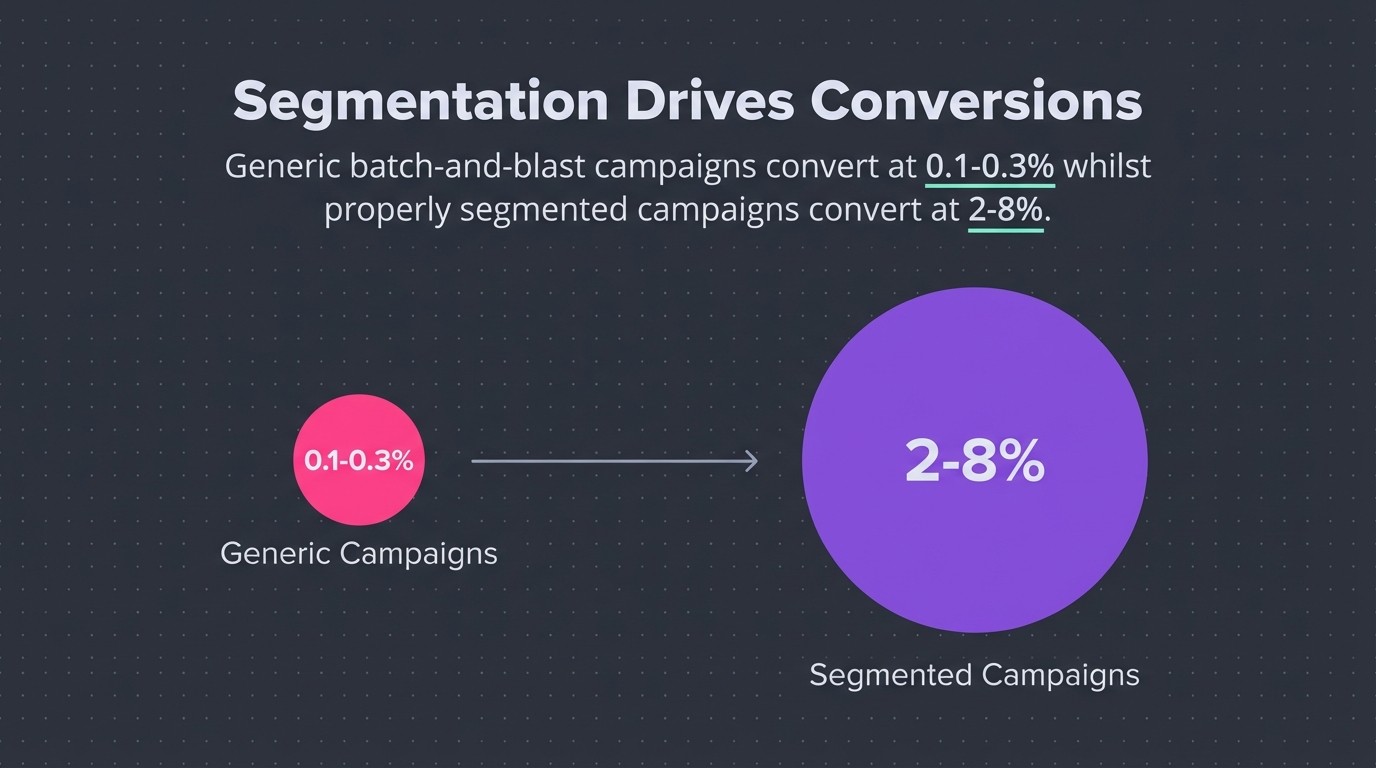
Segmentation depth directly correlates with revenue performance. Generic batch-and-blast campaigns generate 0.1-0.3% conversion rates; properly segmented campaigns convert at 2-8%.
Segmentation Capabilities
Omnisend offers segment building based on purchase history, engagement metrics (opens, clicks), location, and basic demographics. You can create segments like "Purchased in last 30 days but not last 7 days" or "Opened 3+ emails in last month but didn't purchase."
Klaviyo's segmentation is where the platform justifies its premium pricing. You can segment on predicted lifetime value, churn probability, expected next purchase date, historical spending patterns, cross-sell opportunities, and complex behavioural sequences across multiple touchpoints.
Drip uses a tag-based system rather than traditional segments. Tags are applied based on workflow actions, behaviours, or manual assignment. This approach is powerful but less intuitive for marketers accustomed to segment-building interfaces.
Predictive Analytics Features
Predictive analytics use historical data to forecast future customer behaviour. Only Klaviyo offers this natively; the others require third-party integrations.
Klaviyo's predictive analytics include: churn risk scoring, lifetime value predictions, expected next purchase date, gender prediction (based on purchasing patterns), and product affinity scoring. These predictions require 60 days of active data but become remarkably accurate by 90 days.
Omnisend lacks native predictive features. You can integrate with external analytics tools, but this adds cost and complexity. Most Omnisend users rely on reactive segmentation (what customers have done) rather than predictive (what they'll likely do).
Drip similarly lacks predictive analytics. Their lead scoring feature provides basic engagement tracking, but it's not true predictive modelling. You're building segments based on past behaviour, not forecasting future actions.
Customer Data Platform Functionality
Modern email platforms increasingly function as lightweight customer data platforms, storing and unifying customer information from multiple sources.
Klaviyo positions itself as a true customer data platform for ecommerce. Data syncs from your store, syncs with your support system, integrates with review platforms, and unifies everything into single customer profiles. This makes segmentation more powerful and personalisation more accurate.
Omnisend focuses primarily on ecommerce data. Integration with your store is seamless, but pulling in data from support tickets, reviews, or loyalty programmes requires more manual configuration or third-party tools.
Drip stores decent customer data but doesn't position itself as a CDP. The data model works well for email marketing purposes but isn't designed to be your central customer database.
Ecommerce-Specific Features
Generic email platforms handle newsletters fine. Ecommerce retention marketing requires specialised tools built around products, purchases, and customer lifecycles.
Product Recommendation Engines
Automated product recommendations drive 10-15% of email-attributed revenue when configured properly. Implementation quality varies dramatically.
Omnisend includes basic product recommendation blocks: frequently bought together, recently viewed, bestsellers, and related products. Recommendations are decent but not particularly intelligent; they're based on simple collaborative filtering rather than true machine learning.
Klaviyo's product recommendations use machine learning to improve over time. The algorithm considers purchase history, browsing behaviour, product affinity, and what similar customers purchased. Recommendations become noticeably better after 60-90 days of active data collection.
Drip lacks native product recommendation features. You can manually insert product blocks, but there's no automated recommendation engine. For stores with large catalogues, this is a significant limitation.
Abandoned Cart Recovery
Abandoned cart flows typically recover 15-25% of lost checkouts. All three platforms handle this, but sophistication varies.
Omnisend provides pre-built abandoned cart workflows with email and SMS sequences. Default timing is solid (30 minutes, 24 hours, 48 hours), and you can easily customise messaging and discounts. The flow works out-of-the-box with minimal setup.
Klaviyo's abandoned cart flow includes more sophisticated conditional logic by default. Cart value-based variations (VIP treatment for high-value carts), previous purchase history consideration (different messaging for repeat customers), and dynamic product recommendations alongside abandoned items all come standard.
Drip requires more manual abandoned cart setup but allows greater customisation. Their liquid syntax enables highly personalised cart recovery emails that reference specific products with compelling copy tailored to product categories.
Browse Abandonment
Browse abandonment captures visitors who viewed products but never added to cart. This flow often generates 5-10% of email revenue for content-heavy stores.
Omnisend includes browse abandonment as a standard pre-built flow. Tracking is automatic once connected to your store, and emails showcase the specific products viewed with "Still interested?" messaging.
Klaviyo tracks product views automatically and includes browse abandonment in their flow library. You can create sophisticated variations based on number of products viewed, time spent on product pages, and whether the visitor also viewed competitor comparison content.
Drip requires custom implementation for browse abandonment. You'll need to set up specific event tracking via their API, then build the workflow manually. More technical work but total flexibility in execution.
Post-Purchase Sequences
Post-purchase flows build retention by encouraging repeat purchases. These sequences should generate 8-15% of total email revenue.
Omnisend's post-purchase automation includes thank you emails, delivery updates, review requests, and cross-sell recommendations. Templates are solid, and timing is based on industry best practices. Works well out-of-the-box.
Klaviyo's post-purchase flows can be far more sophisticated. Customer lifetime value calculations allow you to treat first-time buyers differently from VIP customers, adjusting messaging, offers, and cadence based on predicted value.
Drip handles post-purchase sequences well through their tag-based system. Customers are tagged based on purchase behaviour, then workflows respond to those tags. Less visual than the other platforms but equally powerful with proper setup.
Shopify and Platform Integrations
Most ecommerce brands run on Shopify, making integration quality critical. All three platforms integrate, but depth varies.
Shopify Integration Depth
Omnisend offers native Shopify integration that syncs customer data, purchase history, and product catalogues automatically. Setup takes 10-15 minutes, and data flows bidirectionally. Product recommendations pull live inventory data, preventing you from promoting out-of-stock items.
Klaviyo's Shopify integration is similarly seamless. Data sync happens in near real-time, and Klaviyo captures more granular behavioural data (specific product views, time on page, navigation patterns). This additional data powers more sophisticated segmentation and personalisation.
Drip integrates with Shopify through their API. Setup requires more technical knowledge, and data sync isn't as comprehensive out-of-the-box. You'll likely need developer help to capture all the behavioural data available in Klaviyo or Omnisend's native integrations.
Other Ecommerce Platform Support
Beyond Shopify, support for WooCommerce, BigCommerce, and Magento varies significantly.
Omnisend supports WooCommerce, BigCommerce, and Magento through native integrations. Quality is nearly identical to their Shopify integration, making them a solid choice for brands on alternative platforms.
Klaviyo supports all major ecommerce platforms with official integrations. Their WooCommerce and BigCommerce integrations are particularly strong, offering similar depth to their Shopify connection.
Drip provides integrations for major platforms but relies more heavily on Zapier and API connections for non-Shopify stores. This works but adds complexity and potential sync delays.
Third-Party Tool Integrations
Modern ecommerce stacks include review platforms, loyalty programmes, subscription management, and customer support tools. Integration ecosystems matter.
Omnisend integrates with 100+ tools including Yotpo, Smile.io, and Gorgias. Integrations are generally plug-and-play through their app marketplace.
Klaviyo boasts 300+ integrations including all major ecommerce tools. The integration quality is generally excellent, with deep data syncing rather than surface-level connections. This makes Klaviyo the natural hub for customer data from across your stack.
Drip offers 50+ native integrations plus Zapier access for everything else. The smaller integration library reflects their narrower market focus. For most D2C brands, the available integrations cover essential tools.
SMS Marketing Capabilities and Costs
SMS drives 15-25% of retention revenue when used strategically. Platform support and pricing structures differ significantly.
Native SMS Features
Omnisend includes SMS as a native channel within their omnichannel platform. You can send standalone SMS campaigns or include SMS within multi-channel workflows. Two-way SMS conversations are supported, allowing customers to reply with keywords for opt-outs or queries.
Klaviyo added SMS more recently but has built it deeply into their platform. SMS and email share the same segmentation engine, meaning your sophisticated email segments automatically work for SMS. Two-way conversations are supported, and you can trigger flows based on SMS replies.
Drip doesn't offer native SMS. You'll need to integrate with Twilio or Attentive. This adds cost and complexity, and workflows become harder to manage across separate platforms.
SMS Pricing Structures
SMS costs are per-message, creating potentially significant variable expenses beyond base platform subscriptions.
Omnisend charges £0.012 per SMS in the UK. There's no SMS bundling; you pay strictly per message sent. A modest SMS programme sending 5,000 messages monthly adds £60 to your subscription.
Klaviyo includes SMS credits in plans above £100/month. The £100/month tier includes 2,500 SMS credits; the £150/month tier includes 5,000 credits. Additional SMS costs £0.015 per message. This bundling makes Klaviyo more cost-effective for heavy SMS users.
Drip's lack of native SMS means you're paying Twilio's rates directly (roughly £0.008-0.012 per message in the UK). Cheaper per message but requires separate billing and management.
SMS Compliance and List Building
SMS marketing faces stricter compliance requirements than email. Platforms handle opt-in management differently.
Omnisend includes SMS subscription forms and checkboxes that comply with UK GDPR and PECR requirements. Double opt-in is enforced by default, and unsubscribe keywords (STOP, UNSUBSCRIBE) are automatically handled.
Klaviyo similarly enforces compliance requirements. Their forms include clear opt-in language, and unsubscribe management is automatic. Klaviyo's advantage is unified email/SMS profiles, meaning you're building one permission-based list rather than managing separate channels.
Without native SMS, Drip leaves compliance management to your third-party SMS provider. This isn't necessarily worse but requires more careful coordination to ensure proper opt-in processes.
Reporting, Analytics, and Performance Tracking
Understanding what's working determines whether you optimise effectively or waste time on vanity metrics. Reporting depth varies dramatically.
Standard Reporting Dashboards
Omnisend provides clean dashboards showing campaign performance (opens, clicks, conversions), automation performance by flow, revenue attribution by channel, and audience growth metrics. Reports are easy to understand but lack depth for sophisticated analysis.
Klaviyo's reporting is significantly more detailed. You see campaign performance, flow performance, cohort analysis showing how customer groups behave over time, revenue attribution across touchpoints, and predictive metrics forecasting future performance based on current trends.
Drip's reporting focuses on workflow performance and subscriber engagement. Their visual reports make it easy to spot where customers drop off in sequences, but revenue attribution is less sophisticated than Klaviyo's detailed tracking.
Revenue Attribution
Attribution determines which emails actually drove purchases versus which customers would have bought anyway. Accurate attribution prevents you from overestimating email impact.
Omnisend uses last-click attribution by default. If a customer clicked an email then purchased within 24 hours, that email gets credit. Simple but often inaccurate for multi-touch customer journeys.
Klaviyo offers multiple attribution models: last-click, first-click, linear (all touchpoints get equal credit), and time-decay (recent touchpoints get more credit). You can analyse the same campaign under different models to understand true impact.
Drip uses last-click attribution similar to Omnisend. Their reporting shows which specific workflow steps drove conversions, making it easier to optimise sequences, but overall attribution sophistication is limited.
A/B Testing Capabilities
Testing systematically beats guessing. Platform testing features determine how quickly you can optimise performance.
Omnisend allows A/B testing of subject lines, sender names, and send times. Tests split traffic automatically, and winners are determined based on opens or clicks. Testing within automation workflows is limited.
Klaviyo supports A/B testing of virtually everything: subject lines, content, send times, from names, and entire workflow branches. You can test within campaigns and within automation flows. Tests can optimise for opens, clicks, or revenue, with statistical significance calculations built in.
Drip's A/B testing is solid for campaigns (subject lines, content variants) but limited within workflows. Their visual workflow builder makes it easy to create manual split tests, but there's no automated winner selection.
Custom Reporting and Data Export
Advanced users need raw data for custom analysis in tools like Google Sheets or Tableau.
Omnisend allows basic data export (campaign reports, subscriber lists) but doesn't provide API access to detailed performance data. Custom reporting requires manual exports and spreadsheet work.
Klaviyo offers comprehensive API access and built-in integrations with data warehouses and BI tools. You can export granular event data, build custom dashboards in external tools, and create sophisticated analyses that combine email data with broader business metrics.
Drip provides solid API documentation and data export capabilities. You can pull detailed workflow performance data, subscriber behaviours, and campaign metrics for custom analysis.
Ease of Use and Learning Curve
Setup time and learning curve directly impact time-to-value. A powerful platform that takes months to learn delivers zero ROI during that learning period.
Initial Setup Process
Omnisend's onboarding is remarkably smooth. Connect your Shopify store (5 minutes), choose pre-built automation workflows to activate (10 minutes), customise templates with your branding (20 minutes), and you're sending campaigns within an hour of signing up.
Klaviyo's setup requires more initial investment. Platform connection is quick, but understanding their data model, learning segmentation logic, and building effective workflows takes 2-4 weeks for most teams. The learning curve is real but justified by superior performance once you're competent.

Drip sits between the two. Initial setup takes a few hours, and you'll spend a week getting comfortable with their tagging system and workflow builder. Not as immediate as Omnisend but faster than Klaviyo.
Interface Complexity
Omnisend's interface prioritises simplicity. Navigation is intuitive, and features are organised logically. You rarely need documentation to find settings. The trade-off is less flexibility; the simplified interface hides advanced options that power users would want.
Klaviyo's interface is dense. There are multiple ways to accomplish the same task, and the sheer number of options can overwhelm new users. However, once you understand the logic, the interface becomes powerful. Everything you need is accessible without constant menu diving.
Drip's interface emphasises visual workflow building. The horizontal canvas makes complex sequences easier to understand at a glance. Other features (campaign creation, list management) are straightforward but less polished than Omnisend's streamlined approach.
Documentation and Learning Resources
Omnisend provides decent documentation covering standard use cases. Video tutorials walk through common workflows, and their help centre answers typical questions. Advanced use cases often lack detailed documentation, forcing you to contact support.
Klaviyo's documentation is extensive. Their academy includes certification courses, video libraries, best-practice guides, and detailed technical documentation. The community forum is active, and you'll find answers to sophisticated questions from other experienced users.
Drip offers solid documentation focused on their core features. Video tutorials cover workflow building and campaign creation. The knowledge base is smaller than Klaviyo's but sufficient for most users. Their support team is responsive when documentation gaps exist.
Support Availability
Support quality matters when you're troubleshooting issues that are costing you revenue. Response times and expertise levels vary significantly.
Omnisend provides 24/7 live chat support on paid plans. Email support is available on free plans but responses take 24-48 hours. Support quality is generally good for basic questions but struggles with complex technical issues.
Klaviyo offers email and live chat support, though 24/7 availability is limited to higher tiers. Their support team is notably more technical, capable of helping with complex segmentation logic, API implementations, and advanced workflow troubleshooting.
Drip provides email and live chat support during business hours (US time zones primarily). Response times are quick, and support quality is solid. Phone support is available on higher tiers for urgent issues.
When to Choose Each Platform
Your specific situation determines the right choice. Here's how to decide.
Choose Omnisend If:
You're new to email marketing and need results quickly. Omnisend's pre-built workflows and intuitive interface let you launch effective campaigns within days, not weeks. Perfect for Shopify store owners without dedicated marketing teams.
Your team lacks technical skills. Omnisend requires zero coding knowledge, minimal training, and doesn't overwhelm users with complex features they're not ready to use. Your team will actually use it rather than getting frustrated and abandoning efforts.

Budget is tight and your list is under 5,000 contacts. Omnisend's lower pricing at small sizes (£48/month vs £100/month at 5,000 contacts) makes it easier to justify the investment whilst you're proving email ROI.
You want true omnichannel marketing. If SMS, web push, and email in coordinated workflows matter to your strategy, Omnisend handles this more naturally than platforms that bolted SMS on later.
Choose Klaviyo If:
Email drives significant revenue (15%+ of total) and you're ready to optimise aggressively. Klaviyo's advanced segmentation and predictive analytics justify the higher cost and learning curve when retention is a primary growth lever.
You have someone technical managing your email programme. Klaviyo rewards expertise. A skilled retention marketer will extract 2-3x better performance from Klaviyo compared to simpler platforms, easily justifying the price premium.
Your customer lifecycle is complex. If you're managing subscriptions, memberships, VIP tiers, or sophisticated customer journeys, Klaviyo's flexibility prevents you from hitting platform limitations as your strategy matures.
You need powerful reporting and attribution. Understanding precisely which touchpoints drive revenue lets you allocate resources effectively. Klaviyo's reporting depth supports data-driven decision-making that simpler platforms can't match.
Choose Drip If:
You're a mid-market D2C brand (5,000-15,000 contacts) wanting more power than Omnisend but less complexity than Klaviyo. Drip occupies this middle ground effectively.
Your list has low engagement rates. Drip's active-contact pricing model saves hundreds monthly if 40-60% of your list is dormant. You only pay for engaged subscribers, making the economics work better than competitors.
You prefer text-focused emails. If your brand voice favours personal, text-heavy emails over polished HTML designs, Drip's philosophy aligns better than Omnisend's template-driven approach.
Email is your primary channel and you're not prioritising SMS. Drip's email-first focus means you're not paying for omnichannel features you won't use.
Final Verdict: Making the Right Choice
There's no universal "best" platform. The right choice depends on your current revenue, team skills, and retention strategy maturity.
Start with Omnisend if you're launching your first serious email marketing effort. Get the fundamentals working (welcome series, abandoned cart, basic campaigns) and prove that email drives meaningful revenue. You can always migrate later once you've outgrown the platform's capabilities.
Invest in Klaviyo when retention becomes a strategic priority. If email drives 15%+ of revenue, you have someone technical managing the programme, and you're ready to optimise based on data rather than guesses, Klaviyo's superior features justify the premium pricing and learning investment.
Consider Drip if you fit the specific profile: mid-market brand, email-focused, appreciates balance between power and usability. Their unique pricing model particularly benefits brands with large but less-engaged lists.
The platforms aren't interchangeable. Omnisend prioritises ease of use and omnichannel coordination. Klaviyo prioritises depth, data, and sophisticated retention marketing. Drip balances between them whilst focusing primarily on email.
Choose based on where you are now and where you'll be in 12 months. Migrating platforms later is painful but not impossible. Choosing wrong and struggling with an overly complex platform (or hitting limitations with an overly simple one) costs more than migration pain.
Most importantly: the platform matters far less than your retention strategy. A brilliant strategist will deliver strong results with any of these tools. A weak strategist will fail even with Klaviyo's advanced features. Get the strategy right first, then choose the platform that best supports execution.
.jpg)
.jpg)