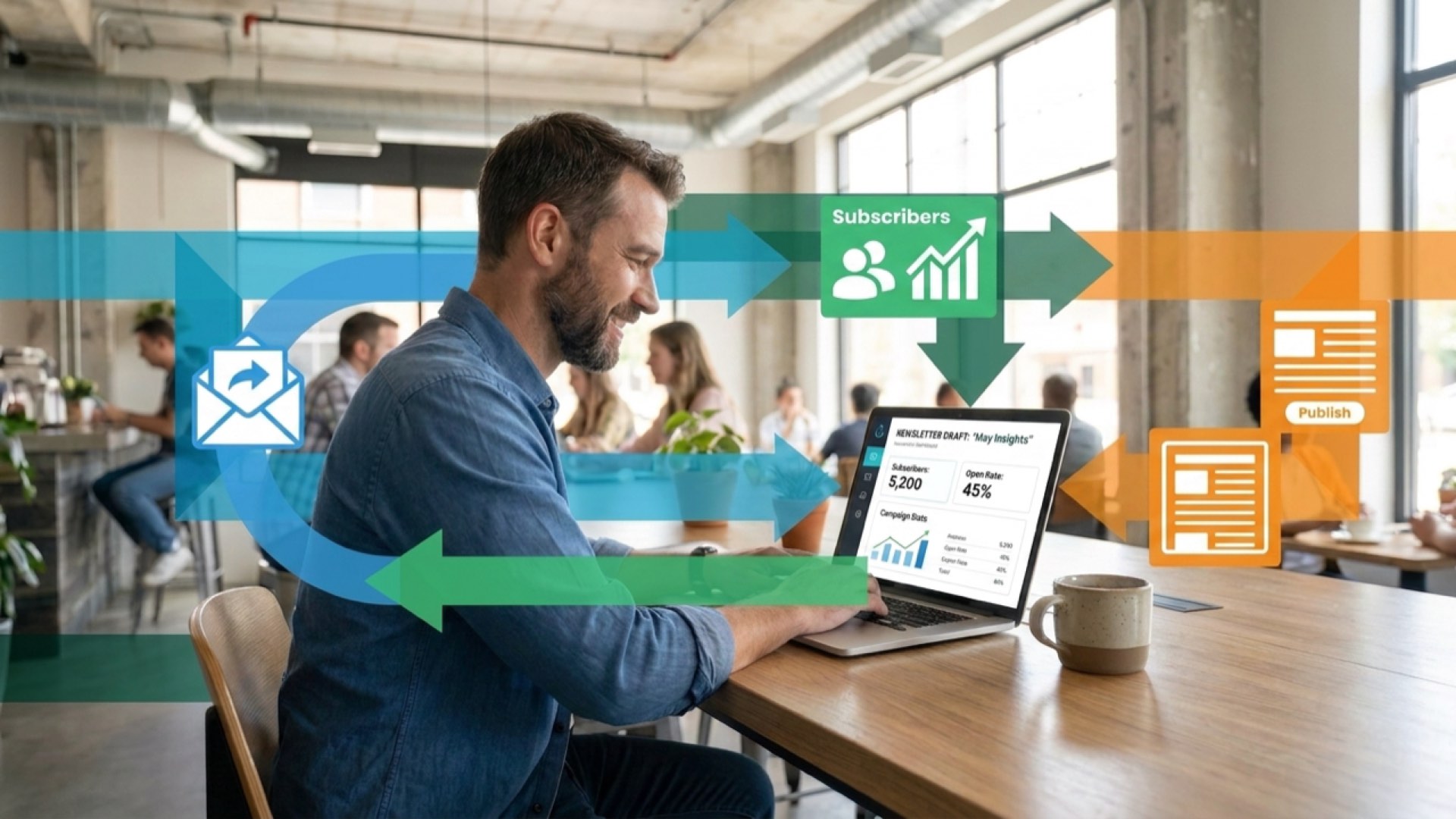
15 Abandoned Cart Email Examples That Win Back Lost Sales
An abandoned cart email is an automated, triggered message sent to a shopper who added items to their online cart but left without buying. According to the Baymard Institute's weighted average across 50 different studies, the global cart abandonment rate is 70.22%, meaning roughly seven out of ten shoppers walk away before completing a purchase. A well-structured three-email abandoned cart sequence can recover a meaningful share of that lost revenue, with Klaviyo's analysis of over 143,000 abandoned cart flows showing an average open rate of around 50.5%.

Most ecommerce brands are sitting on untapped revenue in their cart recovery flow. The problem is not usually the email platform. It's the emails themselves: generic subject lines, no product images, a single weak CTA, and zero urgency. We've audited hundreds of Klaviyo accounts, and the pattern is almost always the same. So this guide is built to fix that, fast.

What Is an Abandoned Cart Email?
An abandoned cart email is a behaviour-triggered message that fires automatically when a logged-in shopper or identified subscriber leaves your store with items still in their basket. It is part of a broader cart recovery flow designed to bring high-intent shoppers back to complete their purchase.
The key word there is intent. Someone who added a product to their cart has already made a significant mental commitment. They browsed, compared, and chose. They did not bounce from your homepage. That distinction matters enormously for how you write to them.
Abandoned cart emails are not cold outreach. They are warm reminders to people who already want what you sell. That is why they perform so differently from standard promotional emails. According to Omnisend's 2026 ecommerce marketing report, abandoned cart emails alongside welcome emails generated 76% of all email automation revenue. That figure tells you exactly where to invest your optimisation effort.
For a deeper look at how to build and optimise the flow itself in Klaviyo, read our guide to setting up a Klaviyo abandoned cart flow.
Why Do Shoppers Abandon Their Carts?
Cart abandonment is not a single problem with a single fix. Shoppers leave for several distinct reasons, and the best abandoned cart emails address the most common ones directly.
The biggest culprit is cost. A February 2024 Baymard survey found that 48% of US adults abandoned a cart because extra costs at checkout, including shipping, tax, and fees, were too high. That is nearly half of all abandonment events traced back to one moment: the shopper sees the total jump and leaves. An abandoned cart email offering free shipping, or at minimum acknowledging the concern, speaks directly to that friction.

Beyond cost, shoppers abandon for reasons that are harder to see in your analytics. Some are comparison shopping. Some got distracted. Some hit a forced account-creation wall and gave up. Some simply wanted to save the items for later. Each of these requires a slightly different recovery approach, which is one reason why a three-email sequence consistently outperforms a single message.
Mobile compounds all of this. Dynamic Yield data shows mobile cart abandonment sits at 80.02%, compared to 66.41% on desktop. That 14-point gap reflects the friction of completing checkout on a small screen. Your abandoned cart email design needs to account for that: large CTA buttons, mobile-optimised product images, minimal friction back to the cart.

Understanding what drove the abandonment is the foundation of everything that follows. It shapes your subject line, your copy, your incentive, and your timing. Get that wrong and even a beautifully designed email will not convert.
15 Abandoned Cart Email Examples (With Subject Lines and Breakdowns)
The best abandoned cart emails share a few traits: a subject line that earns the open, a clear product reminder, a single strong CTA, and a reason to act now. Here are 15 real-world examples across a range of brand voices and tactics, each broken down so you can apply the thinking to your own flows.
Examples 1–5: Urgency and FOMO Tactics
1. Casper
Subject line: 'Your cart is expiring soon'
Casper uses a soft scarcity message tied to cart expiry, not stock levels. It creates FOMO without overpromising. The email leads with the product image, a short line of copy, and a single CTA button labelled 'Complete your purchase'. What works: the urgency is honest, the layout is clean, and there is no distraction from the one action they want you to take.
2. Adidas
Subject line: 'Your bag is about to expire'
Similar to Casper, Adidas frames the abandoned cart itself as a time-limited object. The copy is minimal. The product image dominates. The CTA reads 'Shop now'. What works: Adidas trusts the product to do the selling. No discount needed when the product imagery is strong enough.
3. Nomad
Subject line: 'Don't leave without this'
Nomad leans into FOMO in the subject line, then backs it up with a low-stock message inside the email. The copy mentions that popular items sell out fast. What works: combining a FOMO subject line with real in-email urgency signals gives the shopper two separate reasons to act.
4. Vans
Subject line: 'Your cart misses you'
Vans takes a lighter, brand-consistent tone. The email is visually bold, uses the brand's irreverent personality, and ends with a CTA that reads 'Grab your gear'. What works: the voice matches the brand. Vans does not sound like a generic retailer, and that consistency builds trust and affinity.
5. ASOS
Subject line: 'Still thinking it over? We've got you'
ASOS acknowledges the hesitation directly. The email shows the abandoned items, then surfaces a 'People also bought' section underneath. What works: addressing the mental state of the shopper rather than ignoring it. ASOS is not pretending the shopper forgot. They know the shopper is deciding.
Examples 6–10: Incentive-Led Recovery Emails
6. Dollar Shave Club
Subject line: 'Forget something? Here's 10% off'
Dollar Shave Club holds the discount for the abandoned cart email rather than giving it away immediately. The copy is casual and matches their brand humour. The discount code appears prominently above the CTA. What works: saving the incentive for the recovery email gives it weight. If every email has a discount code, none of them feel special.
7. Liquor Loot
Subject line: 'Your whisky is getting lonely'
Liquor Loot's abandoned cart email is a masterclass in brand voice. It anthropomorphises the product with self-aware humour, then slides in a free shipping offer mid-copy. The CTA reads 'Rescue your bottle'. What works: the entire email is entertaining, which makes it memorable. Even if the shopper does not convert immediately, the brand impression sticks.
8. Columbia
Subject line: 'Your cart: free shipping ends tonight'
Columbia creates genuine urgency by tying a free shipping offer to a specific deadline. The email is product-forward, showing exactly what was left in the cart with clear sizing and colour details. What works: specificity in the subject line. 'Ends tonight' is more compelling than 'limited time only' because it is a real, checkable claim.
9. Glossier
Subject line: 'You've got great taste. Your cart agrees.'
Glossier's abandoned cart email leads with a compliment, then uses personalisation to show the specific items left behind. No discount. Instead, they add customer reviews beneath the product block. What works: social proof replaces the need for a price cut. When reviews say the product is worth every penny, the hesitation around price softens.
10. Recess
Subject line: 'Did you forget us? (It happens.)'
Recess, the canned drink brand, uses a subject line that is disarming rather than pushy. The email body is short: product image, two lines of copy, one CTA, and a 15% discount code. What works: brevity. The email does not try to convince with walls of text. It gives the shopper one easy path back to the cart.
Examples 11–15: Personalisation and Social Proof
11. Away
Subject line: '[First name], your luggage is waiting'
Away uses name personalisation in the subject line, which is worth doing. Research shows personalised subject lines produce a 26% increase in open rates compared to generic alternatives. The email then shows the specific bag left in the cart, the exact colourway, and the product description. What works: the personalisation extends beyond the subject line into the email body. That coherence feels less like automation and more like a human noticed.
12. BarkBox
Subject line: 'Your pup is waiting for their box'
BarkBox personalises using the subscriber's pet name, which they collected at sign-up. The email includes a photo of a dog that matches the subscriber's declared breed. What works: deep personalisation that uses first-party data collected during onboarding. It shows that your signup flow is a data collection opportunity, not just a formality.
13. Patagonia
Subject line: 'You left something behind'
Patagonia keeps the subject line neutral and lets the email content do the work. Below the product image, they include a star rating block pulled from verified buyers. The CTA reads 'Complete your order'. What works: for a brand built on trust and product quality, social proof from real customers reinforces what Patagonia already stands for. The reviews align with the brand promise.
14. Alo Yoga
Subject line: 'Still deciding? Here's what others say'
Alo Yoga's abandoned cart email opens with the product, then features two short customer testimonials beneath it. No discount. The CTA is 'See all reviews', which takes the shopper back to the product page, not directly to checkout. What works: giving the hesitant shopper more information rather than more pressure. Some shoppers need permission, not urgency.
15. Huckberry
Subject line: 'Low stock alert on your saved items'
Huckberry closes the list with a scarcity-led email that uses real inventory data. The copy reads: 'Only 3 left in your size.' The CTA button is labelled 'Grab it before it's gone'. What works: the urgency is earned by specificity. 'Only 3 left in your size' is more believable, and more motivating, than a vague 'selling fast' message.
Key Components of an Effective Abandoned Cart Email
Every strong abandoned cart email contains the same core building blocks, regardless of brand voice or incentive strategy. Miss one and you leave recovery rate on the table.
The subject line is the first gate. If it does not earn the open, nothing else matters. The best abandoned cart subject lines are short, specific, and personalised where possible. Using the shopper's first name, the product name, or a genuine urgency signal consistently outperforms generic alternatives.
Inside the email, the product image must be front and centre. Shoppers need to be reminded of exactly what they left behind. A high-quality image of the specific item in the specific variant they selected, paired with the product name and price, does most of the persuasive work before the copy even starts.
The CTA button needs to be impossible to miss. One button per email, above the fold, in a contrasting colour, with action-led copy. 'Complete your purchase', 'Return to cart', 'Grab it before it's gone'. These outperform passive alternatives like 'View basket' because they tell the shopper what to do, not just where to go.
Social proof belongs in the middle or bottom of the email, after the product block. Star ratings, short testimonials, or a 'bestseller' badge reduce the anxiety that often sits behind abandonment. When other customers vouch for the product, the hesitating shopper has less to worry about.
Finally, the email must be fully mobile-optimised. With mobile abandonment rates significantly higher than desktop, an email that renders poorly on a phone will lose conversions it should have won. Large buttons, single-column layouts, and compressed images are non-negotiable. Our guide to Klaviyo email template design best practices covers this in detail.
Abandoned Cart Email Best Practices
Knowing what the best abandoned cart emails contain is one thing. Knowing how to construct yours to match is another. These best practices separate high-converting flows from ones that barely move the needle.
Match your incentive to the abandonment reason. If the shopper abandoned because of shipping costs, offer free shipping. If they abandoned from a high-ticket product page, a percentage-off discount code will do more work than free shipping. Blanket discounts train shoppers to abandon intentionally. Be tactical about when and how you deploy them.
Keep the CTA singular. Multiple CTA buttons in one email split attention and reduce clicks on each. Pick the one action you want the shopper to take and make everything else secondary. If you include a secondary link, such as 'See more reviews', make it visually smaller and lower in the email.
Test your subject lines. The subject line is the single highest-leverage element in any abandoned cart email. A/B test your subject lines systematically, one variable at a time: personalisation on vs. off, urgency vs. curiosity, short vs. medium length. Let the data tell you what your audience responds to, not what feels right.
Use authentic urgency, not manufactured pressure. 'Only 2 left in stock' when you have 200 in the warehouse is a trust-destroyer if the shopper finds out. Use real inventory data, real deadline dates, and real expiry times. Fake scarcity might win a short-term conversion and cost you a long-term customer.
Include an unsubscribe link and honour it. Compliance is not just a legal requirement under GDPR and similar frameworks. It is a brand signal. Shoppers who feel they can opt out easily are more likely to trust the emails they do receive. A visible, functioning unsubscribe link is a mark of a brand that respects its subscribers.
Segment before you scale. Not all abandoned carts are equal. A £12 phone case and a £400 jacket deserve different treatment. Segment by cart value, product category, and customer status (new vs. returning) to tailor your messaging. First-time visitors might need more social proof. Returning customers might just need a nudge. Our guide to email segmentation strategies that actually work walks through the approach in full.
How to Time Your Abandoned Cart Email Sequence
A three-email abandoned cart sequence, timed at 1 hour, 24 hours, and 72 hours after abandonment, is the standard that outperforms both single emails and poorly timed multi-email approaches.
The data is clear on this. Mailchimp's research on automation sequences shows that an abandoned cart email series produces an order for every 43 recipients, versus a single email which produces one order for every 54 recipients. That is a 24% increase in orders per recipient from adding more touchpoints. Yet only 16% of retailers send a three-email sequence, according to Rejoiner's analysis of retailer abandonment practices. Most brands are leaving recoveries behind by sending one email and calling it done.

Here is how to structure the three-email series:
- Email 1 (1 hour after abandonment): A simple, friendly reminder. No discount yet. Show the product, use a clear CTA, and keep the copy light. The shopper may have been distracted. Give them an easy path back without pressure.
- Email 2 (24 hours after abandonment): Add social proof. Pull in customer reviews, star ratings, or a 'bestseller' badge. This is the trust-building email. If the shopper is still deciding, give them reasons to feel confident in the purchase.
- Email 3 (72 hours after abandonment): Introduce urgency or an incentive. A discount code, a free shipping offer, or a low-stock alert. This is your final push. SaleCycle's best practice analysis notes that sending messages at these three intervals can increase overall campaign performance by up to 30%.
The logic is simple. Email 1 catches the distracted shopper. Email 2 convinces the hesitating shopper. Email 3 converts the price-sensitive shopper. Each email has a distinct job.
For a broader look at how cart abandonment flows fit alongside your other automated touchpoints, our guide to all Klaviyo flows for ecommerce covers the full picture.
Abandoned Cart Email Templates You Can Use Today
Templates are a starting point, not a finish line. These three structures map directly to the three-email sequence above. Adapt the copy to your brand voice. Never send them as-is.
Template 1: The 1-Hour Reminder
Subject line: '[First name], you left something behind'
Body: [Product image] + [Product name and price] + Short line of copy acknowledging they were busy + Single CTA button: 'Return to your cart'
Design note: single column, image-forward, CTA button in brand colour, mobile-optimised.
Template 2: The 24-Hour Trust Builder
Subject line: 'Still thinking it over? Here's what others say'
Body: [Product image] + [Star rating block with 2-3 short reviews] + Line connecting the social proof to the product benefit + Single CTA button: 'Complete your order'
Design note: reviews should appear directly beneath the product block. Keep the layout clean and avoid cluttering with secondary links.
Template 3: The 72-Hour Urgency Email
Subject line: '[First name], your [product] is almost gone / Here's 10% off to help you decide'
Body: [Urgency or scarcity message in bold] + [Product image] + [Discount code or free shipping offer, clearly displayed] + Single CTA button: 'Claim your discount' or 'Grab it now'
Design note: put the urgency or incentive at the very top of the email. Do not bury the discount code. Make the CTA button large enough to tap easily on a phone.
These templates give you a framework. Your brand voice, product photography, and specific offer fill in the rest.
How to Set Up Abandoned Cart Email Automation
Setting up abandoned cart email automation in Klaviyo requires a working integration between your ecommerce platform and your email tool, an identifiable subscriber base, and a clearly defined trigger.
The trigger is the critical piece. In Klaviyo, the abandoned cart flow fires when a subscriber adds a product to their cart and then leaves without purchasing. This requires two conditions: the shopper must be identifiable (logged in or cookied from a previous sign-up), and the cart event must be tracked via Klaviyo's integration with platforms like Shopify, WooCommerce, or BigCommerce.
Start by verifying your integration is passing cart events correctly. In Klaviyo, go to your integrations settings and check that 'Added to Cart' events are logging. If they are not, no amount of flow-building will help.
Next, build your flow using the trigger 'Checkout Started' or 'Added to Cart', depending on how you want to define abandonment. Add a time delay of 1 hour before the first email fires. Then set a flow filter: 'Has not placed an order since starting the flow'. This ensures you do not send a cart recovery email to someone who already bought.
Add the second email at 24 hours and the third at 72 hours, each with the same flow filter active. Keep all three emails inside the same flow so the logic runs sequentially and suppression works correctly across the series.
Finally, test every email in both desktop and mobile preview before activating the flow. Check that product blocks pull dynamically, that the discount code field displays correctly, and that the CTA button links back to the correct cart URL.
The performance case for getting this right is strong. ContentSquare's cart abandonment data puts the overall conversion rate for abandoned cart emails at 10.7%. And with ecommerce retailers losing approximately £18 billion annually to cart abandonment, even a modest improvement in your recovery rate compounds quickly into significant revenue. That is why we treat this flow as one of the first things we build or audit for every client we work with.
If you want a second set of expert eyes on how your current setup is performing, our abandoned cart flow strategies guide covers the optimisation levers in detail. Or if you'd rather hand it over entirely, we offer a full Klaviyo audit as the starting point for every new client engagement.
The Revenue Case for Getting This Right
Abandoned cart emails are the highest-ROI automation available to any ecommerce brand. The numbers are not subtle about this.
Stripo's analysis of abandoned cart email performance puts the average revenue per email sent at approximately £5.81. Multiply that across the volume of abandoned carts your store generates each month and you get a clear picture of what an underperforming flow is costing you.
Most brands treat cart recovery as a 'set and forget' flow. They build it once, activate it, and move on. That is exactly where the opportunity lives. The brands winning at cart recovery are the ones testing subject lines, refining their incentive strategy, and using real inventory data to drive urgency. They are not leaving the flow on autopilot.
The gap between a mediocre abandoned cart flow and an optimised one is not a small rounding error. It is recovered revenue that compounds every single week. And it starts with one well-built, properly timed three-email sequence.
Ready to make retention inevitable? Start with your abandoned cart flow. If your current setup is not performing, it is the highest-leverage place to fix first, and we can show you exactly what to change.
.jpg)
.jpg)