
Klaviyo Segmentation: 20 Segments Every Store Needs
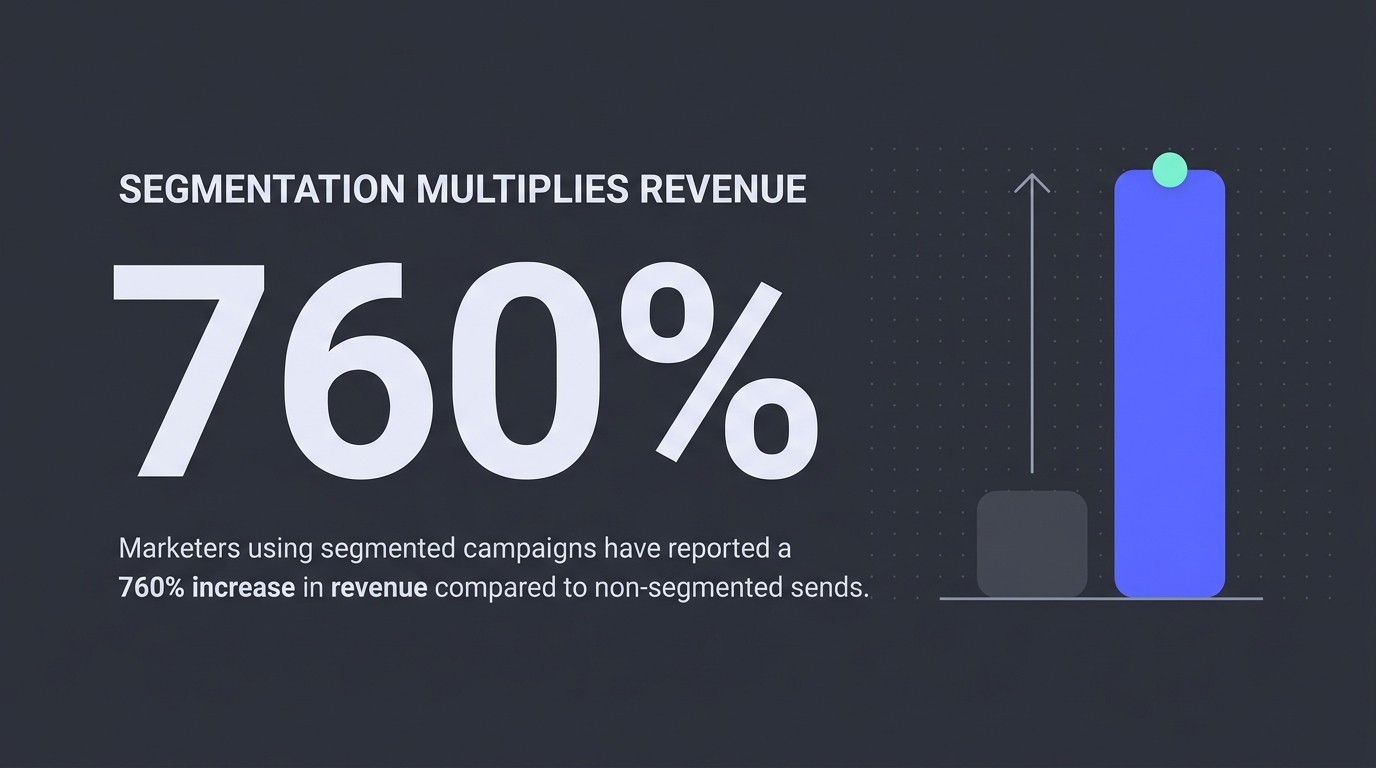
Klaviyo segmentation turns your entire customer database into targeted, dynamic groups that update automatically as contact behaviour changes, letting you send the right message to the right person without manual list management. Marketers using segmented campaigns have reported a 760% increase in revenue compared to non-segmented sends, according to Campaign Monitor's email segmentation analysis. Every segment in Klaviyo is built from conditions tied to what contacts have done, what they look like, or what Klaviyo's predictive engine forecasts they will do next. Get this right, and retention becomes inevitable.
Most ecommerce brands we speak to have Klaviyo set up but under-segmented. They're sending the same campaigns to VIP customers and one-time buyers, to engaged subscribers and contacts who haven't opened an email in eight months. That's not personalisation. It's just email with extra steps. This guide covers exactly how Klaviyo segmentation works, how to build segments correctly, and the 20 specific segments that generate the most revenue across the customer lifecycle.
What Is Klaviyo Segmentation, and Why It Matters for Ecommerce
Klaviyo segmentation is a dynamic system that automatically groups contacts based on conditions you define, updating those groups in real time as new data comes in from your store, your email programme, and any connected integrations.
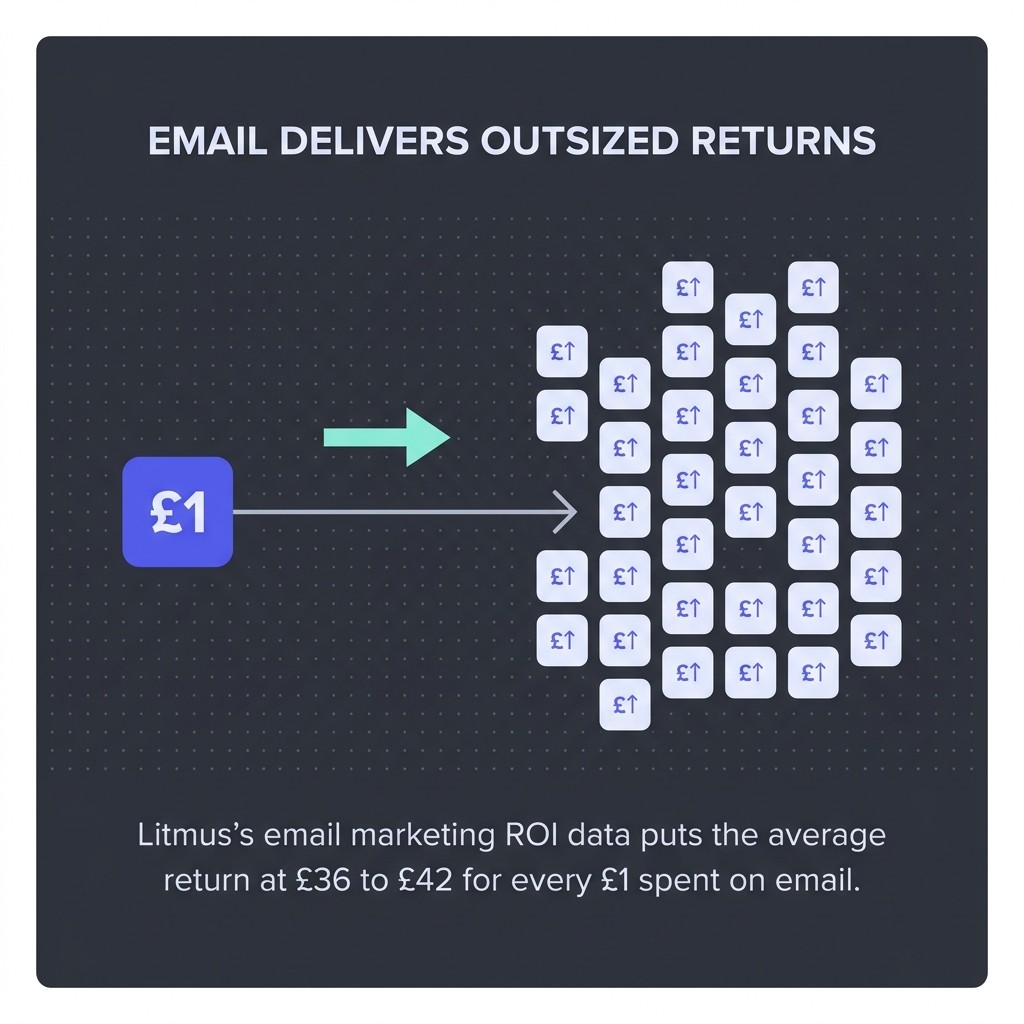
The difference between a well-segmented Klaviyo account and a poorly segmented one shows up directly in revenue. Litmus's email marketing ROI data puts the average return at £36 to £42 for every £1 spent on email. But that average collapses when you're sending irrelevant campaigns to disengaged contacts. Segmentation is what separates the top performers from the average.
Klaviyo pulls behavioural segmentation data from every touchpoint: email opens and clicks, purchase history, product views, site activity, SMS interactions, and custom properties you define yourself. That breadth is the point. You're not just segmenting by demographics. You're grouping contacts by what they actually do.
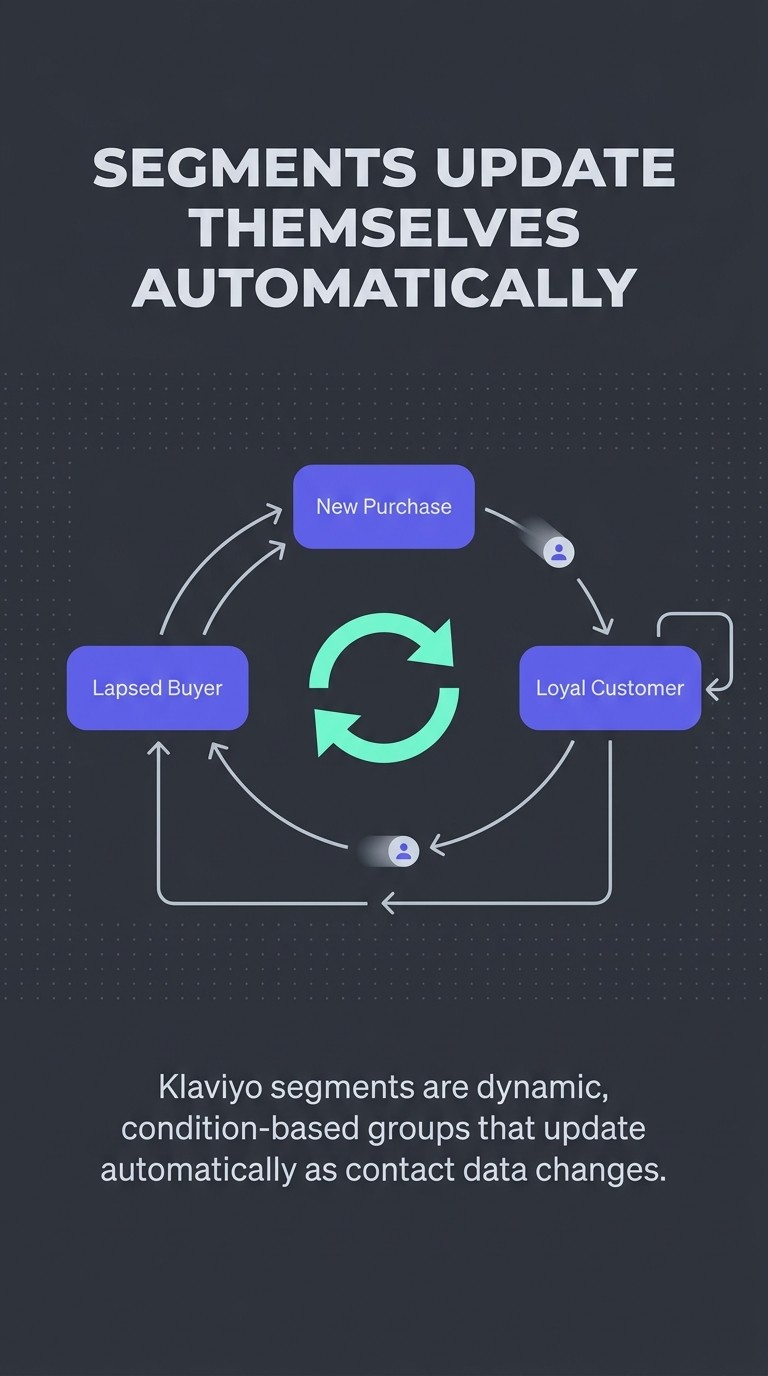
And because segments update automatically, they stay accurate. A contact who buys for the third time drops out of your 'lapsed buyers' segment and into your 'loyal customers' segment without you lifting a finger. That's dynamic segmentation working the way it should.
Segments vs. Lists in Klaviyo: The Difference That Matters
Klaviyo lists are static opt-in groups where contacts stay until manually removed or unsubscribed, whilst Klaviyo segments are dynamic, condition-based groups that update automatically as contact data changes.
Lists in Klaviyo serve a specific purpose: they capture consent. When someone signs up via your pop-up form, they join a list. That list records the subscription event and is the legal basis for sending them marketing. You can't automate someone into a list. They have to opt in.
Segments work completely differently. A segment is a query against your database. Klaviyo runs that query continuously, adding or removing contacts as they meet or stop meeting your conditions. A contact in your 'engaged subscribers' segment today might move into your 'unengaged subscribers' segment in 60 days if they stop opening emails. No manual work required.
The practical implication: build your lists for consent capture, and build your segments for targeting. Your campaign sends, your flow filters, your Facebook Custom Audiences, and your SMS targeting should all reference segments, not lists. Segments give you precision. Lists give you compliance.
One more distinction worth knowing: segments can pull contacts from multiple lists simultaneously. If you want to target all VIP customers regardless of which sign-up form they used, a segment handles that cleanly. A list cannot.
How to Create a Segment in Klaviyo: Step-by-Step
Creating a segment in Klaviyo takes under five minutes once you understand the segment builder, which works by stacking conditions that filter your contact database in real time.
The segment builder is where Klaviyo segmentation actually happens. Each segment is made up of one or more conditions, and those conditions draw on two core data types: what someone has done (event-based, like 'placed order' or 'opened email') and properties about someone (profile-level, like 'city' or 'total spend'). Get those two categories straight before you build anything.
Step-by-Step: Building Your First Segment
- Navigate to Audience in your Klaviyo account, then select Segments.
- Click Create Segment and give it a clear, descriptive name (include the date if it's time-dependent).
- Choose your first condition type: 'What someone has done or not done' for event-based rules, or 'Properties about someone' for profile attributes.
- Set the condition parameters, such as 'Placed Order at least 2 times in the last 90 days'.
- Add additional conditions using AND or OR logic (covered in the next section).
- Click Preview Segment to see the estimated count before saving.
- Save the segment. Klaviyo will calculate the full membership and update it automatically going forward.
One thing that trips people up: the preview count is an estimate. The final count Klaviyo shows after saving is more accurate. Don't make targeting decisions based purely on the preview number.
Segment Conditions: What Someone Has Done vs. Properties About Someone
The two condition categories in Klaviyo are the foundation of every segment. 'What someone has done' includes any tracked event: placed an order, viewed a product, clicked an email, started a checkout. 'Properties about someone' covers everything stored on the profile: location, predicted CLV, custom tags, total order count, acquisition source.
Behavioural segmentation draws almost entirely from the first category. If you want to find contacts who browsed a specific product category but never purchased, you're combining a 'has done' condition (viewed product in category X) with a 'has not done' condition (placed order containing product from category X). That combination is only possible because Klaviyo tracks both.
Properties about someone become critical for VIP customers and predictive analytics segments, where you're filtering on Klaviyo-calculated values like predicted customer lifetime value or churn risk score rather than raw events. Both condition types are available in every segment, and combining them is where the real targeting power lives.
AND vs. OR Logic: How Klaviyo Segment Conditions Combine
Klaviyo segment conditions use AND logic to narrow your audience (a contact must meet every condition) and OR logic to broaden it (a contact needs to meet any one condition), and choosing the wrong operator is the most common segmentation mistake we see in Klaviyo audits.
AND logic is restrictive. Every condition must be true. 'Placed order in the last 90 days AND opened an email in the last 30 days' returns only contacts who satisfy both. Add a third AND condition and your segment shrinks further. Use AND when you want a highly specific, targeted group.
OR logic is inclusive. Any condition being true is enough. 'Opened email in last 30 days OR clicked email in last 30 days' catches contacts who did either. This is useful when you want to define engagement without requiring a specific interaction type. The segment grows with each OR condition you add.
Within a single Klaviyo segment, you can mix AND and OR at different levels. You can group conditions together so that 'Group A OR Group B' applies at the top level, whilst each group uses AND logic internally. This lets you build genuinely sophisticated rules without needing to create multiple overlapping segments.
A practical example: a 'High-intent non-purchasers' segment might use AND logic to require both 'viewed product page at least 3 times in last 14 days' AND 'has not placed an order ever'. That AND combination is tighter and more valuable than either condition alone. Knowing the difference means your segments stay accurate and your sends stay relevant.
For a broader look at how to apply these principles across your full email programme, see our guide to email segmentation strategies that actually work.
13 High-Impact Klaviyo Segmentation Strategies with Examples
The 13 behavioural segmentation strategies below cover the highest-revenue segment types across the full customer lifecycle, from first purchase to churn risk, with specific segment conditions for each.
These aren't theoretical. They're the segments that move the needle in ecommerce accounts we work across. Build them in this order: start with engagement tiers and VIP customers because those deliver immediate campaign lift, then layer in the predictive and win-back segments once you have your foundations right.
1. Engaged Subscribers (Active Email Audience)
Conditions: 'Has opened email at least once in the last 90 days OR has clicked email at least once in the last 90 days.' This is your deliverability anchor. Send your campaigns here first, before any broader audience. Engaged subscribers keep your sender reputation healthy.
2. Unengaged Subscribers (Suppression Candidates)
Conditions: 'Has not opened email in the last 180 days AND has not clicked email in the last 180 days AND subscribed at least 180 days ago.' Do not suppress these contacts immediately. Put them through a re-engagement flow first. Those who don't re-engage get suppressed to protect deliverability.
3. VIP Customers (Top Spenders)
Conditions: 'Has placed order at least 4 times ever AND total customer value is greater than [your top 10% threshold].' VIP customers deserve their own campaign cadence, exclusive access, and early sale previews. Treating your best customers like everyone else is one of the most expensive mistakes in ecommerce email.
4. One-Time Buyers (Second Purchase Targets)
Conditions: 'Has placed order exactly 1 time ever AND placed order at least 30 days ago.' Getting a customer to their second purchase is where the economics of retention really start. The cost of acquisition is already sunk. Everything from the second order onwards is incrementally profitable.
5. Loyal Repeat Purchasers
Conditions: 'Has placed order at least 3 times in the last 12 months.' These contacts respond well to loyalty programme invitations, referral requests, and product launches. They're already advocates. The goal is to make that advocacy explicit.
6. Lapsed Customers (Win-Back Targets)
Conditions: 'Has placed order at least once ever AND has not placed order in the last 120 days.' This is your churn risk cohort. A dedicated win-back campaign with a compelling offer reactivates a meaningful share of these contacts. Without a segment like this, they quietly disappear from your revenue base.
7. High-Value Lapsed Customers
Conditions: 'Has placed order at least once ever AND has not placed order in the last 120 days AND total customer value is greater than [your top 20% threshold].' A sub-segment of the above. These contacts warrant a more aggressive win-back offer. The revenue at stake is higher, so the incentive should be too.
8. Browse Abandoners (Category-Specific)
Conditions: 'Has viewed product in category [X] at least 2 times in the last 7 days AND has not placed order containing product from category [X] in the last 7 days.' Behavioural segmentation at its most direct. These contacts showed intent without converting. Target them with category-specific content or social proof.
9. Post-Purchase Upsell Targets
Conditions: 'Has placed order containing product [A] AND has not placed order containing product [B].' Use this to identify contacts who bought a product that naturally pairs with another. Cross-sell campaigns built on purchase history consistently outperform generic promotional sends.
10. New Subscribers (Pre-Purchase)
Conditions: 'Subscribed in the last 30 days AND has not placed order ever.' Fresh leads who haven't converted yet. They should be in your welcome flow, but this segment lets you layer in targeted campaigns if the flow hasn't converted them within the first two weeks.
11. Location-Based Segments
Conditions: 'City equals [city name] OR region equals [region name].' Location-based segmentation is underused. It's essential for event invitations, region-specific promotions, or simply sending campaigns at the right local time. If your store ships internationally, country-level segments let you tailor currency, shipping messaging, and seasonal relevance.
12. Product Category Aficionados
Conditions: 'Has placed order containing product from category [X] at least 2 times.' These contacts have demonstrated a clear product preference. They're the right audience for new arrivals in that category, restocks, and category-specific campaigns. Generic sends to this group waste the signal Klaviyo has already captured.
13. At-Risk Customers (Churn Risk)
Conditions: 'Klaviyo predictive analytics churn risk score equals high OR Klaviyo predictive analytics churn risk score equals very high.' This uses Klaviyo's built-in predictive analytics rather than a manual time-based rule. Klaviyo calculates churn risk from individual purchase patterns, so a customer who usually buys monthly triggers the flag sooner than one who typically buys every six months. Far more accurate than a blanket 'no purchase in 90 days' rule.
For the full strategy behind building these segments into a retention system, our Klaviyo retention playbook for ecommerce covers the complete lifecycle approach.
Advanced Klaviyo Segmentation: Predictive Analytics and AI
Klaviyo's predictive analytics engine calculates four contact-level scores automatically: predicted customer lifetime value (CLV), churn risk, next order date, and predicted gender, and these scores can be used directly as segment conditions without any custom data setup.
This is where Klaviyo segmentation separates from basic email tools. Most platforms let you segment by what contacts have done. Klaviyo also lets you segment by what they're likely to do next. That's a meaningful shift in how you target.
Predicted CLV Segments
Klaviyo calculates a predicted CLV figure for each contact based on their purchase history, average order value, and purchase frequency. You can segment contacts whose predicted CLV puts them in the top tier of your database, even if they've only placed one or two orders so far. This is early VIP identification. Act on it before your competitors do.
Customer lifetime value and how to improve it sits at the heart of every retention strategy. Our guide to calculating and improving customer lifetime value goes deeper on the underlying metrics.
Churn Risk and Win-Back Segments
The churn risk score is one of the most actionable outputs from Klaviyo's predictive analytics. Rather than using a fixed time window (which treats all customers the same), Klaviyo calculates churn risk relative to each contact's individual purchase cadence. A customer who usually buys every three weeks registers as high churn risk at six weeks. A quarterly buyer doesn't trigger until well past that window.
Build a segment for 'high churn risk' and send them into a win-back campaign before they're fully gone. Waiting until they've definitely lapsed costs you the higher-probability, lower-incentive win. Act whilst they're still warm.
Klaviyo AI and Segments AI
Klaviyo's Segments AI feature lets you describe a segment in plain language and have Klaviyo build the conditions automatically. Type something like 'customers who bought twice last year but haven't purchased in 90 days' and Segments AI translates it into the correct condition stack. It won't replace knowing your segment conditions, but it speeds up the build process considerably, particularly for complex multi-condition segments.
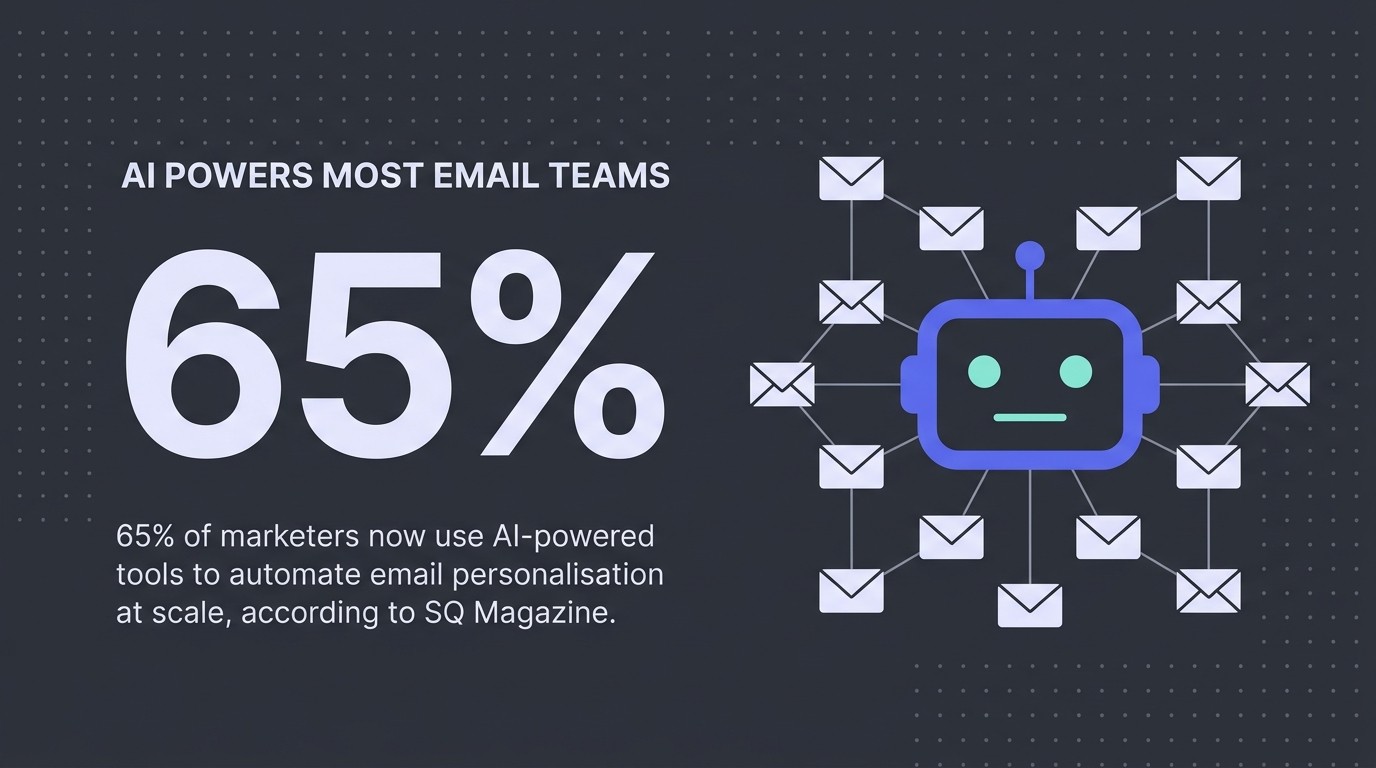
Across the industry, 65% of marketers now use AI-powered tools to automate email personalisation at scale, according to SQ Magazine's personalised email marketing statistics. Klaviyo's Segments AI puts that capability directly inside the platform rather than requiring a separate tool.
RFM analysis (Recency, Frequency, Monetary value) maps neatly onto Klaviyo's predictive and behavioural data. Recency maps to last order date or churn risk score. Frequency maps to order count. Monetary value maps to total customer value or predicted CLV. You can replicate a full RFM segmentation model inside Klaviyo without exporting data to a separate analytics tool.
How to Use Klaviyo Segments Across Channels
Klaviyo segments are not limited to email campaigns: they drive SMS targeting, Facebook and Instagram Custom Audiences, flow entry conditions, and sign-up form targeting, making Klaviyo segmentation a cross-channel audience layer rather than just an email tool.
This multi-channel activation is where the investment in building clean segments pays back beyond email revenue alone.
Email Flows and Campaigns
Segments control who enters a flow and who receives a campaign. For flows, you can add a segment filter at the flow level so only contacts in a specific segment trigger the sequence. A post-purchase upsell flow for buyers of product category X should only reach contacts in that purchase history segment, not your entire customer base. For campaigns, selecting a segment as your recipient list is the basic unit of email segmentation. Always send campaigns to a segment, not a raw list.
SMS Targeting
Every segment built for email can be used for SMS targeting in Klaviyo. Your VIP customers segment, your churn risk segment, your high-intent browsing abandoners: all of them are available as SMS recipient lists. SMS and email sent to the same behavioural segment create a coordinated touchpoint that's harder to ignore than either channel alone.
Facebook and Instagram Ads
Klaviyo integrates with Meta to sync segments directly as Custom Audiences. Your unengaged subscribers segment becomes an exclusion audience in your paid campaigns, so you're not paying to reach people you already have in your email list. Your high-value lapsed customers segment becomes a retargeting audience. The segments you build in Klaviyo extend your first-party data into paid channels without any manual export.
For a full walkthrough of integrating your Shopify store data with Klaviyo to feed these segments, our Klaviyo and Shopify integration guide covers the setup step by step.
Sign-Up Forms
Klaviyo sign-up forms can be targeted to show only to contacts in specific segments, or specifically excluded from showing to existing customers. This is basic but often overlooked: showing a 10% discount pop-up to a contact who already bought yesterday wastes the incentive and looks unprofessional. Segment your form targeting as carefully as your email sends.
To see how all of this connects into a broader Klaviyo strategy, our Klaviyo email marketing strategy guide covers the full picture.
Klaviyo Segmentation Best Practices to Maximise Revenue
The highest-performing Klaviyo segmentation setups share four consistent practices: they prioritise engagement data for deliverability, they suppress unengaged subscribers regularly, they use predictive analytics for early lifecycle targeting, and they build segments before campaigns rather than after.
That last point is the one most stores get backwards. The common approach is to decide on a campaign and then figure out who to send it to. The better approach is to build your core segments first and let the segment logic drive campaign ideas. Your segments will surface audiences you wouldn't have thought to target manually.
Keep Segments Focused
A segment with seven AND conditions will have a tiny membership. That's sometimes the point, but often it's a sign of over-engineering. Start with the minimum conditions needed to define the audience meaningfully. You can always add conditions later. Removing contacts you didn't mean to exclude is harder to undo.
Name Segments Clearly
Use a consistent naming convention: [Lifecycle Stage] [Condition Summary] [Date if Relevant]. 'VIP Customers 4+ Orders' is more useful than 'Segment 12' when you're scanning a list of 40 segments at campaign time. Good naming takes 30 seconds and saves hours across a year.
Audit Segment Health Regularly
Check segment membership counts quarterly. A VIP customers segment that was 800 contacts six months ago and is now 1,400 is growing well. One that's dropped to 200 signals a problem with repeat purchase rates worth investigating. Segments are a live health indicator for your customer base, not just a targeting tool.
Protect Deliverability with Engagement Tiers
Always build an engaged subscribers segment and use it as a baseline filter for any broad campaign send. Litmus's State of Email report found that 76% of top email teams now deploy emails within three days, up from 38% previously. Speed is one part of deliverability. Sending to engaged subscribers is the other. One without the other isn't enough.
Personalisation at scale is what makes Klaviyo segmentation worth the setup time. According to research cited by Digital Silk's personalisation statistics report, 80% of consumers are more likely to purchase from a brand that offers personalised experiences. Segmentation is the mechanism that makes personalisation operationally possible at any scale above a handful of contacts.
For a full review of whether your current segments are set up correctly, our Klaviyo audit checklist walks through every element of a healthy Klaviyo account, including segment coverage, naming conventions, and flow filters.
The 7 Additional Segments That Complete Your Stack
Beyond the 13 strategy-led segments above, seven more segments round out a complete Klaviyo segmentation system, covering acquisition source, subscription tier, seasonal activity, product replenishment timing, gender prediction, cart abandoners, and high-frequency email clickers.
These aren't bonus segments. They're the ones that fill the gaps in customer lifecycle coverage and often surface revenue opportunities that the core segments don't reach.
14. Cart Abandoners (Non-Purchasers)
Conditions: 'Has started checkout in the last 7 days AND has not placed order since starting checkout.' This segment feeds your abandoned cart flow and also works for targeted campaigns if your cart recovery flow hasn't converted them. Most Klaviyo accounts have the flow but no segment-based fallback campaign. Add both.
15. Acquisition Source Segments
Conditions: 'UTM source equals [paid social / organic / referral].' Understanding how different acquisition sources behave over time is important. Contacts acquired through paid social often have lower long-term purchase rates than organic or referral contacts. Knowing which cohort you're targeting changes how you frame an offer and what incentive level you use.
16. High-Frequency Email Clickers
Conditions: 'Has clicked email at least 5 times in the last 30 days.' These are your most active email contacts. They're excellent candidates for product feedback surveys, loyalty programme early access, and referral programme invitations. They're already engaged. Ask them to do something with that engagement.
17. Predicted Gender Segments
Klaviyo calculates a predicted gender property for contacts where sufficient data exists. For stores with clearly gendered product ranges, this enables product-relevant sends without requiring contacts to self-declare. Use it pragmatically: where your product catalogue genuinely splits by gender, this segment condition adds relevance. Where it doesn't, skip it.
18. Seasonal Buyers
Conditions: 'Has placed order in November or December in at least 2 of the last 3 years.' These contacts buy seasonally. They're not lapsed: they're on a predictable annual cycle. Treating them as churn risks in March and sending aggressive win-back incentives wastes budget. Build a segment that accounts for their pattern and market to them ahead of their natural purchase window.
19. Subscription or Loyalty Programme Members
Conditions: 'Custom property loyalty_status equals active OR custom property subscription_status equals active.' If your store runs a loyalty programme or subscription product, these contacts need their own segment. Their campaign content, offers, and lifecycle communications should differ from non-members. Don't merge them into your general customer segments and send undifferentiated campaigns.
20. Next Order Date Imminent
Conditions: 'Klaviyo predicted next order date is within the next 14 days.' This uses Klaviyo's predictive analytics to identify contacts who are statistically likely to purchase soon. A well-timed, relevant campaign reaching them just before that predicted date can accelerate the purchase and, in some cases, increase the order value with a well-placed upsell. It's predictive analytics put to work on the simplest possible brief: reach the right person at the right time.
Build Your Segments Before Your Next Campaign
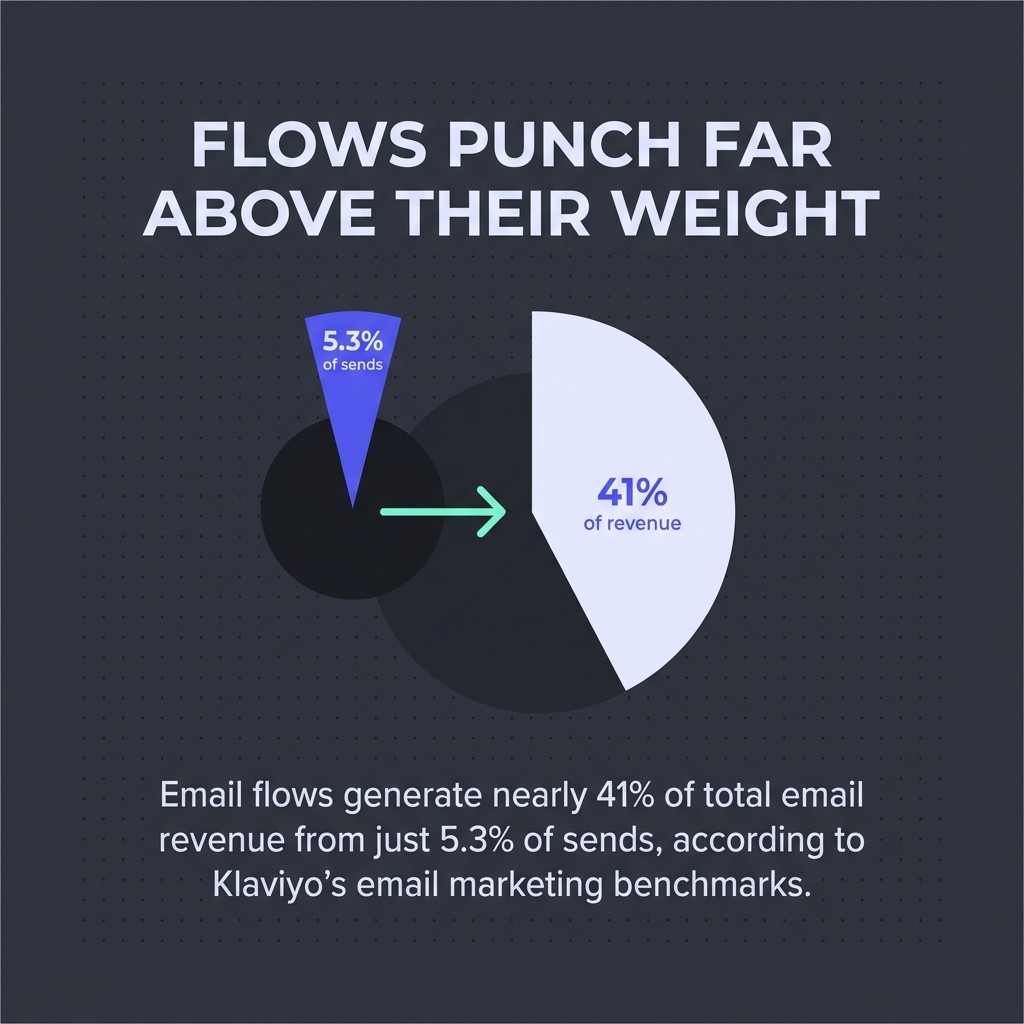
Klaviyo segmentation is the single biggest lever in retention marketing, and it's one that most ecommerce brands have barely touched. Email flows generate nearly 41% of total email revenue from just 5.3% of sends, according to Klaviyo's email marketing benchmarks. That's the power of targeted, condition-based sending over broadcast volume. Segments are what make flows precise and campaigns profitable.
Start with your engaged subscribers segment and your VIP customers segment. Get those right and your next campaign immediately performs better. Then build your churn risk and lapsed customer segments and put a win-back flow behind them. Within two weeks, you'll have a retention infrastructure that most stores take months to build.
That's what obsessed with results, not tasks actually looks like in practice. Not endless setup work for its own sake. Specific segments, in the right order, tied to measurable revenue outcomes.
If you want expert eyes on your current Klaviyo segmentation setup, our advanced customer segmentation service audits your existing segments and builds the ones that are missing. Make retention inevitable.
.jpg)
.jpg)