Email Subject Lines for Ecommerce: 75 Examples by Category
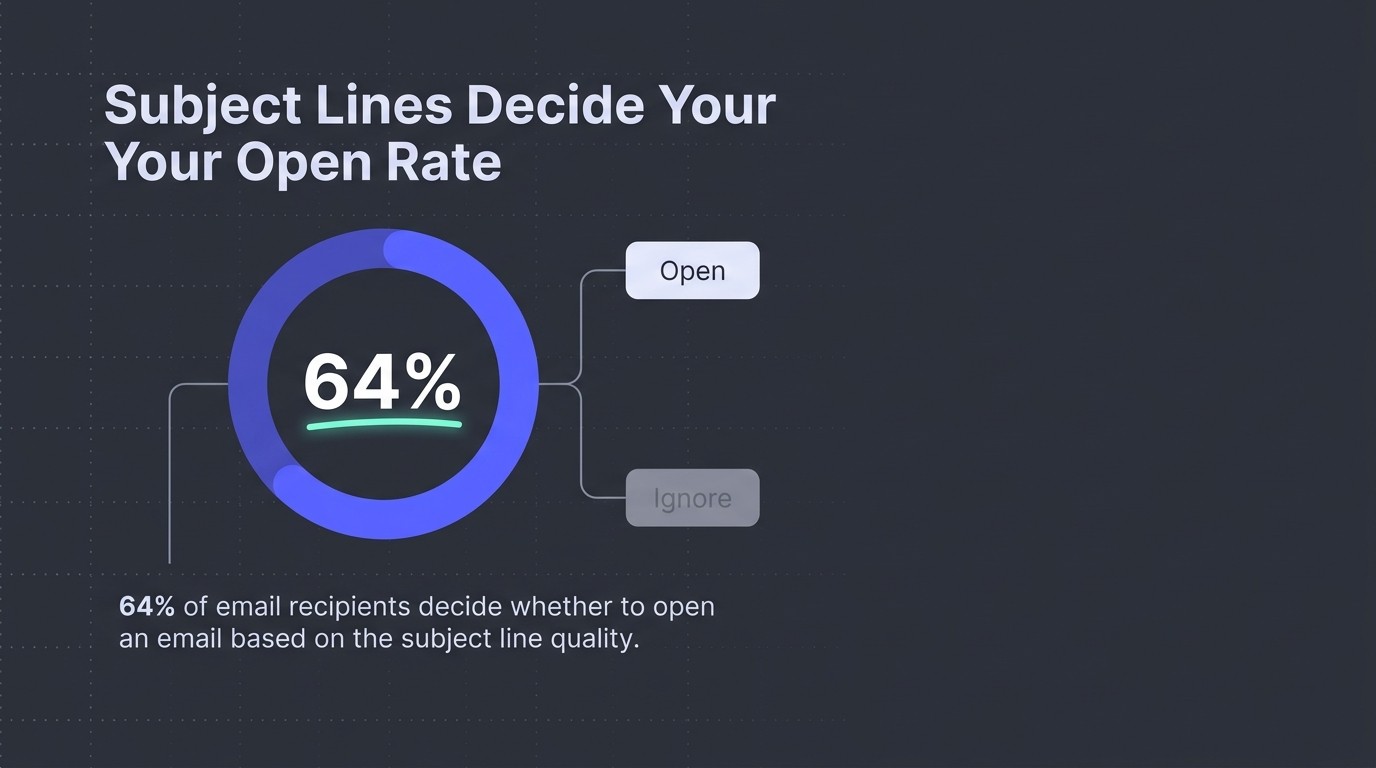
An email subject line is the single line of text that determines whether your email gets opened or ignored, and the data behind that decision is stark: 64% of email recipients decide whether to open an email based on the subject line quality, whilst 69% will mark an email as spam based on the subject line alone. For ecommerce brands, where email marketing consistently delivers some of the strongest ROI of any channel, getting subject lines right is not optional.
Most brands get this wrong in a predictable way. They write subject lines last, treat them as an afterthought, and wonder why their open rates are flat. We've audited hundreds of ecommerce email programmes, and the pattern is always the same: brilliant flows, weak subject lines, left-on-the-table revenue. This guide fixes that.
What Is an Email Subject Line and Why Does It Matter?
An email subject line is the preview text displayed in a recipient's inbox before they open your email, and it functions as the primary gatekeeper between your message and your subscriber's attention.
The inbox is brutal. Subscribers make a judgement call in under two seconds, based almost entirely on three things: your sender name, the subject line, and the preheader text beneath it. The subject line carries most of that weight.
For ecommerce brands, the stakes are measurable. Ecommerce email campaigns averaged a 30.7% open rate in 2025, but that average masks a wide spread. Brands with sharp subject line strategies sit well above it. Those sending generic, untested subject lines sit well below.
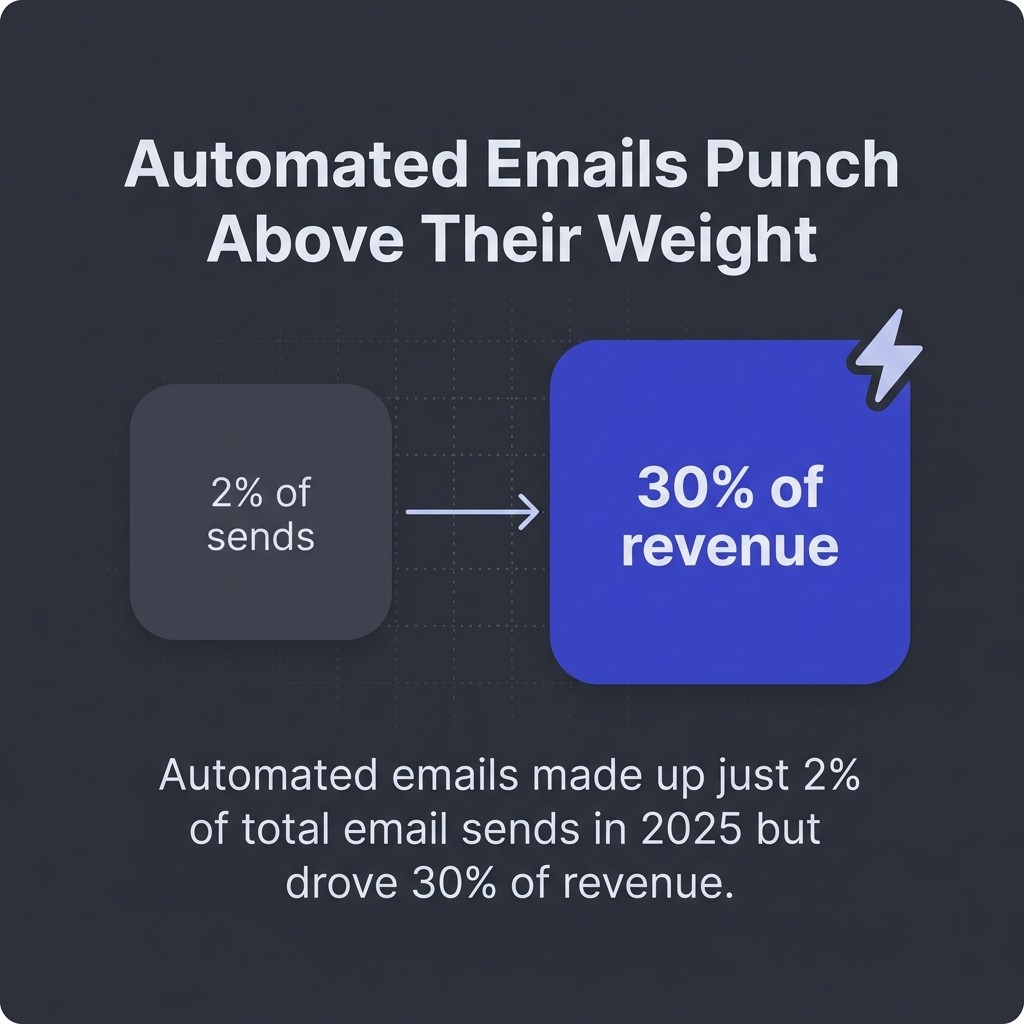
And it gets sharper than open rates. Automated emails made up just 2% of total email sends in 2025 but drove 30% of revenue. Welcome flows, abandoned cart sequences, win-back campaigns: these are the emails where subject lines do the heaviest lifting, because the recipient is already warm and already in the decision window. A weak subject line at that moment is revenue lost.
Strong email subject lines do four things: they communicate relevance instantly, they create a reason to open now rather than later, they match the tone of the brand, and they avoid triggering spam filters. Everything in this guide is built around those four objectives. For a broader view of how subject lines fit into your full email programme, our complete ecommerce email marketing guide covers the entire channel from strategy to execution.
What Makes a Great Email Subject Line?
A great email subject line earns an open by delivering one clear, relevant signal to the right subscriber at the right moment, without tricks, without padding, and without sounding like every other brand in the inbox.
That's a higher bar than most brands set for themselves. The temptation is to chase clever. Clever is fine when it's specific. Clever without context is just noise.
The Four Qualities That Drive Opens
Relevance comes first. An email subject line that speaks directly to where a subscriber is in their lifecycle will always outperform a broadcast-style subject line aimed at nobody in particular. Personalised subject lines are 26% more likely to be opened than generic ones. That gap is not trivial.
Clarity comes second. Vague subject lines feel like a trap. Subscribers who feel tricked by a misleading email subject line unsubscribe, or worse, hit the spam button. Be specific about what's inside.
Timing comes third. Urgency in subject lines works because it answers the question 'why should I open this now?' rather than 'why should I open this?' Subject lines with urgent language generate 22% more opens than those without. The key is that the urgency must be real. Fake deadlines destroy trust fast.
Tone comes fourth, and it's the one most brands ignore. Your email subject line is the first word you say to your subscriber in that session. If your brand is warm and conversational but your subject lines sound like a legal notice, the disconnect kills engagement before the email even opens.
What Separates Good from Average
Average subject lines describe the email. Great email subject lines make the subscriber feel something: curiosity, urgency, excitement, or a direct sense of personal relevance. The difference is intent. Are you telling them what's inside, or giving them a reason to care?
One more thing worth saying plainly: an email subject line that earns a high open rate but leads to a poor email is still a failure. Open rate measures the subject line. Revenue measures the system. The best subject lines set an expectation the email then delivers on.
Email Subject Line Best Practices
Email subject line best practices for ecommerce fall into a clear set of rules, each of which has a measurable impact on open rates, deliverability, or downstream revenue.
These aren't suggestions. Every one of these best practices is something we see ignored in the majority of accounts we review.
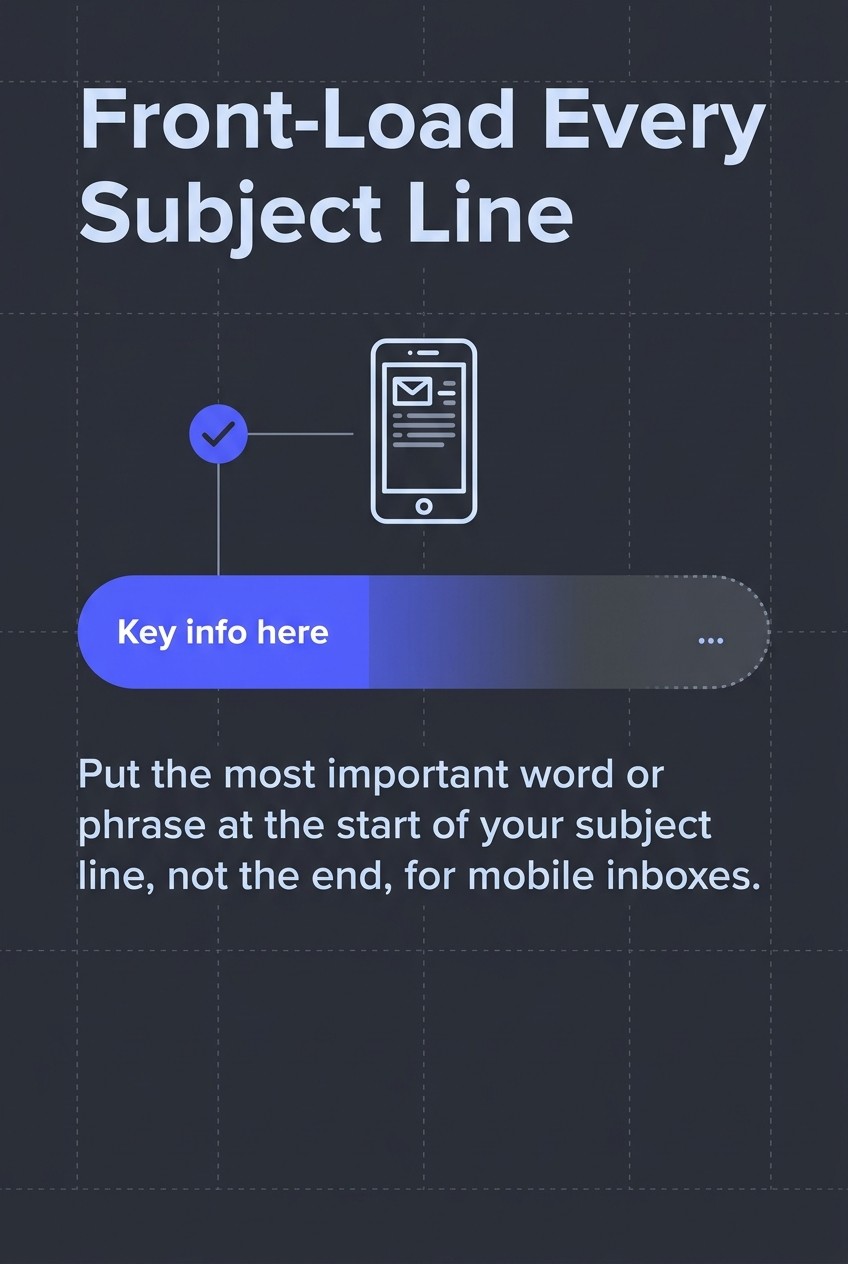
- Front-load the key information. Most inbox previews truncate subject lines beyond 40-50 characters on mobile. Put the most important word or phrase at the start, not the end.
- Keep personalisation specific. First-name personalisation is table stakes. Behaviour-based personalisation (referencing what they browsed, bought, or abandoned) is where the real open rate gains sit.
- Test one variable at a time. A/B testing subject lines is only useful if you change a single element per test. Test length vs. length, or tone vs. tone. Not both simultaneously.
- Avoid spam trigger words. Words like 'free', 'guaranteed', 'no risk', and excessive punctuation (multiple exclamation marks, all caps) send emails straight to the spam folder before a single subscriber sees them.
- Match the preheader to the subject line. The preheader text is 40-90 additional characters of persuasion. Most brands leave it as the email's first sentence by default. That's a missed opportunity every single send.
- Use urgency honestly. Real deadlines, real stock limits, real end dates. Never manufacture urgency that doesn't exist.
- Segment before you write. The best email subject line practices are audience-specific. A subject line for a first-time buyer should look nothing like one for a VIP repeat customer. Our guide to email segmentation strategies covers how to split your list so every subject line lands with the right context.
One best practice that gets underused: writing ten subject line options for every send, then cutting to the best two for an A/B test. The first subject line you write is rarely the sharpest. The discipline of generating options forces better thinking.
How Long Should an Email Subject Line Be?
An email subject line between 20 and 40 characters performs better than any other length range, with a MailerLite study of 20,000 campaigns finding that top-performing campaigns are 45% more likely to have subject lines in that character range.
That's a tighter window than most brands work within. The average email subject line runs 44 characters. The sweet spot is shorter than most people think.
Why Length Matters on Mobile
55% of ecommerce emails are opened on mobile devices. On a mobile inbox, the visible subject line drops to roughly 30-40 characters before truncation. An email subject line that reads perfectly on desktop can be cut mid-word on a phone, losing its meaning entirely.
The fix is front-loading. Write the subject line so the first 30 characters carry the full meaning. Everything after that is extra. Not every email subject line needs to max out even 40 characters. 'Last chance: 20% off ends tonight' is 35 characters and says everything it needs to.
When Longer Subject Lines Work
There are cases where a longer email subject line outperforms a short one. Curiosity-driven subject lines sometimes need a full clause to set up the open loop. Specificity often requires more words than vagueness. 'New arrivals' (12 characters) is less compelling than 'Your summer wishlist just landed' (31 characters).
The rule isn't 'short always wins'. The rule is 'never waste characters'. Every word in an email subject line needs to earn its place. If you can say it in fewer words without losing meaning, do.
Sales Email Subject Lines (15 Examples)
Sales email subject lines for ecommerce need to do two things at once: signal an offer clearly enough to drive opens, and frame it compellingly enough to drive clicks.
The failure mode here is being too broad. 'Big sale on now' tells the subscriber nothing specific. 'Your 25% off expires at midnight' tells them exactly what, exactly how much, and exactly when. Specificity in sales email subject lines is not just clearer; it's more persuasive.
Promotional Sales Subject Lines
- Your 25% off expires at midnight
- Flash sale: 4 hours only
- We're giving away free shipping today
- The price drop you've been waiting for
- 30% off, no code needed
- Sale ends in 3 hours, [First Name]
- These prices won't last the weekend
- Your exclusive early-access sale starts now
Value-Driven Sales Subject Lines
- Spend £50, save £15. Simple.
- The deal that makes sense this month
- Two for the price of one, while stocks last
- Save more when you bundle: here's how
- Buy one, get the second half price
- You earned this: a discount just for you
- Your loyalty reward is ready to spend
Notice the pattern: every sales email subject line above names the offer, implies a timeframe, or references a reward. None of them says 'check out our latest deals'. That phrase has been so overused it no longer registers.
Cold Email Subject Lines (10 Examples)
Cold email subject lines face the hardest inbox conditions of any email category: the recipient doesn't know the sender, has no prior relationship, and has every reason to ignore or delete.
The one thing that changes the outcome is relevance. A cold email subject line that demonstrates the sender knows something specific about the recipient's business will always outperform a generic pitch. Vague cold subject lines go to trash. Specific ones get opened.
For ecommerce brands running B2B or wholesale outreach, or for agencies reaching out to prospective clients, these ten cold email subject lines balance directness with personalisation.
- Quick question about [Company Name]'s retention rates
- Spotted something on your site worth discussing
- Three ideas for [Brand Name]'s email flows
- [First Name], your abandoned cart sequence has a gap
- You're getting 10,000 visitors. Here's what's leaking.
- Specific feedback on [Brand Name]'s welcome email
- Idea for [Brand Name] I haven't pitched elsewhere
- This might be why your open rates are flat
- [First Name]: 15 minutes on your Klaviyo setup?
- One change that moved the needle for a similar brand
Each of these cold email subject lines references something specific: a metric, a gap, a brand name, or a concrete offer. None of them opens with 'I hope this finds you well'. That phrase is the cold email equivalent of a dead fish handshake.
Professional Email Subject Lines (10 Examples)
Professional email subject lines for business communication need to convey purpose immediately, without the urgency tricks or curiosity gaps that work in marketing emails.
The mistake most teams make is being too terse. 'Following up' or 'Quick question' give the recipient no context and no reason to prioritise. Professional email subject lines should be specific enough that the recipient knows exactly what's being asked before they open.
- Q3 campaign review: agenda and prep notes
- Action required: approval needed by Friday
- Meeting recap from Tuesday's strategy session
- Updated brief: email flow revisions attached
- [Project Name]: status update for this week
- Invoice #2847 for your records
- Proposal for [Company Name]: ready to review
- Decision needed: two options for the launch date
- Joining details for tomorrow's 10am call
- Thank you for today's meeting, next steps below
Professional email subject lines work because they remove ambiguity. The recipient reads the subject line and immediately knows what the email is, what's required of them, and roughly how long it will take to handle. That clarity is a courtesy. It also increases open rates, because busy professionals open emails they can quickly categorise.
Follow-Up Email Subject Lines (10 Examples)
Follow-up email subject lines are notoriously difficult to write, because they carry the implicit awkwardness of 'you didn't reply to me' whilst needing to seem entirely unbothered by that fact.
The best follow-up email subject lines reframe rather than repeat. If the first email's subject line pitched an offer, the follow-up email subject line should add new information, create urgency, or approach the hook from a different angle. Sending 'Re: Re: Re: [Original Subject]' is not a follow-up strategy. It's a forwarded email with hope attached.
- Still thinking it over? This might help.
- One more thing I forgot to mention
- The offer expires Friday. Wanted to check in.
- Did my last email get lost?
- Circling back with something new
- [First Name], any questions on the proposal?
- A quick update since my last email
- We just added something you'll want to see
- Last email from me on this, I promise
- Open when you have two minutes
Follow-up email subject lines that acknowledge the follow-up ('Did my last email get lost?' and 'Last email from me on this') tend to generate strong open rates because they're honest. Subscribers and prospects respond to brands and people that don't pretend the context doesn't exist.
For ecommerce, follow-up email subject lines appear most often in abandoned cart sequences and win-back campaigns. Our detailed guide on abandoned cart flow strategies covers the full sequence logic, including when to send each follow-up and how to escalate the subject line approach across the flow.
Welcome Email Subject Lines (10 Examples)
Welcome emails have an average open rate of 83.63% according to GetResponse's email marketing benchmarks report, making them the highest-performing email category in ecommerce and the most important subject line you'll write in any subscriber's lifecycle.
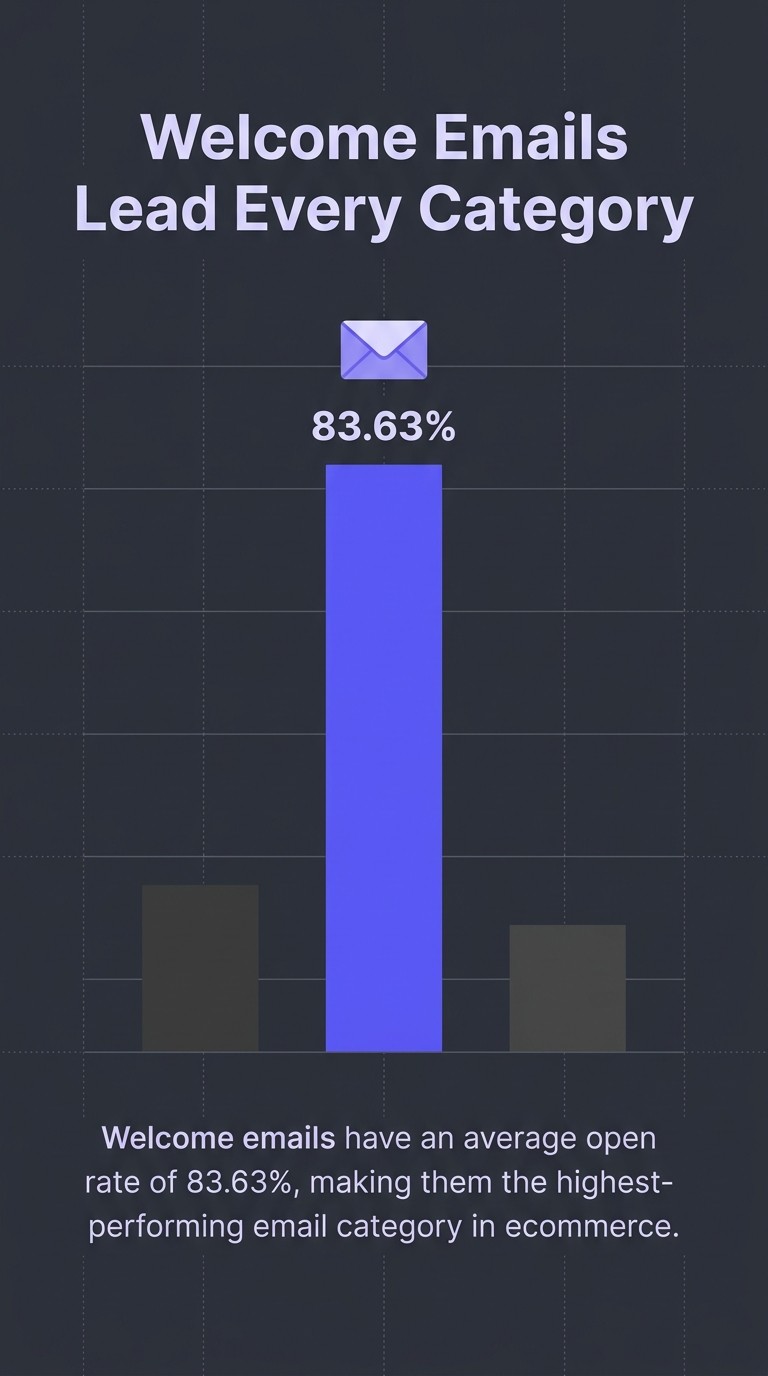
That open rate isn't magic. It's timing. A subscriber who just signed up is at peak engagement. The welcome email subject line simply needs to match that energy and confirm they made the right call. Don't overthink it. Don't try to be too clever. Be warm, be specific, and be quick about it.
- Welcome to [Brand Name]. Here's what's waiting for you.
- You're in. Your 15% off is inside.
- Your account is ready, [First Name]
- This is just the beginning
- Thanks for joining. Here's what happens next.
- We're glad you're here. Genuinely.
- Your welcome gift is one click away
- Meet [Brand Name]: a quick intro from us
- You made the list. Here's your exclusive access.
- Good things incoming, [First Name]
Welcome email subject lines that include an offer (a discount, free shipping, early access) consistently outperform pure introduction subject lines, because they give the subscriber a concrete reason to open beyond curiosity. For full welcome sequence templates and the email content to back these subject lines, see our welcome series email templates that convert.
FOMO and Urgency Subject Lines (10 Examples)
FOMO and urgency email subject lines trigger opens by making inaction feel costly, and they work because loss aversion is a stronger motivator than gain for most people.
Used correctly, urgency in subject lines drives action. Used constantly, it trains subscribers to ignore you. The brands that get the most out of urgency email subject lines are the ones that earn trust first, then deploy urgency selectively. If every single email shouts 'LAST CHANCE', none of them does.
Deadline-Driven Subject Lines
- Ends tonight: your 20% off code
- Only 6 hours left on this offer
- The sale closes at midnight, no extensions
- Your cart expires in 24 hours
- Today only: free delivery on everything
Scarcity-Driven Subject Lines
- Only 3 left in your size
- Almost gone: the pieces everyone's buying
- Last chance to get [Product Name] before it sells out
- We can't restock this. Grab it now.
- Your wishlist item is nearly out of stock
Scarcity-driven FOMO subject lines perform well when they're accurate. 'Only 3 left in your size' is a powerful email subject line because it's specific and verifiable. Klaviyo's dynamic content blocks can pull real-time inventory into subject lines automatically, which means this level of specificity is achievable at scale without manual effort. For back-in-stock campaigns specifically, our guide on creating urgency in back-in-stock email flows walks through the exact setup.
Curiosity-Driven Subject Lines (10 Examples)
Curiosity-driven email subject lines generate opens by leaving an information gap that the subscriber wants to close, and they're among the most effective subject line types when used sparingly.
The failure mode is the clickbait trap. An email subject line that creates massive curiosity but fails to deliver in the email body destroys trust fast. The curiosity needs to be genuine and the payoff needs to be real. Open loops that don't close are just broken promises.
- We probably shouldn't be telling you this
- Something's different about this one
- You're not going to believe what we found
- This is the email we almost didn't send
- A confession from our team
- The thing our best customers all do
- We ran an experiment. Here's what happened.
- Your order history told us something surprising
- The question everyone's been asking us
- Not what you'd expect from us
Curiosity email subject lines work best in newsletter or brand storytelling contexts, where the relationship is already established and the subscriber trusts that the payoff will be worth it. For cold or transactional email subject lines, lean on specificity over mystery. Strangers need clarity. Loyal subscribers are willing to be intrigued.
Emojis in Email Subject Lines
Emojis in email subject lines have a measurable effect on open rates: top-performing campaigns are 21% more likely to include an emoji in their subject line than bottom-performing campaigns, according to MailerLite's analysis.
That number gets misread constantly. It doesn't mean adding an emoji to any subject line boosts performance. It means the campaigns that use emojis well are more likely to top the charts. The emoji is a symptom of a well-considered subject line, not the cause of it.
When Emojis Improve Subject Lines
Emojis work when they replace a word rather than decorate one. '🔥 25% off everything' is tighter than '25% off everything 🔥'. The emoji at the front catches the eye in the inbox. At the back, it's afterthought punctuation.
Emojis also work when they match brand tone. A playful D2C lifestyle brand using a 🎉 in a welcome email subject line feels natural. A high-end fashion label doing the same might undermine the brand positioning they've spent years building. Test before committing to either direction.
When Emojis Hurt Deliverability
Some emojis trigger spam filters, particularly older ones associated with financial scams: 💰, 💵, and certain alert symbols. Overloading an email subject line with multiple emojis is a spam trigger signal. One per subject line, maximum. And always test inbox placement after adding emojis to confirm your emails are still landing correctly.
Spam Trigger Words to Avoid
Spam trigger words in email subject lines cause deliverability failures that no amount of great content can fix, because the email never reaches the inbox in the first place.
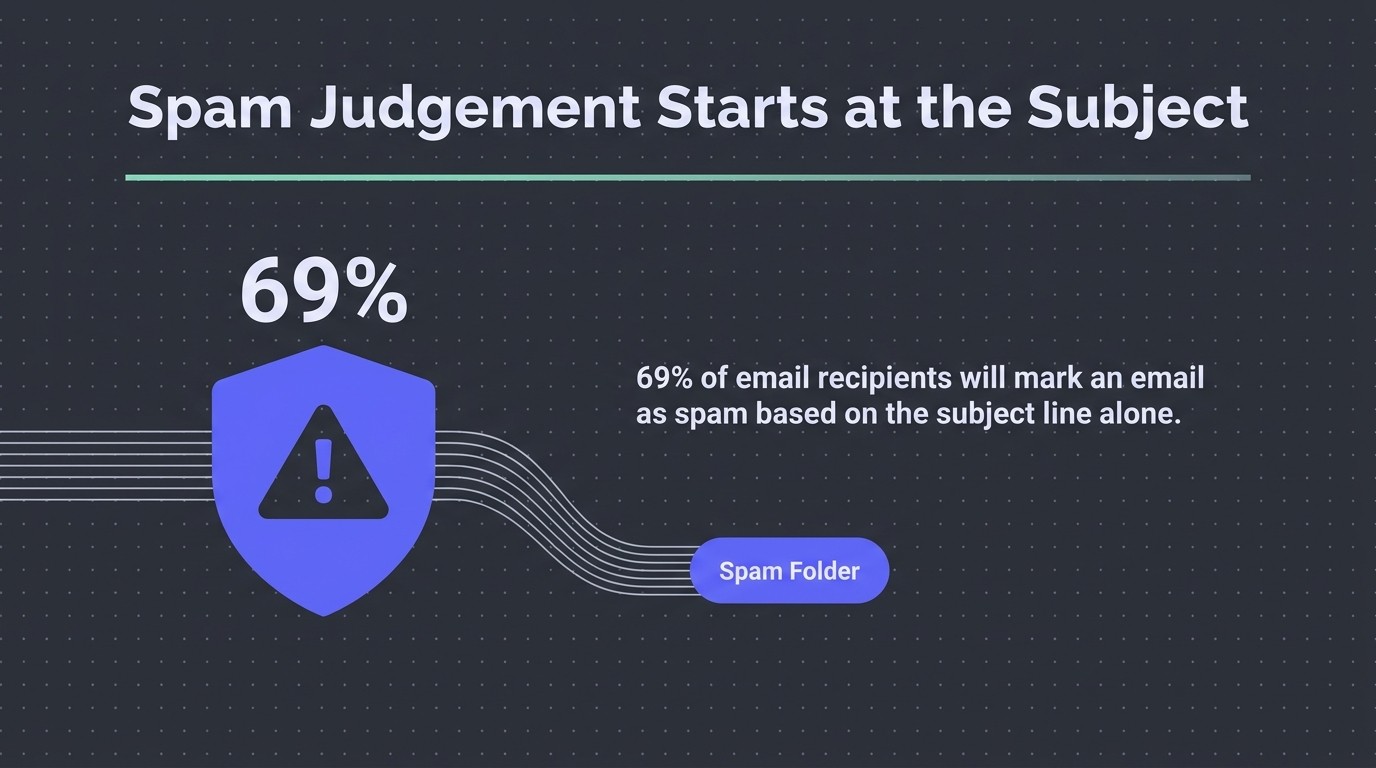
Spam filters have grown sophisticated, but certain patterns still flag reliably: financial language paired with guarantees, excessive punctuation, all-caps words, and phrases associated with phishing or misleading offers. The irony is that many of these spam trigger words appear in perfectly legitimate marketing emails, and the spam filter doesn't care about your intentions.
Words and Patterns That Trigger Spam Filters
Avoid these in email subject lines:
- Financial trigger words: 'Free money', 'guaranteed', 'no risk', 'earn £', 'double your income', 'cash bonus'
- Urgency overkill: 'Act now!!!', 'LIMITED TIME OFFER', multiple exclamation marks, all-caps phrases
- Phishing-associated phrases: 'Confirm your details', 'Verify your account', 'Your account has been compromised'
- Vague promises: 'You've been selected', 'Congratulations', 'You won't believe this deal'
The practical fix is to run every email subject line through a spam checker before sending. Mailchimp and Klaviyo both include deliverability tools that flag likely spam trigger words at the send stage. Use them. Skipping this step is how brands accidentally train ISPs to route their entire domain to the junk folder.
One pattern that doesn't get flagged enough: excessive personalisation tokens in subject lines can read as phishing to spam filters. '[First Name], your account has a message' is structurally similar to phishing email subject lines, even when the sender is legitimate. Test these carefully.
A/B Testing Email Subject Lines
A/B testing email subject lines is the only way to move from educated guesses to actual data about what your specific audience responds to, and every major email platform, including Klaviyo, makes it straightforward to set up.
Most brands A/B test infrequently and test the wrong things. Changing the sender name and the subject line in the same test tells you nothing useful. You won't know which variable drove the difference. One variable per test, always.
What to Test in Email Subject Lines
The highest-leverage A/B tests for email subject lines are:
- Length: short vs. medium (15 characters vs. 35 characters for the same message)
- Personalisation: first name vs. no first name in the same subject line structure
- Tone: direct ('20% off ends tonight') vs. curiosity-driven ('Before you go to bed tonight')
- Urgency framing: deadline-based vs. benefit-based for the same offer
- Emoji vs. no emoji for the same subject line copy
How to Read A/B Test Results
Open rate is the primary metric for subject line A/B tests, but it's not the only one worth watching. An email subject line with a higher open rate but a lower click-to-open rate suggests the subject line over-promised. The average email click-to-open rate in 2025 was 6.81%, which is a useful benchmark for assessing whether your subject line and email content are aligned.
Run tests on a minimum of 20% of your list per variant before calling a winner. Statistical significance matters. A 2% difference in open rates on a 500-subscriber test is noise, not data. For the design and content that your tested subject lines need to match, our guide on Klaviyo email template design best practices covers what happens after the open.
Subject Line Examples for Key Ecommerce Flows
The highest-revenue email subject lines in ecommerce come from automated flows, not broadcast campaigns, and the data makes that clear: abandoned cart and welcome emails generated 76% of all automation-driven orders in 2025.
These flows run 24/7. The subject line you set today sends to thousands of subscribers over the coming months. Getting it right has a compounding return.
Abandoned Cart Email Subject Lines
- You left something behind, [First Name]
- Your cart is waiting. Don't let it expire.
- Still deciding? Here's 10% off to help.
- Someone else might buy this before you do
- We held your items. But not forever.
Post-Purchase Email Subject Lines
- Your order is on its way, [First Name]
- How to get the most from your new [Product Name]
- Thank you. Here's something for your next order.
- Your delivery is confirmed. What's next?
- Customers who bought this also love...
Win-Back Email Subject Lines
- We miss you. Here's proof.
- It's been a while. We've got something new.
- [First Name], your 20% off is about to expire
- Are you still there? We'd hate to lose you.
- One last offer before we say goodbye
Win-back subject lines need an edge that welcome and cart recovery email subject lines don't. The subscriber is already cold. The subject line needs to cut through the habit of ignoring your brand. 'One last offer before we say goodbye' works because it combines FOMO with a clear endpoint, and it's honest. You can see how these flows fit together end-to-end in our post-purchase email flow guide, which covers the sequence from confirmation to re-engagement.
Getting subject lines right across your automated flows is what separates ecommerce brands with flat retention from those that make it inevitable. Across the entire customer lifecycle, from the first welcome email to the fifth win-back attempt, the subject line is always the first decision point. Treat it as one.
If you want to see exactly where your own flows stand, a Klaviyo audit from FlowFixer will show you which subject lines are costing you opens and which flows are leaving revenue on the table. That's where we start with every brand we work with.
.jpg)
.jpg)